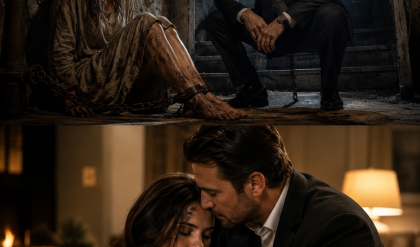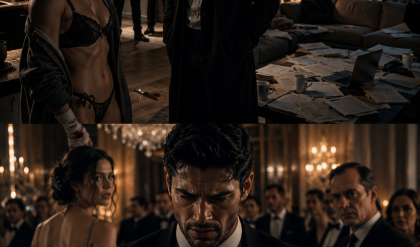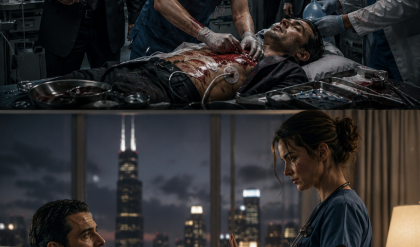
But the other man had said, “What about the girl?”
And Roman had said, “Nobody touches her. Not yet.”
Claire had fled to the break room, made coffee with shaking hands, and tried to behave as if her boss had not just discussed making people disappear.
Now Roman watched her like he could read the memory on her face.
“I didn’t hear anything,” she said.
His gaze flicked to her left eye. “You’re lying.”
“I’m not.”
“When you lie, your left eyelid twitches.” He stepped closer. “It has done that four times since I said the word heard.”
Claire’s fingers went cold.
Roman stopped in front of her.
“Claire, listen carefully. What you heard was not meant for you.”
“I understand that.”
“No, you don’t.” His voice hardened. “Because if you understood, you would already be terrified.”
“I am terrified.”
Something moved across his face, too fast to name.
“Good,” he said. “Fear keeps people alive.”
“That’s not exactly comforting.”
“I’m not trying to comfort you. I’m trying to keep you breathing.”
Claire stared at him. “Are you going to fire me?”
“No.”
“Then what?”
“From this moment forward, you work directly for me. You don’t answer questions about my schedule. You don’t transfer calls without checking with me. You don’t discuss what you hear in this office with anyone, including federal agents, police officers, reporters, or men who claim they’re trying to help you.”
Her pulse spiked. “Federal agents?”
Roman’s face went still.
And Claire understood, with a sick twist in her stomach, that he had said too much.
Before she could respond, his private line rang.
Roman looked at the number, and his expression changed from controlled to lethal.
He answered in Italian. Claire understood almost none of it, but she understood names.
Valenti.
Brooklyn.
Bennett.
Her name.
Roman ended the call.
“Go to your desk,” he said.
“Why did that man say my name?”
“Go to your desk, Claire.”
“No. Why did he say my name?”
Roman looked at her.
For the first time since she had met him, he did not seem entirely sure what to do.
Then he said, “Because someone else knows you heard that call.”
By 2:15 p.m., Claire had answered fourteen calls, canceled three meetings, lied to two board members, and drunk so much coffee her hands trembled even when she was sitting still.
At 2:27, her desk phone rang again.
“DeLuca Holdings, executive office.”
“This is Special Agent Nora Whitaker with the FBI,” a woman said. “I need to speak with Roman DeLuca.”
Claire’s spine straightened.
“He’s unavailable. May I take a message?”
A pause.
Then Agent Whitaker said, “Miss Bennett, I suggest you choose your next words carefully.”
Claire’s heart dropped. “I’m sorry?”
“We know you were in his office this morning. We know you heard something. We can protect you, but only if you cooperate before he moves you out of reach.”
Claire looked toward Roman’s closed door.
“What is this about?”
“Brooklyn warehouses. Illegal imports. A dead accountant in Red Hook. And a man named Anthony Valenti who doesn’t leave witnesses alive.”
Claire’s hand tightened around the phone.
“I don’t know anything.”
“That may be true,” Whitaker said. “But Valenti won’t care. And neither will DeLuca if he thinks you can hurt him.”
The line went dead.
Claire sat frozen, staring at the phone.
Then her cell buzzed.
Unknown number.
Do not tell DeLuca about the FBI call. If you want to live, come to the parking garage. Level B2. Alone. Five minutes.
Claire reread the message three times.
Her first instinct was to run to Roman.
Her second was to run from him.
The problem was she no longer knew which instinct belonged to survival and which belonged to stupidity.
His office door opened.
Roman stepped out, jacket gone, sleeves rolled to his forearms. “Who called?”
Claire locked her phone. “No one.”
His eyes narrowed.
“Claire.”
“A reporter,” she said. “Asking about the board meeting.”
“Your eye.”
She almost laughed because fear was making her ridiculous. “Maybe I have allergies.”
Roman crossed the room in three long strides.
He did not touch her this time. He braced one hand on her desk and leaned down until they were almost eye to eye.
“Who called?”
“The FBI,” she whispered.
Roman’s jaw flexed.
“What did they say?”
“That they know I heard something. That they can protect me. That Anthony Valenti doesn’t leave witnesses alive.”
Roman’s face went hard.
“And then?”
Claire hesitated.
His gaze dropped to the phone in her hand.
“Give it to me.”
“No.”
“Claire.”
“You are not my father, my husband, or my jailer.”
Something flashed in his eyes at the word husband, but it vanished.
“No,” he said. “I’m the man whose security team just intercepted the same message on your phone telling you to go alone to the garage.”
Claire’s blood turned to ice.
“How?”
“My building. My network. My rules.”
“That’s illegal.”
“So is kidnapping.”
She stood too fast. “Kidnapping?”
“That message is not from the FBI.” Roman straightened. “It came through a routed number used by Valenti’s people. They’re trying to grab you before I can secure you.”
“Secure me,” she repeated. “You mean control me.”
“I mean keep you alive.”
“This is insane.”
“Yes.”
“At least you admit it.”
His mouth twitched without humor. “I admit many things when they’re true.”
The elevator chimed at the end of the hall.
Roman’s head turned.
The private elevator should not have chimed. It required biometric access.
His hand moved beneath his desk.
When it came back, he was holding a gun.
Claire stopped breathing.
“Behind me,” Roman said.
The elevator doors opened.
Three men stepped out.
They wore expensive suits and carried weapons like extensions of their bodies. The man in front had gray hair, a narrow face, and the relaxed smile of someone who had never doubted his own cruelty.
“Roman DeLuca,” he said. “You’ve become difficult to reach.”
“Valenti,” Roman replied.
Claire’s knees weakened.
Anthony Valenti’s gaze slid to her.
“And this must be the secretary who fell into your lap.” His smile widened. “New York has such charming gossip.”
Roman moved in front of Claire.
“Leave her out of this.”
“You brought her into it when you let her listen.”
“I didn’t let her do anything.”
“No, I imagine gravity did that for you.” Valenti laughed softly. “Still, she heard enough. My people are nervous.”
“Your people can be nervous somewhere else.”
Valenti’s eyes sharpened. “Give me the south route records, the accountant’s ledger, and the girl. I walk away.”
Claire’s stomach twisted.
The girl.
Not Claire. Not Miss Bennett.
The girl.
Roman’s voice dropped. “No.”
Valenti sighed. “You always did confuse possession with protection.”
The first shot shattered the glass wall behind Claire.
Roman shoved her down so fast she hit the carpet before she understood what had happened. Gunfire exploded. Men shouted. Claire covered her head while Roman fired back with frightening precision.
Security alarms screamed.
Roman grabbed her wrist.
“Run.”
They ran through the side corridor, past conference rooms and framed magazine covers, toward the emergency stairwell. Claire had lost one shoe. She kicked off the other and sprinted barefoot.
“Where are we going?” she gasped.
“Private exit.”
“You have a private exit?”
“I have enemies.”
“Right. Stupid question.”
They made it down six flights before Roman stopped, breathing hard but controlled. He pressed a panel Claire had always thought was decorative. It opened into a narrow service elevator.
Inside, he punched a code.
The doors closed.
For three seconds, there was silence except for Claire’s harsh breathing.
Then the elevator stopped.
Roman’s eyes lifted.
“No,” he said quietly.
The ceiling panel crashed inward.
Claire screamed.
A man dropped through.
Roman caught him mid-fall, slammed him into the wall, and took his gun before Claire could process the movement. The second man tried to follow, but Roman fired once upward. The body vanished with a shout.
The elevator lurched again.
Roman pulled Claire against him, one arm around her head, shielding her as the lights flickered.
“You’re bleeding,” she said.
“Not mine.”
“That is not comforting either.”
“Make a list.”
The elevator reached the garage.
A black SUV screeched to a stop as the doors opened. The driver, a broad-shouldered man with a scar along his jaw, jumped out.
“Boss!”
“Eli,” Roman said. “Get us out.”
Eli Russo, Roman’s head of security, opened the rear door. “Valenti’s men hit the north entrance. We have maybe thirty seconds.”
Roman pushed Claire inside and climbed in after her.
Bullets struck the SUV as it tore out of the garage.
Claire flinched against Roman’s side.
He caught her face in both hands. “Are you hurt?”
“I don’t think so.”
“Look at me.”
“I am looking at you.”
“Breathe.”
“I am breathing.”
“You’re arguing. That’s a good sign.”
Her laugh came out broken, nearly a sob.
Roman’s face changed.
For one dangerous second, the man with the gun disappeared, and she saw the man from the office again, the one who had looked at her mouth as if he had wanted something he had no right to want.
“I’m sorry,” he said.
That stunned her more than the shooting.
“For what?”
“For all of it.”
Claire stared at him. “You’re a mafia boss.”
His expression tightened. “That’s not a question.”
“I need you to deny it.”
“I can’t.”
She closed her eyes.
Roman’s thumb brushed a line of dust from her cheek. “But I can explain.”
“Do explanations make people less dead?”
“No.”
“Then maybe I don’t want one.”
They drove in silence after that.
Roman took her to his penthouse because, according to him, his office had been compromised, the police could not be trusted, and the FBI had a leak he was not ready to identify.
Claire told him she wanted to go home.
He told her Valenti knew her address.
She told him she would go to her mother’s apartment in New Jersey.
He told her Valenti knew that too.
By the time they reached the penthouse, Claire was shaking with anger because fear had become too exhausting to hold by itself.
The apartment was beautiful in the way museums were beautiful: glass, marble, steel, expensive silence. Roman poured her whiskey without asking and set it on the bar.
“I don’t drink whiskey.”
“You do tonight.”
She took it, swallowed, and coughed.
Roman almost smiled.
Almost.
“Tell me the truth,” she said. “What did I hear?”
Roman leaned against the bar across from her.
“The shipment was a false manifest tied to Valenti’s trafficking routes. My accountant found it buried inside one of my warehouse subsidiaries. He was going to bring me the ledger. Valenti killed him before he could.”
Claire frowned. “You expect me to believe you’re the good guy?”
“No. I expect you to believe I’m not the worst one.”
“That’s a very low bar.”
“In my world, low bars keep people alive.”
“What about ‘erase the route and everyone attached to it’?”
“I meant erase them from the system. Move the drivers, give them new documents, get them out of the city before Valenti found them.”
“And the girl?”
Roman’s eyes darkened.
“A twelve-year-old named Sofia. Her father drove one of the trucks. Valenti thought the father talked. He planned to use the child as leverage.”
Claire’s stomach turned.
“Did you save her?”
“Yes.”
“How do I know that?”
Roman took out his phone, opened a security feed, and turned it toward her.
A little girl slept on a sofa in what looked like a safe house, wrapped in a yellow blanket. An older woman sat nearby reading. A man with a sling on one arm stood guard outside the door.
Claire looked away.
The truth did not make Roman safe.
It made the world more complicated.
“You could have told me,” she said.
“No, I couldn’t. Because the fewer people who know where she is, the longer she lives.”
Claire wanted to hate the logic. She hated that she understood it.
Her phone buzzed.
She reached for it.
Roman moved faster.
“Don’t—”
She had already read the message.
Nice view from the forty-first floor.
Claire looked at the windows.
Across the rain-smeared glass, Manhattan stared back in a thousand reflected lights.
Roman grabbed the phone.
His face went empty.
Then he turned his head. “Eli!”
The security chief appeared from a hallway. “Sir?”
“Sweep the adjacent towers. Now.”
Eli saw the phone and swore under his breath. “On it.”
Claire stepped away from the windows. “They can see us?”
“They want you to think they can.” Roman drew the curtains with a remote. “Fear is cheaper than bullets.”
“Is that supposed to help?”
“No. But it’s true.”
A landline rang on the bar.
Roman answered.
He listened.
His eyes changed.
“When?” he asked. “How many? No, evacuate now. Every floor.”
He hung up and grabbed Claire’s hand.
“We’re leaving.”
“What happened?”
“Bomb in the garage.”
The world narrowed to the pressure of his hand around hers.
They ran.
The private elevator shot upward instead of down.
“Why are we going up?” Claire demanded.
“Roof.”
“You have a helicopter.”
“I have two.”
“Of course you do.”
The helicopter lifted from the rooftop three minutes later.
The explosion hit while they were over the East River.
Claire saw fire bloom from the base of Roman’s building, orange and black against the rain. She clapped a hand over her mouth.
“My God.”
“Everyone was evacuated,” Roman said, one arm locked around her. “No casualties.”
“They tried to kill you.”
“They tried to scare me.”
His voice was cold enough to freeze blood.
“It didn’t work.”
Claire looked at his profile, the hard line of his jaw, the wet darkness of his hair, the controlled rage in his eyes. She should have been repelled by it.
Instead, she thought of the little girl under the yellow blanket.
“Where are we going?” she asked.
“My house outside the city.”
“I thought the penthouse was your house.”
“No,” Roman said. “The penthouse is where I sleep when I don’t want to feel anything.”
The estate sat behind iron gates in Westchester, surrounded by old trees and stone walls. It looked less like a gangster’s hideout than a place inherited by people who measured time in generations.
An older woman met them at the door before the helicopter engine had fully died in the distance.
“Roman,” she said, touching his face. “You’re bleeding.”
“Not mine, Grace.”
Her eyes moved to Claire.
Roman’s hand settled at the small of Claire’s back. “This is Claire Bennett. She stays here until I say otherwise.”
Grace studied Claire with sharp blue eyes that missed nothing.
Then she softened.
“Come inside, sweetheart. Men make war. Women end up needing tea.”
Claire almost cried from the kindness of it.
Inside, the house smelled of lemon polish, firewood, and something baking. Grace led Claire upstairs to a guest room with a fireplace and thick quilts while Roman made calls in the hall, his voice low and lethal.
When Grace brought towels, Claire asked, “How long have you known him?”
“Since he was thirteen and too proud to admit he was hungry.”
Claire looked toward the closed door. “Was he always like this?”
“Angry? No. Dangerous? Maybe.” Grace folded a towel with precise hands. “His father was killed when Roman was twenty-one. His mother died in the same car. After that, the boy decided grief was useless unless it could be turned into power.”
“That sounds lonely.”
“It was.”
Claire sat on the edge of the bed. “Why does he care what happens to me?”
Grace smiled sadly. “Because you looked at him today and saw a man instead of a crown.”
“I saw a criminal.”
“You saw both,” Grace said. “That’s why he’s afraid.”
Before Claire could answer, her phone rang.
Unknown number.
She should have called for Roman.
Instead, exhausted and furious, she answered.
“Miss Bennett,” a cultured male voice said. “Anthony Valenti.”
Her blood went cold.
“What do you want?”
“To offer you the chance to live.”
“I’m not interested in anything from you.”
“You haven’t heard the price.”
“I don’t care.”
“You will.” His voice remained pleasant. “At midnight, you will open the east service gate. You will disable the alarm using the code Roman gave you.”
“He didn’t give me any code.”
“But he will. Men in love become careless.”
Claire’s heart stumbled.
Valenti laughed softly. “Yes, I know. He looks at you like his father looked at his mother. That kind of weakness is hereditary.”
“You’re insane.”
“No, Miss Bennett. I’m practical. If you open the gate, you walk away with five million dollars and a new life. If you refuse, your mother in Hoboken dies first. Then your brother in Chicago. Then your friend Maya and the baby she had last month.”
Claire couldn’t breathe.
“You’re lying.”
A photo appeared on her screen.
Her mother leaving a grocery store, blue scarf around her neck.
Another photo.
Her brother outside a school gym with a basketball under one arm.
Another.
Maya holding her infant daughter near a nursery window.
Valenti’s voice dropped. “Midnight. East gate. Or the people you love become examples.”
The call ended.
Claire sat frozen, phone in hand.
Her first thought was that she could leave. She could run down the hall, find a door, vanish into the rain, and somehow draw Valenti away from everyone.
Her second thought was that Roman would find her.
Her third was worse.
Maybe Valenti was right.
Maybe Roman’s love, if that was what this impossible thing was becoming, would make him careless. Maybe everyone near her would die because she had fallen into the lap of a man who carried wars behind his eyes.
Claire called her mother with shaking hands.
“Mom,” she said when the familiar voice answered. “I need you to listen, and I need you not to ask questions yet.”
That was how Roman found her fifteen minutes later, standing by the window, telling her brother to take the first flight out of Chicago under another name if he could, to pay cash, to tell no one, to trust her just this once.
Roman waited until she hung up.
Then he said, “How long were you going to keep this from me?”
Claire turned.
He stood in the doorway, pale with anger.
“I was going to tell you.”
“When? After you opened the gate?”
She flinched.
His face hardened. “So that was the offer.”
“You listened?”
“My security picked up the call.”
“You monitor my phone?”
“Tonight, yes.”
“That is a violation.”
“So is threatening your mother.”
Claire’s anger broke apart. “He knows everyone I love.”
Roman crossed the room, but stopped before touching her.
“I already have teams moving to them.”
She stared. “What?”
“Your mother will be with my people in nine minutes. Your brother in twenty. Maya and her baby are being moved as we speak.”
Tears burned her eyes. “You did that already?”
“Yes.”
“Why?”
Roman looked at her as if the answer cost him something.
“Because they matter to you.”
Claire covered her mouth.
His voice roughened. “But you do not keep threats from me. Not because I need control. Because incomplete information gets people killed.”
“I thought if I told you, you’d start a war.”
“The war already started.”
“Because of me.”
“No.” He stepped closer. “Because men like Valenti think love is a weakness and women are leverage. That is not your fault.”
Claire’s tears fell then, sudden and humiliating.
Roman finally touched her, pulling her into his arms with a gentleness that felt almost impossible after the violence of the day.
“I don’t know how to survive this,” she whispered.
“Then borrow my certainty until you find yours.”
She laughed weakly against his chest. “That’s a very arrogant thing to say.”
“I’m a very arrogant man.”
“Yes, I noticed.”
His lips brushed her hair. “You’re safe here.”
“For how long?”
“For tonight.”
It was not a grand promise.
That was why she believed it.
The FBI arrived at 7:30 the next morning with coffee, warrants, and Agent Nora Whitaker, who looked exactly like her voice: sharp, unsentimental, and too tired to be easily impressed.
Roman met her in the library with Claire on one side and his attorney, Victor Hale, on the other.
Victor was silver-haired, elegant, and had the polished calm of a man who charged by the breath. He had been with Roman’s family for thirty years and treated the estate like a second skin.
“Miss Bennett,” Agent Whitaker said, “you’re in danger.”
Claire sat straighter. “I’ve gathered that.”
“We can put you in protective custody.”
Roman’s hand tightened once on the arm of his chair.
Claire noticed.
So did Whitaker.
“This is not romance,” the agent said. “This is organized crime. Men like Roman DeLuca make people feel protected because they control the danger around them.”
Roman smiled coldly. “You practiced that.”
“I’ve arrested men like you.”
“No,” he said. “You’ve arrested men who were careless enough to let you.”
Victor sighed. “Roman.”
Claire looked at Whitaker. “What do you want from me?”
“The truth. What you heard. What Valenti said. What DeLuca knows.”
“And if I give it to you?”
“We protect your family.”
Roman leaned forward. “I’m already doing that.”
Whitaker didn’t look away from Claire. “We do it legally.”
Claire almost said yes.
Not because she trusted the FBI completely, but because she wanted a door out of the nightmare. She wanted rules, badges, paperwork, and a world where evidence mattered more than bullets.
Then Victor’s phone buzzed.
He glanced down.
For less than a second, his face changed.
It was small. A tightening near the mouth. A flicker in the eyes.
Claire had spent six months managing powerful men. She knew the look of someone receiving bad news they already expected.
Roman was still watching Whitaker.
No one else noticed.
Claire did.
“What happened?” she asked Victor.
He looked up smoothly. “Nothing important.”
Claire’s left eye twitched.
Roman turned toward her.
She hated him for noticing.
“What is it?” he asked.
“I don’t know.”
Whitaker’s eyes narrowed. “Miss Bennett?”
Claire stood slowly and walked to the window, buying herself time. Outside, guards moved along the stone drive. One of Roman’s men was speaking into a radio near the east gate.
The east gate.
Valenti had named it last night.
But Roman had never told her about any east service gate. She had not known it existed until Valenti did.
How had Valenti known Roman would eventually give her a code to that gate?
Unless the person feeding Valenti information was someone inside this house.
Someone who knew the estate.
Someone old enough to know Roman’s parents.
Someone calm enough to sit beside him while planning his ruin.
Claire turned back.
“Agent Whitaker,” she said carefully, “if someone inside Roman’s organization were working with Valenti, would your surveillance have picked it up?”
Roman went still.
Victor smiled faintly. “That’s an interesting leap.”
“No,” Claire said. “It’s a question.”
Whitaker glanced at Roman. “We’ve suspected a leak for months.”
Roman’s voice dropped. “You never told me.”
“You’re not exactly on our holiday card list.”
Claire looked at Victor.
His smile remained.
But his eyes had gone flat.
That was the first false ending of Claire’s fear.
For a moment, she thought they had found the snake.
Then the library windows exploded inward.
Everyone dropped.
Gunfire tore through the shelves. Books burst apart. Glass rained over the carpet. Roman covered Claire with his body, one hand cradling the back of her head.
Whitaker fired toward the broken windows.
Roman’s guards answered from outside.
The attack lasted less than a minute.
When the shooting stopped, smoke and dust filled the library.
Victor Hale was on the floor, bleeding from a cut on his temple but alive.
He looked genuinely shaken.
Claire stared at him, confused.
If Victor was the leak, why would Valenti shoot at him too?
Roman helped Claire up. “Are you hit?”
“No.”
“Look at me.”
“I said no.”
“Claire.”
She looked at him.
He exhaled as if he had been holding his breath for a year.
Whitaker rose, furious. “That was Valenti’s answer.”
Roman’s eyes were black with rage. “No. That was his mistake.”
By noon, they had a plan.
By one, Claire hated it.
By two, she was wearing a recording device beneath the lining of her blazer while Roman stood in front of her looking like a man being forced to watch his own execution.
“You don’t have to do this,” he said.
“Yes, I do.”
“No, Claire. You don’t.”
She adjusted her sleeve because her hands needed something to do. “Valenti threatened my family. He bombed your building. He shot at this house. He won’t stop because you ask him nicely.”
“I don’t ask nicely.”
“That’s also a problem.”
His mouth twitched, then fell.
“You will stay beside me,” he said. “If I tell you to get down, you get down. If I tell you to run, you run. If anything feels wrong, you press the ring.”
Claire looked at the ring Whitaker had given her. A panic button hidden beneath a fake pearl.
“I know.”
Roman stepped closer.
For once, he seemed to struggle for words.
“I have spent fifteen years making sure no one could hurt me by threatening someone I loved.”
Claire’s breath caught.
He touched her cheek. “Then you walked into my office with your color-coded folders and your stubborn mouth, and now every enemy I have knows exactly where to aim.”
“Roman—”
“I should send you away.”
“But you won’t.”
“No,” he said. “Because I’m selfish enough to want you close and decent enough to hate myself for it.”
She rose on her toes and kissed him.
It was not like the accidental almost-kiss in his office. It was not shock or adrenaline. It was a choice. A terrified, irrational, unmistakable choice.
Roman froze for half a heartbeat.
Then his hand slid into her hair and he kissed her back like the world had narrowed to one necessary thing.
When they separated, Claire whispered, “I’m scared.”
“Good.”
“If you say fear keeps me alive one more time, I’ll scream.”
His smile was brief and real. “Then I’ll say something else.”
“What?”
“I’m scared too.”
That steadied her more than any promise could have.
The meeting was set for an abandoned ferry terminal in Staten Island, neutral ground only in the sense that everyone present was equally likely to die there.
Valenti arrived with six men.
Roman arrived with four, plus Claire.
The FBI waited outside the perimeter, hidden in vans and neighboring buildings, listening through Claire’s wire.
Roman’s hand rested lightly on her back as they walked inside. To anyone watching, it looked possessive.
Claire knew better now.
It was his way of checking she was still there.
Anthony Valenti sat at a metal table beneath a broken departure sign, his gray hair immaculate, his suit dry despite the rain.
“Miss Bennett,” he said. “You disappoint me. I gave you such a generous offer.”
Claire sat across from him. “You threatened my mother.”
“Yes. And you still came.” His eyes moved to Roman. “She’s either loyal or stupid.”
“She’s neither yours to judge,” Roman said.
Valenti laughed. “Listen to you. Your father sounded like that when he spoke about your mother.”
Roman went very still.
Claire felt the change in him before she saw it.
Valenti noticed too. His smile sharpened.
“Ah,” he said. “That still hurts.”
Roman’s voice was quiet. “We’re here to discuss terms.”
“No. You’re here because I allowed you to come.”
“Then start talking.”
Valenti leaned back. “Brooklyn. The waterfront. Your warehouse network. Half your construction contracts. And the Bennett woman leaves with me.”
Roman smiled.
It was the kind of smile that made Claire understand why men feared him.
“No.”
Valenti sighed. “You disappoint me too.”
Claire forced herself to speak. “Why do you care about me so much?”
Valenti’s gaze slid to her. “Because you changed him.”
“I’m a secretary.”
“You were a secretary,” Valenti corrected. “Now you’re the crack in Roman DeLuca’s armor.”
Roman’s fingers curled once against the table.
Claire remembered Whitaker’s instruction.
Make him angry. Angry men brag.
“You sound jealous,” she said.
Valenti’s eyes narrowed.
Claire kept going because fear had become a bridge and she was already halfway across it.
“Roman protects people. You threaten mothers and babies because you can’t win straight.”
One of Valenti’s men shifted.
Roman did not look at Claire, but she felt his warning.
Careful.
Valenti smiled slowly. “You think he protects people? Did he tell you what his father was?”
“He told me enough.”
“No,” Valenti said. “I doubt that. Men sanitize their ghosts for pretty women.”
Roman’s voice turned deadly. “Leave my father buried.”
“Buried?” Valenti laughed. “Your father was burned into the steering wheel of his own car.”
The room went silent.
Claire’s stomach tightened.
Roman did not move.
Valenti leaned forward. “He begged, you know. Not for himself. For your mother. That was the funny part.”
Roman’s face emptied.
Claire reached for his hand under the table.
His skin was cold.
“What are you saying?” Roman asked.
Valenti’s smile widened. “That the official story was a lie. The Calabrese family didn’t kill Antonio and Lucia DeLuca. My people did. Your father thought he could walk away from certain arrangements. Thought he could turn legitimate, wash his hands, build hotels and charities and play respectable.” Valenti’s eyes glittered. “So we made an example.”
Roman’s hand tightened around Claire’s.
Valenti kept talking, drunk on cruelty.
“Your mother was supposed to be at church. Wrong place, wrong morning. These things happen.”
Claire felt Roman move before she saw it.
He lunged across the table.
Guns rose.
Claire grabbed his arm with both hands.
“Roman, don’t!”
Valenti’s men aimed at his head.
For one terrible second, Claire thought grief would win.
Then Roman stopped.
Slowly, with a control that looked physically painful, he sat back down.
Valenti clapped once. “Good boy.”
Claire pressed the panic ring.
Nothing happened.
No agents.
No shouting.
No rescue.
Her blood went cold.
She pressed again.
Valenti’s eyes flicked to her hand.
Then he smiled.
“Oh, Miss Bennett. Did you think the FBI was listening?”
Roman’s head turned toward her.
Valenti reached into his pocket and placed a small crushed device on the table.
Claire recognized it.
The receiver from Whitaker’s van.
“One of the problems with federal operations,” Valenti said, “is that they depend on federal employees. And federal employees have mortgages, addictions, sick parents, secret children, all sorts of pressure points.”
Roman’s face hardened. “Who?”
Valenti looked past him.
The terminal door opened.
Victor Hale walked in with an umbrella.
Claire’s heart stopped.
This time there was no false ending.
Victor closed the umbrella calmly and looked at Roman with something almost like regret.
“I’m sorry,” he said.
Roman stood slowly. “Victor.”
“I tried to prevent this.”
Roman’s laugh was soft and terrible. “By selling us out?”
“By preserving what your father built before you destroyed it with sentiment.”
“My father was killed because he wanted out.”
“Your father was killed because he became weak.” Victor’s voice sharpened for the first time. “He let your mother talk him into legitimacy. Charities. Schools. Clean contracts. He forgot that men like us survive because other men are afraid.”
Roman stared at the man who had raised him after his parents died.
“You knew.”
“I arranged the meeting that put him in that car.”
The words struck the room harder than gunfire.
Roman staggered half a step.
Claire rose, but one of Valenti’s men aimed at her.
“Sit down,” Victor said gently. “Please, Claire. I don’t want you harmed.”
“You threatened my family.”
“No. Anthony did that. I merely allowed it.”
“That’s supposed to be better?”
Victor looked almost sad. “You made him reckless. Roman was ready to sign away profitable routes, expose old accounts, cooperate with federal investigators. For you.”
“For a future,” Roman said.
“For a fantasy,” Victor snapped. “There is no clean future for men with our history.”
Claire looked at Roman.
His grief was immense, but beneath it something steadier was forming.
Not rage.
Decision.
Roman turned back to Victor. “You killed my parents.”
Victor’s jaw worked. “I saved the family.”
“You killed my parents.”
“Yes,” Victor said, and his voice broke. “And I carried you through their funeral. I built you into the man who could survive it. Don’t make me regret saving you too.”
Valenti stood. “Touching as this is, we have business. Roman signs over Brooklyn and the waterfront. The girl comes with us until the transfer clears.”
“No,” Claire said.
Every man in the room looked at her.
She stood, legs trembling, and removed the dead wire from her jacket.
Valenti smiled. “Brave until the end.”
Claire dropped the wire on the table.
Then she took Roman’s phone from his jacket pocket.
Roman’s eyes flicked to her.
Trust me, she prayed silently.
She tapped the screen twice.
A voice filled the room.
Victor’s voice.
“Your father was killed because he became weak.”
Then Valenti.
“My people did.”
Then Victor again.
“I arranged the meeting that put him in that car.”
The color drained from Victor’s face.
Claire held up the phone.
“Roman records every room he enters when he thinks he might die,” she said, her voice shaking but clear. “Security protocol. I thought it was paranoid yesterday.”
Roman’s mouth curved faintly.
“Today,” she said, “I find it charming.”
Valenti lunged for the phone.
Roman moved faster.
The table overturned. Gunfire cracked. Claire dropped to the floor as Roman pulled her behind the metal barrier. This time the explosion of violence did not paralyze her. She crawled, found the panic ring, and remembered Whitaker’s second instruction.
If the ring fails, use the phone.
She hit the emergency contact Agent Whitaker had programmed.
The call connected.
Claire shouted over the gunfire, “Victor Hale is the leak! Valenti confessed! Ferry terminal! Move now!”
A bullet struck the metal near her head.
Roman fired twice, then grabbed her and dragged her toward a concrete pillar.
“You did beautifully,” he said.
“This is a strange time for praise!”
“I’m proud of you.”
“Stay alive and tell me later!”
Outside, sirens erupted.
Valenti cursed.
Victor tried to run.
Roman saw him.
For one terrifying moment, Claire thought Roman would shoot the man in the back.
He had every reason.
Every wound.
Every ghost.
Instead, Roman aimed at the floor near Victor’s feet and fired.
Victor froze.
Roman’s voice cut through the chaos.
“No more family ghosts,” he said. “You face what you did.”
Federal agents flooded the terminal seconds later.
Valenti’s men dropped their weapons. Valenti himself tried to reach for a backup gun and was tackled by three agents. Victor Hale stood motionless in the rain blowing through the broken windows, looking suddenly old.
Agent Whitaker entered last, bleeding from a cut above her brow.
Claire ran to her. “Your team—”
“Compromised,” Whitaker said grimly. “Not all of us.”
She looked toward Victor as agents cuffed him.
“Well,” she added, “that explains a lot.”
Roman stood in the center of the terminal, staring at Victor.
Victor met his eyes.
“I loved you like a son,” the older man said.
Roman’s face tightened.
“No,” he replied. “You loved what you could turn me into.”
Victor flinched.
Roman took Claire’s hand and walked away before grief could pull him back.
Three weeks later, Roman DeLuca sat in a federal conference room and signed documents that made half of New York gasp.
He turned over records, shell companies, names, routes, accounts, and enough evidence to bury Anthony Valenti’s organization and half of Victor Hale’s network for life. In exchange, the FBI agreed not to pretend Roman was innocent, only to acknowledge that cooperation mattered and that much of DeLuca Holdings had already been cleaner than anyone expected.
It was not simple.
Nothing became pure because a man fell in love.
Reporters camped outside his buildings. Board members resigned. Old allies called him a traitor. Enemies tested the edges of his restraint. For months, Roman lived between attorneys, agents, restructuring teams, and sleepless nights when he woke reaching for a gun that Claire had insisted he stop keeping under the pillow.
She did not fix him.
He did not save her.
They chose, repeatedly and with difficulty, not to become the worst parts of what had happened to them.
Claire quit as his assistant.
Roman accepted her resignation with the expression of a man being stabbed politely.
“You’re smiling,” she said, handing him the letter in his office, the same office where she had fallen into his lap.
“I am not.”
“You’re trying not to.”
“I’m proud of you,” he said. “I hate this, but I’m proud of you.”
“I’m not leaving you. I’m leaving the job.”
“I know.”
“You’re being dramatic.”
“I was raised by criminals and lawyers. Drama is cultural.”
She laughed, and the sound softened something in him.
Claire enrolled in a teaching certification program that fall. Roman funded a foundation in his mother’s name to support children pulled from trafficking cases, violent homes, and the quiet disasters rich men preferred not to see. He did not put his name on the building.
Claire noticed.
He shrugged when she asked.
“Your influence,” he said.
“My influence is excellent.”
“It’s expensive.”
“You can afford it.”
“Yes,” Roman said, pulling her close. “I can.”
One year after the day Claire Bennett fell into his lap, Roman brought her back to the Westchester estate, where Grace had set dinner on the terrace under strings of warm lights.
Claire knew something was happening because Roman wore the expression he used when negotiating billion-dollar deals and pretending not to be nervous.
After dinner, he took her to the garden.
No guards followed close enough to hear. That was new. It had taken a year, three arrests, and Roman firing two security consultants before he learned that love did not mean surrounding Claire with armed men every time she wanted air.
At the fountain, he stopped.
Claire looked at him. “If this is another safe house, I’m going to scream.”
“It’s not a safe house.”
“A panic room?”
“No.”
“A legally questionable island?”
His mouth twitched. “You think too little of me.”
“I think accurately of you.”
Roman took her hands.
The teasing faded.
“I have been many things,” he said. “Some of them useful. Some unforgivable. Some I’m still learning how to put down.”
Claire’s eyes stung.
“Roman.”
“Let me finish, or I’ll lose my nerve.”
“You don’t lose your nerve.”
“I do with you.”
That silenced her.
He reached into his pocket and took out a small velvet box.
“I don’t want to marry you because you survived my world,” he said. “I don’t want gratitude, fear, adrenaline, or some story people tell because it sounds dramatic. I want mornings. Arguments about paint colors. Your textbooks on my dining table. Grace complaining that I don’t eat enough. Your mother asking invasive questions. I want boring things with you, Claire. I want a life so honest it would have frightened every man who tried to raise me.”
He opened the box.
The ring was simple, an oval diamond set in gold, beautiful without shouting.
“I love you,” Roman said. “Not because you saved me. Because you made me want to become someone who could be loved without being feared.”
Claire was crying before she answered.
“You understand I’m still going to argue with you.”
“I’m counting on it.”
“And I’m not quitting school.”
“I’d be disappointed if you did.”
“And if you ever monitor my phone without asking again, I will throw this ring into the Hudson.”
His smile broke open, real and bright and rare.
“Understood.”
Claire held out her hand.
“Yes,” she whispered. “Of course yes.”
Grace claimed later that Roman DeLuca, feared by half of New York and investigated by the other half, cried when he slid the ring onto Claire’s finger.
Roman denied it.
Claire never did.
They married six months later in a small stone church in the Hudson Valley with Claire’s mother sobbing in the front row, her brother grinning beside her, Maya’s toddler dropping flower petals in chaotic handfuls, and Agent Whitaker sitting in the back because, as she put it, “Someone has to make sure this wedding doesn’t become evidence.”
Eli Russo, fully recovered from a Valenti ambush that had nearly killed him, stood as Roman’s best man. Grace stood beside Claire, dabbing her eyes with a handkerchief and pretending she had allergies.
When it came time for vows, Roman held Claire’s hands carefully, as if they were the first honest things he had ever been trusted with.
“I promise not to make fear the language of our home,” he said. “I promise to tell you the truth, especially when the truth makes me look bad. I promise to protect you without owning you, to listen when you tell me I’m becoming someone I don’t want to be, and to spend the rest of my life proving that the day you fell into my lap was not the day your life went wrong. It was the day mine finally started going right.”
Claire could barely speak through her tears.
Then she took a breath.
“I promise not to run when things become difficult,” she said. “I promise not to keep secrets because I think I’m protecting you. I promise to remind you that you are more than your past, more than your family name, more than the worst thing people believe about you. And I promise that when you become impossible, which will be often, I will love you honestly enough to tell you.”
The church laughed.
Roman smiled at her like she had hung the sun.
That evening, at the estate, under the same terrace lights where he had proposed, Roman danced with Claire slowly while the people they loved watched from candlelit tables.
“You’re happy,” he said.
Claire rested her cheek against his chest. “I am.”
“Good.”
“You sound surprised.”
“I’m still learning that happiness can stay.”
She lifted her head and looked at him.
“It can,” she said. “But not by accident. We build it. Every day.”
Roman kissed her forehead. “Then we build.”
Years later, people would still whisper about the secretary who fell into Roman DeLuca’s lap and somehow brought down two criminal empires.
They would get the story wrong, of course.
They would say she softened him.
She hadn’t.
She had made him braver.
They would say he saved her.
He hadn’t.
He had stood beside her while she saved herself.
And whenever someone asked Claire if she regretted the fall, she would look across whatever room they were in and find Roman watching her with that same dark, impossible devotion.
Then she would smile.
“Not for a second,” she would say.
Because some accidents destroy lives.
And some accidents reveal the life that was waiting all along.
THE END