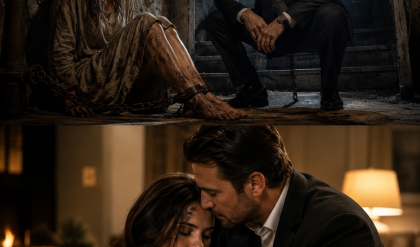
Nora lifted both hands.
“What? I only meant she’s uncomfortable.”
“No, you didn’t.”
The room went quiet.
Nora’s eyes filled instantly.
“On my daughter’s wedding day,” she whispered, “I am being attacked.”
Claire closed her eyes, breathed once, and turned back to the mirror.
I felt terrible. That was Nora’s gift. She could hurt you and still make you feel guilty for bleeding.
An hour before the ceremony, I told Daniel I needed the restroom.
“I’ll walk with you.”
“No, stay with Claire. She needs you for pictures.”
“You sure?”
“Yes. I’m fine.”
I was not fine, but I wasn’t alarmed yet. I had been uncomfortable for weeks. My lower back ached. My belly tightened and released in what I thought were Braxton Hicks contractions. I told myself it was the heat, the dress, the emotion of the day.
The restroom off the bridal suite was bigger than our first apartment bathroom, with cream walls, gold mirrors, and a little sitting area where bridesmaids could fix makeup. I locked myself in a stall and sat there breathing slowly.
Then the first real contraction hit.
It was different from the practice ones. Lower. Deeper. It took over my whole body with a force that made me grab the wall. When it passed, I stood on shaky legs, stepped out of the stall, and reached for my phone.
Before I could unlock it, my water broke.
There is no graceful way to describe that moment. One second I was a pregnant woman at a wedding trying not to complain. The next, warm fluid rushed down my legs and splashed onto the tile.
“Oh, God,” I whispered.
My hands shook so badly I almost dropped my phone. I called Daniel.
It rang once.
Twice.
Then went to voicemail.
Of course it did. He was in the chapel, probably lining up with Claire behind the closed doors. I tried again. No answer.
I called Paige. No answer.
Claire. No answer.
I was scrolling for Dr. Patel’s number when the restroom door opened.
Nora stepped inside.
For one foolish second, relief flooded me.
“Nora,” I gasped. “Thank God. My water broke. I can’t reach Daniel. Please get him.”
She did not move.
Her eyes went to the floor.
Then to my dress.
Then to my phone.
“The ceremony starts in ten minutes.”
That was the beginning of the nightmare.
After she locked the door, I pounded on it with the side of my fist.
“Nora! Open this door!”
No answer.
I heard voices in the hallway. Heels. Laughter. The distant swell of strings.
“Help!” I screamed. “Somebody help me!”
The music swallowed my voice.
Another contraction came. I bent forward, both hands braced against the door, and a sound came out of me that I did not recognize. It was too raw to be called a scream. When it passed, I slid one hand along the wall and forced myself toward the sink.
Think, Avery.
That was what I kept telling myself.
Think.
The restroom had no window. No second door. No emergency pull cord. My phone was gone. I checked the cabinets under the sink with shaking hands, as if a spare phone or a hammer might magically appear among extra toilet paper and cleaning spray. Nothing.
I tried the door again.
Locked.
I shouted until my throat burned.
Outside, the music changed.
The bridal processional.
Claire was walking down the aisle.
That knowledge broke something in me. Not because I blamed Claire. I didn’t. But because the whole world was continuing as if nothing was wrong. People were standing. Smiling. Taking photos. Daniel was probably trying not to cry as he gave his sister away. And thirty feet away, behind a locked door, his wife was leaning over a marble sink in active labor.
Time became strange.
I measured it by contractions, by songs, by bursts of applause. I remember hearing laughter after the vows. I remember thinking, They’re married now. I remember apologizing to Lily out loud.
“I’m sorry,” I whispered, pressing both hands to my belly. “I’m so sorry, baby. Mommy’s trying.”
The contractions moved closer together. My body knew what to do, even if my mind refused to accept it. Pressure built low and heavy, terrifying in its certainty.
I sat on the floor because I was afraid I would fall.
The tile was cold through my dress.
At some point, someone tried the restroom handle.
I screamed.
“Help! I’m in here! Please!”
A woman’s voice on the other side said, “Oh, it’s locked.”
Then Nora’s voice, farther away but clear enough to hear.
“That restroom is out of order, sweetheart. Use the one downstairs.”
The footsteps retreated.
I crawled to the door and hit it with both fists.
“Nora! Please! Please, don’t leave me!”
Her heels came closer.
For a moment, I saw her shadow under the door.
“You need to calm down,” she said.
“Nora, the baby is coming.”
“Then you should have stayed home.”
“I need an ambulance.”
“You need to stop screaming before Claire hears you.”
I pressed my forehead to the door.
“Why are you doing this?”
Her voice dropped.
“Because my children had lives before you.”
Then she walked away.
That was when fear turned into something colder.
Until then, I had believed Nora was panicking in some twisted way. I had believed she would come back when the ceremony ended. I had believed she understood there was a line even she would not cross.
But that sentence—my children had lives before you—told me the truth.
She knew exactly what she was doing.
I do not remember everything after that. Trauma leaves some memories sharp as broken glass and others blurred as fog. I remember trying to stand and failing. I remember my body bearing down without my permission. I remember seeing blood on the pale blue fabric of my dress and thinking, Daniel bought me this dress because he said it made me look like spring.
Then I remember a sound outside.
Not music.
Running.
“Avery!” Daniel’s voice roared through the hallway. “Avery!”
I tried to answer, but only a weak moan came out.
He hit the door.
“Open it!”
Another voice, male, panicked. “Sir, we’re getting the key.”
“Break it down!”
“Daniel?” I tried to say.
The lock rattled. Someone cursed. Metal scraped. The door flew open so hard it hit the wall.
Daniel stood there in his navy suit, face white, eyes wild.
Behind him were Paige, a venue manager, and Marcus in his groom’s tuxedo. Farther back, guests crowded the hallway.
Daniel dropped to his knees beside me.
“Oh my God. Avery. Baby, look at me.”
I wanted to tell him I had tried. I wanted to tell him Nora had my phone. I wanted to ask if Claire was okay. But another contraction took me, and Daniel looked down and saw the blood.
His face changed.
Not fear.
Rage.
“Who locked this door?” he demanded.
No one answered.
Then Nora appeared behind the crowd, one hand pressed dramatically to her chest.
“She was making a scene,” she said. “I thought she needed privacy.”
The hallway went silent.
Claire pushed through the guests, still in her wedding dress, veil crooked, bouquet gone.
“What did you say?” she asked.
Nora turned toward her daughter, tears already forming.
“Claire, sweetheart, I was trying to protect your day.”
“My day?” Claire looked from her mother to me on the floor. “Mom, what did you do?”
“I only asked her to wait.”
Daniel stood.
I had never seen my husband look at his mother like that.
“Where is her phone?”
Nora flinched.
“Daniel—”
“Where is my wife’s phone?”
“She was going to cause chaos.”
Paige made a sound like she had been struck.
Marcus pulled out his phone and called 911.
The rest became sirens, white lights, and hands lifting me onto a stretcher. Daniel stayed beside me until the paramedics forced him to move so they could work. Claire rode behind the ambulance with Marcus. Paige stayed at the venue long enough to tell every guest exactly what had happened.
Nora, I later learned, tried to follow us to the hospital.
Marcus blocked her car with his truck.
I woke up in a hospital bed with my throat dry, my body aching, and Daniel sitting beside me with his head in his hands.
For one terrible second, I thought Lily had died.
The monitor beeped beside me. My mouth felt full of cotton.
“Daniel,” I whispered.
His head snapped up.
The moment he saw my eyes open, he broke.
I had seen my husband cry before. Quiet tears at our wedding. A few choked sobs when we heard Lily’s heartbeat for the first time. But this was different. This was a man coming apart after holding himself together too long.
He grabbed my hand and kissed my fingers.
“She’s okay,” he said before I could ask. “Avery, she’s okay. You’re both okay.”
My whole body shook.
“The baby?”
“She’s perfect.”
A nurse entered with a tiny bundle wrapped in a pink-and-white blanket. She smiled softly, as if she understood that my soul had been waiting outside my body.
“Someone wants to meet her mama.”
When they placed Lily on my chest, the world stopped being cruel for a moment.
She was impossibly small. Warm. Red-faced and furious, with a soft cap pulled low over her dark hair. Her mouth opened in a silent little protest, then settled against me as if she recognized my heartbeat.
“Hi,” I whispered, crying so hard I could barely see her. “Hi, Lily.”
Daniel leaned over us and pressed his forehead to mine.
“I’m sorry,” he said. “I’m so sorry.”
“You found me.”
“Not fast enough.”
“You found me.”
Later, in pieces, he told me what had happened.
After the ceremony, he noticed I was missing from the family photos. Nora said I had gone downstairs to rest. Daniel thought that made sense until Paige asked which room, because she wanted to bring me water. Nora said she didn’t know. Claire overheard and immediately said, “Avery wouldn’t go anywhere without telling Daniel.”
That was the first crack.
Then one of the bridesmaids mentioned seeing a wet spot near the bridal restroom. Nora snapped at her to stop gossiping. Paige got suspicious. She went upstairs, tried the restroom, heard something inside, and screamed for Daniel.
By the time they opened the door, I had been locked in there for nearly forty minutes.
Forty minutes.
Long enough for a wedding ceremony.
Long enough for a life to end.
I do not remember the ambulance ride clearly, but Daniel said I kept asking for my phone. The paramedic thought I was confused. Daniel knew I wasn’t.
Nora had it.
She handed it over at the hospital only after Paige threatened to call the sheriff from the waiting room. It was powered off in Nora’s purse.
Claire came to my hospital room two hours after Lily was born.
She was still in her wedding dress.
The hem was dirty. Her makeup was streaked. Her veil was gone. Marcus stood behind her, one hand at her back, his face grim and protective.
I expected anger.
Not because Claire was cruel, but because guilt does strange things to victims. I thought maybe she would look at me and see the ruined reception, the empty dance floor, the guests whispering over cold plates of chicken, the wedding photos that would forever have an ambulance in the background.
Instead, she covered her mouth and began to cry.
“Avery,” she said, voice breaking. “I am so sorry.”
I shook my head.
“No. Claire, no. I ruined—”
“Don’t you dare finish that sentence.”
Her voice was so sharp that Lily startled against my chest.
Claire came closer, slower then, and touched my shoulder.
“You did not ruin my wedding. My niece was born on my wedding day. That could have been beautiful. Mom made it monstrous.”
“I didn’t want to take attention from you.”
“You were in labor. You were not tap dancing on the cake.”
A laugh burst out of me, ugly and wet and painful. Claire laughed too, then cried harder.
Marcus wiped his eyes and looked away.
Paige arrived a few minutes later with vending-machine coffee and murder in her expression.
“I hope orange is Mom’s color,” she said, setting the cups down. “Because if Daniel doesn’t press charges, I will.”
Daniel was standing by the window. He had not sat for more than a minute since I woke.
“We’re pressing charges,” he said quietly.
The room went still.
I looked at him.
“Daniel.”
He turned.
His face was pale with exhaustion, but something in him had settled. Something old had cracked and fallen away.
“She locked my wife in a room while she was in labor,” he said. “She took your phone. She lied to me. She lied to everyone. Lily could have died. You could have died.”
“I know.”
“No.” His voice broke. “I don’t think you do. I don’t think any of us do yet.”
Claire sat in the chair beside my bed.
“She’s outside,” she said.
My arms tightened around Lily.
Daniel’s eyes went dark.
“She is not coming in.”
“She’s telling everyone she deserves to meet her granddaughter.”
Paige laughed once, coldly.
“Her granddaughter? She treated that baby like a scheduling conflict.”
Daniel walked out before anyone could stop him.
I could not see the hallway from my bed, but I heard enough.
Nora’s voice rose first.
“Daniel, this is ridiculous. I am your mother.”
“And I am Lily’s father.”
“You can’t keep me from my own blood.”
“You lost the right to use that word today.”
“I made one mistake trying to protect your sister!”
Claire stepped into the doorway then, still in her ruined dress.
“Don’t use me.”
Nora went quiet.
Claire’s voice shook, but she did not back down.
“You don’t get to hide behind me. Avery was there because I asked her to be there. I told her to leave if she felt sick. You locked her in a bathroom so people would keep looking at the wedding you planned, not the marriage I was making.”
“I did it for you,” Nora whispered.
“No,” Claire said. “You did it because you couldn’t stand a room where you weren’t the most important person in it.”
That was the first time I ever saw Nora speechless.
It did not last.
Over the next week, Nora performed every role she knew.
Victim.
Mother.
Widow in spirit, though her ex-husband was still alive somewhere in Kentucky.
Lonely grandmother.
Misunderstood martyr.
She called Daniel sixty-three times in two days before he blocked her. She called Claire until Marcus answered and told her to stop. She called Paige at the hospital where Paige worked nights and left a voicemail saying she hoped Paige enjoyed “turning her back on the woman who gave her life.”
Then, at 1:13 on a Wednesday morning, someone pounded on our front door hard enough to wake the baby.
Daniel bolted upright.
I sat up in bed, heart hammering, Lily asleep in the bassinet beside me.
The pounding came again.
“Open this door!” Nora screamed from the porch. “I know you’re in there!”
I froze.
Daniel was already pulling on jeans.
“Stay here.”
I grabbed his arm.
“Don’t open it.”
He looked toward the hallway, jaw clenched.
“I won’t.”
Nora hit the door again.
“You can’t keep my granddaughter from me! Avery, I know you’re listening! You think you won, don’t you? You think because you had a baby everyone belongs to you now?”
My blood went cold.
Daniel called 911.
I lifted Lily from the bassinet and carried her into the closet like instinct had taken over. I sat on the floor between hanging coats, holding my newborn against my chest while my mother-in-law screamed on the porch that I had stolen her family.
That was when I stopped wondering whether legal action was too harsh.
The police arrived. Nora cried. She told them she was a worried grandmother whose son was being controlled by his wife. She said I had always been jealous of her bond with Daniel. She said postpartum women were unstable and that someone needed to check on the baby.
One officer asked Daniel whether he wanted her removed.
Daniel said, “I want her trespassed from my property, and tomorrow I’m filing for a protective order.”
Nora’s sobbing stopped so suddenly I could hear the shift from the closet.
“You would do that to your mother?”
Daniel’s answer was quiet.
“You did this to yourself.”
The next morning, Daniel sent one message to the family group chat before leaving it.
He wrote:
“Mom locked Avery in a restroom while she was in active labor, took her phone, lied about where she was, and delayed medical care. Lily and Avery survived because Paige noticed and because we got the door open. We are pursuing legal protection. Anyone who pressures us to give Mom access to our child will not have access to us.”
For an hour, no one replied.
Then Nora sent a message so long it arrived in pieces.
At first, it sounded like every speech she had ever given.
No one understood her.
She had sacrificed everything.
She had raised three children alone.
She had gone without new shoes so Daniel could play baseball, skipped meals so Claire could take dance lessons, worked through fevers so Paige could have school supplies.
I read the first part with Lily asleep on my lap and felt the old guilt stir.
Then I reached the paragraph that changed everything.
“When Avery got pregnant, all of you forgot me. Daniel stopped calling every morning. Claire cared more about baby blankets than her own wedding plans. Paige flew in for Avery’s shower but missed my birthday dinner last year. Everyone asked about the baby. Everyone said Lily’s name. I became invisible in my own family.”
My hands went numb.
Daniel read over my shoulder, and I felt his whole body go still.
The message continued.
“I knew if Avery went into labor at the wedding, everyone would make the day about her. I knew Claire would forgive it because Claire always wants to seem kind. I knew Daniel would run to Avery because that is what wives do—they take sons away and then act innocent. I only wanted one hour. One hour where my family remembered who held them together before Avery and that baby came along.”
That baby.
Not Lily.
Not my granddaughter.
That baby.
Nora had not locked me in the bathroom to protect Claire.
She had not panicked.
She had not misunderstood labor.
She had punished me for giving birth to someone she saw as a rival.
A newborn.
A child who had not even taken her first breath.
The final paragraph was worse.
“If something had happened, maybe everyone would finally understand what stress you have put me under.”
Daniel dropped the phone.
It hit the carpet without making much sound.
He walked into the nursery, stood over Lily’s crib, and put both hands on the rail. I followed slowly because my body still hurt and because something told me he needed me near.
He did not cry at first.
He stared down at our daughter.
Then he whispered, “She wanted us scared enough to come back.”
I put my hand on his back.
“No,” he said, shaking his head. “Not us. Me. She wanted me back.”
That was the real collapse.
Not the wedding.
Not the reception.
Not the family group chat.
It was the moment Daniel understood that his mother’s love had always come with a leash.
After that, everything moved quickly.
We hired an attorney. We filed for a protective order. We gave statements to the Franklin police. The venue provided security footage from the hallway outside the bridal suite. It did not show inside the restroom, but it showed enough.
Nora entering after me.
Nora leaving with my phone in her hand.
Nora turning the key.
Nora standing outside the door while I banged from inside.
Nora redirecting a bridesmaid away.
Nora waiting thirty-eight minutes before Paige arrived.
There are things a person can explain.
There are things a person can excuse.
There are things a person can regret.
That footage was none of those things.
At the protective order hearing two weeks later, Nora came wearing a soft gray cardigan and a cross necklace. She looked smaller than I remembered. Older. She sat at the respondent’s table with a church friend beside her and dabbed her eyes before anyone had spoken.
I sat between Daniel and our attorney, with stitches still healing and a folded burp cloth in my purse because my life had become a strange combination of legal documents and breast milk.
Lily stayed home with my mother.
Nora’s attorney tried to paint the incident as a family misunderstanding.
“Mrs. Hartwell believed Avery needed privacy.”
The judge looked over his glasses.
“Privacy from emergency medical care?”
The attorney shifted.
“She panicked.”
Our attorney played the hallway footage.
The courtroom watched in silence as Nora took my phone.
As she locked the door.
As she calmly adjusted the front of her dress before walking toward the chapel.
Daniel made a sound beside me. Not a sob. Not a word. Something trapped between grief and disgust.
Then came the audio.
I had not known the venue had it. The hallway camera near the bridal suite recorded sound, faint but clear enough.
My voice came through first, muffled by the door.
“Please! Nora, please!”
Then Nora’s.
“You should have stayed home.”
My stomach turned.
The judge’s face hardened.
A few seconds later, the audio caught the sentence that ended any last illusion.
“Maybe now Daniel will remember who his real family is.”
Claire was sitting behind us with Marcus. Paige sat beside her.
When Nora’s own voice filled that courtroom, Claire covered her mouth. Paige looked at the floor. Daniel closed his eyes.
Nora did not look ashamed.
She looked betrayed that the truth had been recorded.
That was the difference.
The judge granted the protective order.
No contact with me. No contact with Lily. No coming to our home. No approaching Daniel if I or the baby were present. Any communication regarding legal matters had to go through attorneys.
Nora began sobbing before the judge finished speaking.
“This is my family,” she cried. “You people don’t understand. They are all I have.”
The judge looked at her for a long moment.
“Then you should have treated them like people, Mrs. Hartwell. Not property.”
That sentence followed us out of the courthouse.
For days afterward, Daniel barely spoke. Not because he blamed me. Not because he doubted the decision. He was grieving someone who was still alive, which is a strange kind of mourning. There is no funeral. No casseroles. No permission from the world to fall apart. People hear that you cut off your mother and immediately search for the softer version.
But she raised you.
But she must have been overwhelmed.
But mothers make mistakes.
But family is family.
Daniel stopped answering those people.
Claire and Marcus canceled their honeymoon and used the refunded money for a small dinner two months later with close friends. She wore a short white dress and sneakers. Marcus cried during his toast anyway.
“The marriage survived,” he said, lifting his glass toward Claire. “The performance didn’t. I’m grateful for the difference.”
Everyone laughed softly.
Claire came over to me afterward and asked to hold Lily. She sat near the window with my daughter asleep in her arms, looking more peaceful than she had on her actual wedding day.
“I need to tell you something,” she said.
I sat beside her.
“What?”
“I almost canceled the big wedding three times.”
“Claire.”
“I wanted a courthouse ceremony and barbecue in the backyard. Mom said people would think Marcus couldn’t afford a real wedding. Then she said Dad would hear about it and laugh at her. Then she cried and said after everything she gave up, she deserved to see one daughter walk down an aisle properly.”
I looked across the room at Daniel, who was talking quietly with Paige.
“So you went through with it for her.”
Claire nodded.
“She didn’t lock you in that bathroom because my wedding mattered to me. She did it because the wedding was hers.”
That was the twist none of us expected, even after everything.
Nora had not only tried to protect Claire’s wedding from my labor. She had turned Claire’s wedding into a monument to herself long before I ever arrived in that bathroom.
The dress Claire felt pressured to buy.
The guest list full of Nora’s church friends.
The expensive venue.
The mother-daughter dance Claire never wanted.
Even the flowers—white gardenias, Nora’s favorite, not Claire’s.
The wedding had been a stage. Claire was the bride, but Nora had written herself as the main character.
My labor did not threaten Claire.
It threatened Nora’s audience.
Once that truth came out, the Hartwell family changed in ways that were painful and necessary.
Paige went to therapy first. She said nurses were the worst patients and then proved herself right by arguing with her therapist for three sessions before admitting she had spent her whole life mistaking adrenaline for love. Claire followed. She had nightmares about the hallway and guilt so deep she sometimes called me crying at midnight, apologizing again for something she did not do.
Daniel resisted therapy the longest.
“I’m fine,” he said one night while washing bottles at the sink with the focus of a man defusing explosives.
“You’re washing the same bottle for the third time.”
He looked down.
“So it’ll be very clean.”
I leaned against the counter, Lily asleep against my shoulder.
“Daniel.”
He shut off the water.
“I keep thinking about every time I told you to let it go.”
I said nothing.
He gripped the edge of the sink.
“Every time you told me she said something cruel, I made it easier for myself by calling it a misunderstanding.”
“You were trained to do that.”
“That doesn’t make it okay.”
“No,” I said gently. “It explains it. It doesn’t erase it.”
He turned then, eyes red.
“I put peace with her above safety with you.”
I stepped closer.
“You didn’t know she would do this.”
“I knew she hurt you.”
That was the hardest part of healing: letting the truth be complicated.
Daniel had failed me in small ways before the big thing happened.
He had also saved me.
He had been his mother’s son.
He became Lily’s father.
All of those things were true.
“I need you to promise me something,” I said.
“Anything.”
“Don’t spend the rest of your life punishing yourself instead of changing.”
He nodded slowly.
The next week, he made an appointment.
Nora did not disappear quietly.
People like Nora rarely do. Control does not release its grip simply because a judge signs paper.
She sent letters to Daniel’s office until his manager returned them unopened. She cornered Claire in the grocery store and cried so loudly that strangers stared. She told women at church that I had “weaponized childbirth,” a phrase so absurd Paige had it printed on a mug for me as a joke.
Then Nora tried the one thing that almost worked.
She contacted Daniel’s father.
His name was Robert Hartwell, and Daniel had not spoken to him in six years. Robert had left the family when Daniel was seven and drifted in and out until the children became old enough to stop waiting by windows. Nora had used him as a ghost story for decades.
Your father left, but I stayed.
Your father forgot you, but I sacrificed.
Your father was selfish, so you owe me loyalty.
When Robert called Daniel, I watched my husband’s face close like a door.
“Why are you calling?”
I could hear Robert’s voice faintly through the phone.
“Your mother reached out.”
Daniel laughed once.
“Of course she did.”
“She said things have gotten bad.”
“That’s one way to describe her locking my wife in a bathroom during labor.”
Silence.
Then Robert said something that made Daniel sit down.
“I’m sorry. She did what?”
Nora, it turned out, had told him only that Daniel was keeping her from the baby because Avery had “created drama at Claire’s wedding.”
Robert drove from Bowling Green two days later.
I did not want him in my house at first. I had no reason to trust a man who had abandoned his children. But Daniel wanted answers, and sometimes healing requires opening a door only wide enough to hear the truth, not wide enough to let someone move in.
Robert looked older than his sixty years. He stood on our porch holding a small stuffed rabbit for Lily and shame in both hands.
“I’m not here to excuse myself,” he said before stepping inside. “I failed my kids. I know that. But there are things they deserve to know.”
We sat in the living room while Lily slept in her swing. Claire and Paige came too. Marcus stayed near Claire, silent and solid.
Robert told them Nora had always been controlling. Not stressed. Not overwhelmed. Controlling. He said when he tried to leave the marriage the first time, Nora threatened to tell the children he had chosen another woman over them. There had been no other woman. Just a man too weak to fight cleanly and too selfish to stay responsibly.
“I left badly,” he admitted. “I let her own the story because it was easier than facing what I’d done. That hurt all of you.”
Nora had built a kingdom out of his absence.
She had made herself the abandoned saint, and her children the loyal subjects. Every birthday, every graduation, every family dinner became evidence in a case she was always arguing: I stayed, therefore you owe me.
Daniel listened without moving.
Claire cried quietly.
Paige asked the question no one else wanted to ask.
“Did Mom ever love us?”
Robert looked at the floor.
“I think she loved being needed by you.”
That answer hurt more than a simple no.
But it was honest.
A month later, Nora violated the protective order.
She showed up at Claire’s school during dismissal, carrying a gift bag and a framed photo of herself holding Daniel as a baby. She told the receptionist she needed to speak with her daughter about “family reconciliation.” Claire refused to come out. Nora caused such a scene that the principal called the police.
That violation changed everything.
The criminal case, which had been moving slowly, suddenly gained teeth. The district attorney’s office contacted us. Child endangerment was discussed because Lily had been at risk during the delayed medical care. False imprisonment. Interference with an emergency. The exact charges became a maze of legal language, but the meaning was simple.
Nora’s actions were no longer a family dispute.
They were a crime.
The plea hearing happened in late July.
Lily was three months old by then, round-cheeked and serious, with Daniel’s dark eyes and my stubborn chin. I did not bring her to court. I would not let Nora turn my baby into an audience.
Nora stood before the judge and pleaded guilty to reduced charges. Her attorney spoke about stress, loneliness, untreated anxiety, and the pressure of family expectations. Our attorney submitted impact statements.
Claire spoke first.
She stood with her hands clasped in front of her and looked directly at her mother.
“You said you did it for me. I want the court to know that is not true. I loved Avery before that day. I loved my niece before she was born. My mother used my wedding as an excuse to harm someone she resented. She did not protect me. She made me part of her lie.”
Paige spoke next.
“My mother taught us that love meant panic, guilt, and obedience. I am learning that love should not require fear. I hope she gets help, but I do not want her near my niece.”
Then Daniel stood.
He held his paper for a moment, then folded it and put it in his pocket.
“I spent most of my life believing my mother’s pain excused the pain she caused,” he said. “On April 18, my wife almost gave birth alone on a bathroom floor because my mother wanted to be obeyed. My daughter’s first danger in this world came from someone who called herself family. I can forgive many things in time, maybe. But I will not confuse forgiveness with access.”
Nora sobbed through his statement.
When it was my turn, I did not look at her at first.
I looked at the judge.
“I used to think cruelty had to look angry to be real,” I said. “But sometimes cruelty wears a nice dress and tells you to calm down. Sometimes it says it only needs one hour. Sometimes it cries afterward because consequences feel unfair.”
My hands trembled, but my voice held.
“I don’t want revenge. I want a record. I want my daughter to grow up in a family where people tell the truth about what happened. I want her to know that her safety matters more than anyone’s feelings. And I want Nora Hartwell to understand that being a grandmother is not a biological reward. It is a position of trust. She broke that trust before Lily ever took her first breath.”
For the first time since I had known her, Nora did not interrupt.
The judge sentenced her to probation, mandatory counseling, community service, and continued no contact with me and Lily. Some people thought that was too light. Paige definitely did. Daniel struggled with it. I did too, at first.
But over time, I realized the sentence was not the only justice.
Justice was Daniel refusing to answer her calls.
Justice was Claire having the marriage she wanted after the wedding Nora stole.
Justice was Paige learning to sleep without her phone on loud in case her mother needed emotional rescue at 2 a.m.
Justice was Lily growing safely in a house where no one had to earn peace by surrendering boundaries.
The last letter Nora sent came through her attorney around Lily’s first Thanksgiving. It was addressed to Daniel, but he let me read it.
She wrote that she was sorry “if Avery felt frightened.”
Not sorry for locking the door.
Not sorry for taking the phone.
Not sorry for risking our lives.
Sorry if I felt frightened.
Daniel read that line twice, then placed the letter back in the envelope.
“What do you want to do with it?” I asked.
He walked to the kitchen trash can, lifted the lid, and dropped it inside.
“Nothing.”
It sounds small.
It wasn’t.
For Daniel, doing nothing was freedom. No explanation. No debate. No emotional courtroom where Nora got to cry until everyone forgot the evidence. Just a letter in the trash and a baby laughing from her high chair because she had discovered mashed sweet potatoes.
Life did not become perfect after that.
Trauma does not leave because the villain loses in court. There were nights I woke sweating, convinced I heard a lock turning. There were days Daniel went quiet after seeing a gray sedan like Nora’s in a parking lot. Claire could not look at wedding photos for months. Paige still made jokes too sharp to be only jokes.
But healing came anyway, not as a miracle, but as repetition.
Daniel answering Lily’s cries at 3 a.m.
Claire painting a mural in Lily’s nursery, a willow tree with tiny birds hidden in the leaves.
Paige teaching me how to swaddle with military precision and then crying when Lily smiled at her.
Marcus building a bookshelf shaped like a dollhouse.
My mother flying in from Atlanta and staying just long enough to help without taking over.
Robert sending birthday cards and accepting that trust, once abandoned, grows slowly if it grows at all.
And me, learning to stop apologizing for surviving.
On Lily’s first birthday, we had a small party in our backyard. Nothing elaborate. Pink cupcakes. A plastic kiddie pool full of ball-pit balls. A banner Claire painted by hand. Daniel grilled burgers while Marcus held an umbrella over him because Tennessee weather has a flair for drama.
At one point, I stood on the back porch and watched everyone.
Claire was laughing with Paige near the picnic table. Robert sat a little apart, talking quietly with Daniel, not forcing closeness but not running from it either. My mother was wiping frosting off Lily’s cheek. Lily herself was wearing a paper crown and looking offended by the entire concept of birthdays.
For a moment, grief passed through me.
Not because Nora wasn’t there.
Because for so long, I had mistaken absence for failure.
A mother-in-law should have been there. A grandmother should have been there. A family should have been whole.
But whole does not mean everyone is included.
Sometimes whole means nothing rotten is left inside.
Daniel came up beside me and slipped his hand into mine.
“You okay?”
I nodded.
“Just thinking.”
“About her?”
I didn’t have to ask who he meant.
“A little.”
His hand tightened.
“Me too.”
Across the yard, Lily squealed as Claire lifted her into the air.
Daniel smiled, and there was sadness in it, but peace too.
“I used to think cutting Mom off meant losing my family,” he said. “But I think I was losing all of you by keeping her.”
I leaned my head against his shoulder.
“She wanted you to choose.”
“I did.”
I looked up at him.
He was watching our daughter.
“I chose the family that doesn’t need someone else to be small so they can feel loved.”
That night, after everyone left and Lily fell asleep in her crib, I stood in the nursery doorway for a long time.
The room smelled like baby lotion and clean laundry. The willow tree Claire painted stretched across the wall, its branches full of hidden birds. A stuffed rabbit from Robert sat on the shelf. A quilt from my mother hung over the rocking chair. A framed photo of Daniel holding Lily in the hospital rested on the dresser.
There was no picture of Nora.
Someday, Lily will ask.
Children always find the missing spaces. They ask why one grandmother comes to birthdays and another does not. They ask why Daddy gets quiet when certain songs play. They ask why Aunt Claire’s wedding pictures are mostly from a backyard dinner two months later instead of the big day with gardenias and satin chairs.
When Lily is old enough, I will tell her the truth.
Not with hatred.
Hatred keeps people in the room long after they have been removed.
I will tell her that she was born on the day her aunt got married. I will tell her that her arrival should have been a story our family told with laughter, about bad timing and ruined mascara and a bride who became an aunt before dessert.
I will tell her that someone made a dangerous choice out of jealousy and control.
I will tell her that blood can explain connection, but it cannot excuse cruelty.
I will tell her that forgiveness is not a key you hand back to someone who locked the door.
And I will tell her that on the day she was born, her father changed.
He stopped being the obedient son of a woman who measured love by control.
He became the father who would break down any door between his child and safety.
Lily will know that she did not destroy a family.
She revealed one.
She revealed the cracks, the lies, the guilt dressed up as devotion. She revealed who would protect her, who would excuse danger, who would tell the truth when truth was expensive.
Nora once said Daniel forgave her for everything.
She was wrong.
Daniel had forgiven her for things he did not yet have names for.
But the day our daughter was born, he learned the name.
Control.
And once he saw it clearly, he never bowed to it again.
So yes, Lily Grace Hartwell was born on a wedding day.
But that is not the most important part of the story.
She was born on the day a locked door failed.
She was born on the day a family stopped calling cruelty love.
She was born on the day we learned that not every person who cries is sorry.
Some people cry because they lost control.
And some doors, once opened, should never be closed behind you again.
THE END