Part 3
The scratch on the lock plate wasn’t random.
I knew that the way I knew bad code wasn’t random—it meant someone had tried, failed, adjusted, and tried again.
Slowly.
Carefully.
Inside my parents’ house.
I didn’t move right away. I stood there with the water glass still in my hand, listening to the quiet hum of the hallway. My brother’s door down the hall. My mother asleep on the couch below. My father breathing steadily in the hospital bed miles away.
A normal house.
A normal family.
A completely wrong equation.
I closed my door, set the glass down, and reopened the laptop.
The secure system flickered alive.
Then immediately flashed an alert I had never seen at home before:
UNAUTHORIZED LOCAL NETWORK ACCESS DETECTED
My fingers went cold.
That meant one thing.
Someone in the house had tried to bridge my work device.
I didn’t react outwardly. Training never lets you react outwardly. I simply copied logs, locked the system, and sent a silent ping to my supervisor.
No message.
Just a signal.
Then I waited.
At 3:18 a.m., my phone vibrated.
Supervisor Hale.
“You’re not at the office,” he said immediately.
“I’m at my parents’ house.”
Silence.
Then: “Is your device secure?”
“No longer just a routine concern,” I said carefully. “Someone attempted local access.”
Another pause.
When he spoke again, his tone had changed.
“Stay exactly where you are. Do not move equipment. Do not confront anyone alone.”
That was not advice.
That was containment protocol language.
“Understood,” I said.
And hung up.
By morning, the neighborhood looked normal again.
Too normal.
Kids waiting for buses. Lawns being watered. A man jogging with headphones like the world had never contained anything dangerous.
Then the black SUVs arrived.
Three of them first.
Then five.
Then more.
No sirens. No shouting. Just quiet doors opening and men stepping out like they already knew the layout of the house.
My mother saw them from the kitchen window.
“What is that?” she whispered.
I didn’t answer.
Because I already knew.
Federal confirmation.
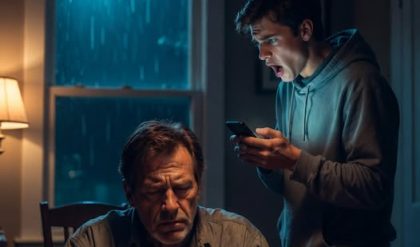
My brother came downstairs in a hoodie, yawning.
“Wow,” he said, peering outside. “Did someone important die or something?”
I turned slowly.
He was holding my guest room laptop.
Still open.
Still awake.
Still logged in.
For one second, the world stopped being metaphorical.
“Where did you get that?” I asked quietly.
He shrugged. “It was just sitting there. I was curious.”
“You accessed it.”
He laughed. “Relax. It’s just your work stuff. There’s no way this is actually federal. You’re dramatic.”
My heartbeat did not change.
It just… flattened.
“Put it down,” I said.
“Come on,” he said, scrolling. “You really think you do anything important? It’s just coding and—”
The front door opened.
No knock.
No warning.
Just authority entering a space like it already belonged there.
My brother froze.
The man at the door looked at me first.
Then at him.
Then at the laptop.
“Step away from the device,” he said calmly.
My brother blinked. “Uh—what?”
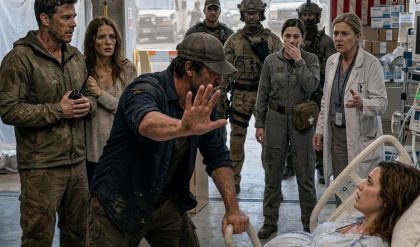
Two more agents entered behind him.
Then three more.
My mother appeared in the hallway, confused and frightened.
My father, still weak from the hospital, standing behind her.
And suddenly the house was no longer a house.
It was a perimeter.
The lead agent walked straight to me.
“You reported unauthorized access,” he said.
“Yes.”
He nodded once. “Good call.”
My brother gave a nervous laugh. “This is insane. It’s just her work laptop.”
The agent looked at him.
Not angry.
Not emotional.
Just final.
“That device contains active federal surveillance data tied to a multi-state financial crimes task force.”
Silence dropped like a weight.
My mother’s hand flew to her mouth.
My father leaned against the wall, suddenly pale.
My brother stopped breathing.
“I didn’t know,” he said quickly. “I was just looking—I thought—”
The agent interrupted him.
“You accessed restricted material.”
“No—I didn’t—I just opened it—”
“Then you are already inside the scope of an active federal inquiry.”
My brother turned to me.
For the first time, his expression wasn’t smug.
It was empty.
“What did you do?” he whispered.
I didn’t answer.
Because the truth wasn’t what I did.
It was what he had just done to himself.
The agent stepped aside slightly.
“Ma’am,” he said to me, “your supervisor authorized immediate extraction of all local breach evidence. We will need your full cooperation.”
I nodded once.
“Take the device.”
He did.
Then he looked at the rest of the house.
“Everyone present will be interviewed.”
My mother grabbed my arm. “Is this about you?”
I hesitated.
Then said the only honest thing left.
“No.”
I looked at my brother.
“It’s about what you opened.”
Part 4
Two hours later, the house was silent again.
But not normal silent.
Surveilled silent.
My brother sat at the kitchen table with his hands folded in front of him like he was trying to disappear. My mother hadn’t stopped crying. My father hadn’t spoken since the agents arrived.
And I stood by the window, watching the SUVs remain parked like dark punctuation marks against our driveway.
The lead agent approached me.
“We’ve confirmed something,” he said.
My stomach tightened.
He opened a file.
“One of the devices your brother accessed contained a backdoor link to an ongoing federal sting operation. That breach triggered an early exposure risk.”
I stared at him.
“What does that mean?”
“It means,” he said quietly, “your presence here compromised an active investigation.”
A pause.
Then:
“And it means someone in your family was not just curious.”
He looked at my brother.
“They were targeted.”
That night, I finally understood the shape of the thing I had brought home.
It wasn’t just my job.
It wasn’t just my files.
It was the attention that came with them.
And attention, in my world, always had consequences.
Before they left, the agent handed me a final instruction.
“Stay available,” he said.
“For what?” I asked.
He paused at the door.
“For when we decide what your family is connected to.”
Then he left.
My brother finally spoke after the cars disappeared.
His voice was smaller than I had ever heard it.
“You knew this could happen?”
I looked at him.
For the first time since I arrived home, I didn’t feel fear.
I felt clarity.
“I knew someone would eventually try to open something they shouldn’t,” I said.
His eyes widened slightly.
“And I warned you,” I added.
“I just didn’t think it would be you.”
Outside, the engines started.
One by one.
Leaving the house behind.
But not alone.
Because whatever had just been opened in our home…
was no longer staying there.