Nora took the folded receipt from her pocket and held it out with two fingers, giving the child space to refuse it. “Someone left this for you.”
Madeline stared at the paper. “Who?”
“I don’t know.”
“Did Aunt Vivian give it to you?”
“No.”
That seemed to matter. The girl reached for the receipt slowly, as if afraid it might vanish if she moved too fast. She read the back. Her lips parted, but no sound came out. Then, very carefully, she folded the note and tucked it inside a small tear in the bear’s stitched ear.
“Daddy,” she whispered.
Nora looked toward the coffee cart. “Your father left it?”
Madeline nodded, but not like a child guessing. Like a child confirming something she had held against every adult who told her to let it go.
“He said if everything got bad, I should remember the blue door,” Madeline said. “He said Grace stays.”
“Who is Grace?”
The girl looked at the fountain as if the water might answer for her. “A woman in a story Daddy tells me. Everyone leaves the house because it gets cold and scary, but Grace stays. Daddy says sometimes staying is how people get saved.”
Nora should have stood up then. She should have given the note, wished the girl luck, and returned to being invisible. Invisibility had kept her alive. Strangers’ problems had teeth. Rich strangers’ problems had entire legal departments, private security, and graves no one found.
Instead, she heard herself ask, “Why can’t he tell you himself?”
Madeline’s face tightened. “Aunt Vivian says he left me.”
“Do you believe her?”
“No.” The answer came so quickly Nora felt something shift in her chest. “My dad is Luca Rossi. He doesn’t leave people he loves.”
Nora knew the name.
Everyone in Boston knew the name, though most said it with their voices lowered. Luca Rossi owned shipping warehouses, restaurants, construction companies, half the private docks between Boston and Providence, and a charity foundation that appeared every December on local news handing out coats to children while reporters carefully avoided mentioning how the Rossi family had made its first fortune.
Some called him a businessman. Some called him a billionaire. Some called him the last respectable mafia boss in New England, which was a contradiction only people with money were allowed to survive.
Nora did not react.
Madeline watched her closely, waiting for the usual flinch adults gave when they heard her father’s name.
Nora only said, “Then keep the receipt safe.”
Madeline’s chin trembled, but she did not cry. “Will you come next Tuesday?”
“That depends.”
“There might be another note.”
Nora looked at the coffee cart, where Aunt Vivian was laughing into her phone. Then she looked back at the child who had been left by a fountain with a coded message hidden in a stuffed bear.
“I’ll check,” Nora said.
The next Tuesday, there was another receipt.
This one came from a restaurant called Marcellino’s, a place on Hanover Street where men in tailored suits ate veal and pretended not to discuss crimes over wine older than most marriages. The receipt was for one espresso and a slice of lemon cake.
The message on the back read: Be brave, Maddie. The song is not finished. Tell Grace the north window is open.
Nora delivered it.
Madeline read it and closed her eyes. “He remembers the song.”
“What song?”
“The music box on my mom’s dresser. It broke the night she died.” Madeline pressed the bear to her mouth, and her next words came muffled. “Daddy wasn’t there. Aunt Vivian says he chose business instead. But Mommy said he tried to come home.”
Nora had spent years teaching herself not to let other people’s grief touch her directly. Grief was heavy, and she already carried enough. But some grief ignored boundaries. A child’s grief had a way of sitting down beside you and waiting until you admitted it was there.
“What happened to your mother?” Nora asked.
“She was sick,” Madeline said. “But not like hospital sick at first. She got tired, and her hands shook, and sometimes she forgot words. Aunt Vivian said Mommy needed quiet, and Daddy had to travel because people were angry with him. Then Mommy died in November, and Aunt Vivian said I had to live with her because Daddy was dangerous.”
“Is your aunt kind to you?”
Madeline gave the answer children give when the truth might punish them later. “She buys me things.”
“That wasn’t what I asked.”
The girl looked at Nora then, really looked, and seemed to decide something. “She doesn’t hit me.”
Nora’s fingers tightened around the rod hidden beneath her coat.
Children should not know how to offer that as evidence of mercy.
By the third Tuesday, Nora was no longer pretending this was not her business. She arrived before eight and circled the garden twice, noting exits, uniforms, cameras, cars parked longer than necessary. She found the third receipt under the same bench.
Still here. Still coming. Do not trust the woman in pearls. Grace will know when to move.
At nine, Madeline arrived with Aunt Vivian, who wore pearls.
That was the first false twist, though Nora did not know it yet. The note seemed to name Vivian as the obvious villain, and obvious villains were useful because they gave frightened people somewhere to put their fear. Vivian was cruel, yes. Controlling, certainly. But Nora had learned that the person holding the leash was not always the person who owned the dog.
Madeline listened to the message and said, “Aunt Vivian has been asking about you.”
Nora did not move. “About me?”
“She asked if I talked to anyone in the park. I said no.”
“Good.”
“She said homeless people steal children.”
Nora almost smiled. Almost. “People say many things when they want children afraid of the wrong danger.”
Madeline looked toward the coffee cart. “There’s a man who comes to the house at night. He isn’t family. Aunt Vivian calls him Mr. Crowe, but the housekeeper calls him August when she thinks nobody hears. He asked if I still had the bear.”
Nora’s mind sharpened.
“Did he touch it?”
“No. I slept with it under my shirt.”
“Smart.”
Madeline’s face changed at the praise, not into happiness exactly, but into a small astonishment that hurt to see. “Daddy says I’m smart.”
“Your daddy is right.”
That night, Nora used the phone.
She had three numbers she trusted. One belonged to Jace, a nineteen-year-old line cook in South Boston who had once slept behind the same church basement where Nora got socks in winter. Jace knew delivery drivers, kitchen staff, men who parked cars at restaurants where Luca Rossi’s people ate. Information moved through poor workers faster than through surveillance networks because no one wealthy believed poor workers were listening.
Jace answered on the fourth ring. “Nora? You alive?”
“Yes.”
“That’s your greeting?”
“It answers the important question.”
He laughed, then stopped because he knew she had not called to chat. “What’s wrong?”
“I need a message passed to Luca Rossi.”
Silence. Then, very carefully, “Tell me you did not just say that.”
“I need a message passed to Luca Rossi.”
“Nora.”
“His daughter is in the Public Garden every Tuesday. Someone is using her as leverage. Notes are being left for her, and someone named August Crowe is asking about her stuffed bear.”
Jace cursed softly. “You know what Rossi is, right?”
“Yes.”
“You know men like that don’t bring people into problems and then let them walk out clean?”
“I’m already not clean,” Nora said.
“That’s not what I meant.”
“I know what you meant.”
Another silence. Jace had survived enough not to waste time arguing with a person who had already decided. “What do you want me to say?”
“Tell him the woman with the gray coat found his receipts. Tell him Vivian wears pearls. Tell him Crowe asked about the bear. Tell him if he wants his daughter alive and free, he has less time than he thinks.”
Jace exhaled. “God help me, I know a dishwasher at Marcellino’s.”
“Thank you.”
“No. Don’t thank me. Just don’t die before I can yell at you.”
Two days later, Nora’s phone rang while she was eating half a turkey sandwich behind a closed bookstore.
The voice on the other end was male, controlled, and tired in the way powerful men sounded when sleep had become an enemy.
“Is this the woman who spoke to my daughter?”
“Who is this?”
“Luca Rossi.”
Nora looked down the alley, then up at the windows. “Prove it.”
A pause. Then he said, “Madeline keeps emergency things in the left ear of her bear because when she was five, she decided secrets needed a soft place to sleep. Her mother called the bear General Button because one eye is sewn higher than the other. The blue door is from a house in a story I made up when Maddie was afraid of thunderstorms. Grace stays because Maddie asked why brave people always leave to fight dragons, and I told her sometimes the brave person is the one who keeps the light on.”
Nora closed her eyes for one second.
“All right,” she said.
“I want to meet you.”
“I don’t meet in cars. I don’t meet in private buildings. I don’t go anywhere your men choose.”
“Name the place.”
“Mike’s Diner on Chelsea Street. Tomorrow. Six-thirty in the morning. Come alone.”
“I can’t come alone.”
“Then don’t come.”
She hung up.
He came alone.
At least, he entered alone, which was not the same thing. Nora saw the black SUV two blocks down and the man pretending to read a newspaper outside the laundromat. She let them exist because power always brought shadows, and a man like Luca Rossi was not going to cross Boston without one.
He was not what she expected.
Nora had imagined a thick-necked man with gold at his wrist and arrogance in his walk. Instead, Luca Rossi was tall, spare, and dressed in a charcoal coat that looked expensive because it did not need to announce itself. His hair was dark with silver at the temples. His face carried the composure of someone who had learned young that emotion was a currency enemies could spend.
But when he saw the receipt Nora placed on the diner table, the composure cracked.
Just for a second.
Enough.
He sat across from her. “Where is she?”
“Safe enough for the moment. Not safe.”
His jaw tightened. “I know.”
“No,” Nora said. “You know she is controlled. You know Vivian has custody. You know Crowe is near her. You do not know what it means that he asked about the bear.”
Luca’s eyes lifted. “Tell me.”
“It means he knows there is something in it, or he thinks there is. Either way, the bear has become a target. If the bear is a target, Maddie is a target. If Maddie is a target, they have moved from waiting to acting.”
Luca stared at her for a long moment, reassessing. “Who are you?”
“Nobody useful on paper.”
“That wasn’t an answer.”
“It’s the only answer I give strangers.”
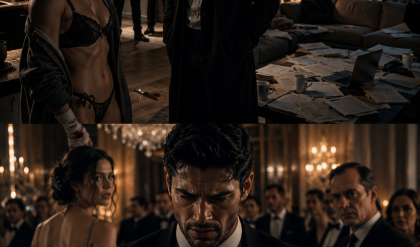
He leaned back. “I have attorneys challenging Vivian’s guardianship. My wife’s will was altered while I was being kept out of the state by a federal investigation that turned out to be built on a witness statement no one can now produce. Vivian claims my presence would endanger Madeline. Crowe is financing her legal team. Every phone at that house is monitored. Every staff member reports to someone. I could storm the place, but if I do that, I become the monster Vivian says I am.”
“You are a monster,” Nora said.
His expression did not change.
“I know the stories,” she continued. “Maybe half are lies. Maybe half aren’t. But your daughter believes you love her, and at the moment that matters more than what men whisper in bars.”
Something like pain moved through his eyes. “I sent the receipts because Serena used to take Maddie to that fountain on Tuesdays. It was the only pattern Vivian did not break because she thought it harmless. I thought if I could keep Maddie steady until the court moved—”
“The court is too slow.”
“I know.”
“Do you?”
He said nothing.
Nora pushed the latest receipt toward him. “The woman in pearls is not the whole problem.”
Luca looked at the message, then at her. “Why are you helping?”
Because once, when Nora had been fourteen, she had waited three days in a motel bathroom for a mother who never came back. Because once, at twenty-three, she had heard a girl crying behind a locked door and had done nothing because doing something would have gotten her killed, and the sound had followed her into every winter since. Because the world was full of people who saw fear and called it someone else’s business.
She said, “Because your daughter asked me if I would come back next Tuesday.”
Luca’s face changed again, and this time he did not hide it fast enough. He looked, for one raw second, less like a mafia king and more like a father who had been forced to live outside the locked room where his child was crying.
“What do you need from me?” he asked.
“Believe me when I tell you twenty minutes may be too late.”
He did not understand then.
He would on Tuesday.
The attempted kidnapping began like a mistake.
That was how these things often began. Not with screeching tires or guns in daylight, but with men who looked official enough that strangers gave them the benefit of the doubt. One carried a leather folder. The other wore an earpiece. Both knew how to smile without warmth.
Nora spotted them before Madeline arrived. They stood near the Swan Boat dock, pretending to check messages while their attention remained fixed on the fountain. Their shoes were too clean for men enjoying a park. Their coats were too similar. Their stillness was wrong.
She called the number Luca had given her.
A man answered, not Luca.
“Tell him two men are at the garden. Gray coats. One folder. One earpiece. They’re watching the fountain.”
“He says hold position. He’s twelve minutes away.”
Nora looked at the path where Vivian was approaching with Madeline.
“Twelve minutes is a lifetime,” Nora said, and hung up.
Vivian looked nervous. That was the second false twist. For one brief moment, Nora wondered if the aunt was afraid because she had changed her mind, because cruelty had limits, because even selfish people sometimes discovered a conscience when a child’s hand was in theirs.
Then Vivian bent, kissed the air beside Madeline’s cheek, whispered something that made the child stiffen, and walked away too quickly.
Madeline came to the fountain alone.
Nora sat beside her. “Listen carefully. Two men are here for you. Your father knows. He is coming. Until then, you stay behind me.”
Madeline did not cry. Her hand went to the bear’s ear. “Aunt Vivian said if I made a scene, Daddy would go to prison.”
“She lied.”
“Will they hurt you?”
“Maybe.”
“I don’t want that.”
Nora looked at her then, and the answer came from a place older than the park, older than the overpass, older than fear. “I have been hurt before, Maddie. It did not make me disappear.”
The men approached at 9:17.
By 9:19, one was on the ground with his folder scattered open, fake custody papers sliding over the pavement. The other was bent over the fountain edge, gasping because Nora had put the rod exactly where breath became difficult without breaking the ribs. She had moved fast, but not wildly. Violence done for survival was not rage. It was geometry. Angles, distance, timing, consequence.
People finally noticed.
A woman screamed. Someone shouted for police. Phones appeared, hungry and useless.
Madeline clung to Nora’s coat with one hand and the bear with the other.
Then Luca Rossi arrived.
He did not arrive like a criminal. He arrived like a storm wearing a tailored coat, with two attorneys, three security men, and a uniformed Boston police lieutenant who looked deeply unhappy to be there. Luca crossed the grass so fast one of his men had to jog to keep up.
Madeline broke away from Nora and ran.
“Daddy!”
Luca dropped to his knees before she reached him. Not crouched. Dropped. He caught his daughter with both arms and held her so tightly her shoes lifted off the ground. His face went into her hair. For several seconds, the man Boston feared did not speak at all.
Then Vivian screamed from the path, “He’s abducting her! Somebody stop him!”
That was the trap.
The police lieutenant moved. The attorneys began talking. Luca’s security closed ranks. The gray-coated men, recovering now, started shouting that they had been authorized by the child’s legal guardian. Vivian pointed at Nora and cried, “That woman attacked them! She’s unstable! She’s been stalking my niece for weeks!”
Phones kept recording.
Nora understood the shape of it all at once.
The men had not only come to take Madeline. They had come to provoke Luca into looking exactly like the dangerous man Vivian described in court. If Luca struck one of them, if he threatened Vivian, if his security manhandled anyone on camera, Vivian would not need truth. She would have images.
And images were often enough.
So Nora did the one thing nobody expected.
She raised her voice.
Not a shout. A command.
“Madeline Rossi has something to say.”
The park noise shifted.
Vivian’s eyes flashed. “She is a child. She’s terrified.”
“Yes,” Nora said. “She is. Let her say why.”
Luca looked at Nora over Madeline’s head. He understood before anyone else did. Slowly, painfully, he released his daughter enough for her to turn.
Madeline stood in the circle of adults, small and shaking, with General Button clutched against her chest. Her father kept one hand on her shoulder. Nora stood a step away, rod lowered, visible but still.
Madeline looked at Vivian.
“You told me Daddy left because he didn’t want me,” she said. Her voice trembled, but it carried. “You told me Mommy died because Daddy chose work. But Mr. Crowe said Daddy would do anything if they had me. He said I was leverage. I didn’t know that word, so I looked it up in the dictionary at school.”
Vivian’s face went white beneath the makeup.
Madeline pulled the torn ear of the bear open and took out the receipts. “Daddy sent me messages. Aunt Vivian tried to find them. Mr. Crowe wanted the bear. And today she told me if I screamed, Daddy would go to prison.”
The lieutenant looked at Vivian differently then.
Not enough to fix everything. Not enough to heal months of fear. But enough to turn the trap sideways.
Luca’s attorney stepped forward with emergency filings. The lieutenant asked the gray-coated men for identification. One produced a private security license. The other produced a driver’s license and silence. Vivian kept talking until her own lawyer, arriving too late and sweating through his collar, told her to stop.
Nora stepped back.
She knew this part. After the moment of danger came the moment when people with documents reclaimed the world. People like Nora became inconvenient again. Witness, vagrant, unstable woman with a rod. Useful for five minutes, disposable afterward.
She picked up her backpack.
Madeline saw.
“Don’t go,” the girl said.
Everyone looked at Nora then.
She hated it.
Luca rose, one hand still holding Madeline’s. “Nora.”
She did not remember telling him her name.
Jace, probably. Or Luca Rossi had done what powerful men did and found out. Her body prepared for anger, but Luca’s voice held no ownership.
“You saved my daughter,” he said.
“No,” Nora replied. “She saved herself. I just stood in the way long enough for people to hear her.”
Madeline shook her head fiercely. “You stayed.”
The word moved through Nora like a hand finding an old bruise.
Grace stays.
For the next two weeks, Nora tried to disappear.
It was not easy. The video from the park went everywhere. Local news blurred Madeline’s face but not Nora’s. Headlines called her “Homeless Hero,” which made her want to throw the phone into the harbor. Strangers tried to hand her money with tears in their eyes. A podcaster offered to “tell her story.” A city council aide left a message at the church shelter asking whether she would appear at a homelessness awareness event, as if awareness had ever put a lock on a door.
Worse than attention was the other thing.
Recognition.
On the fifteenth day after the park, Nora returned to the underpass at dusk and found a white envelope tucked inside the rolled edge of her sleeping bag.
No stamp. No name.
Inside was a photograph.
Nora at twenty-two, wearing a navy blazer, standing beside a woman with auburn hair outside a courthouse in Portland, Maine.
On the back, one sentence:
You should have stayed dead, Eleanor.
Nora sat very still.
The rod was beside her. Her phone was in her pocket. Traffic groaned overhead. For six years, she had lived with the knowledge that the past was not finished; she had simply outrun it. Now the past had found the bench in Boston where she slept.
Her real name was Eleanor Vale.
Once, she had been the daughter of a shipping millionaire whose company moved freight along the Atlantic coast. Not a billionaire’s daughter, not an heiress in the fairy-tale sense, but close enough that newspapers used flattering words when her father donated to hospitals. At twenty-two, Eleanor had discovered that part of Vale Maritime’s logistics network was being used by a trafficking ring moving women through private docks under false work documents.
She had reported it.
She had trusted the wrong federal liaison.
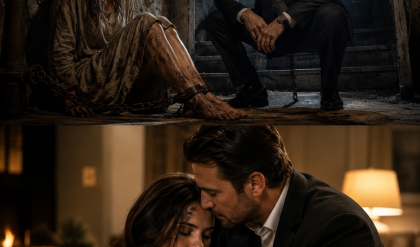
Her father died in a car accident three weeks later. Her name appeared in a sealed witness file. The evidence vanished. The man who had promised protection delivered her instead to the people she had exposed. For eighteen months, she learned what powerful criminals did to women who knew where bodies were buried.
She escaped because another captive started a fire and because Eleanor decided, in one bright instant, that dying while running was better than living in a locked room.
This story was written by the author “hoanganh1” – if you see any account copying it, please report it to respect the author. Thank you very much, readers!!
After that, she became Nora Kincaid. She owned nothing because everything with her real name attached to it could be tracked. She stayed outside because shelters required identification and systems asked questions that traveled. She carried the rod because no locked room would ever hold her again.
Only three people knew even pieces of that story.
Jace knew she had been hunted. A nurse at a clinic in Roxbury knew scars did not always come from accidents. And now, somehow, Luca Rossi knew enough to send his car but not his men.
He came himself.
Nora saw him before he reached the overpass. He stopped ten feet away, hands visible, alone except for the city behind him.
“I didn’t leave the envelope,” he said.
“I know.”
“How?”
“You would have used better paper.”
His mouth tightened, almost a smile, then disappeared. “Crowe knows who you were.”
Nora stood with the rod in hand. “So do you.”
“Not because I looked before the park,” Luca said. “After the video spread, my people searched for anyone who might come after you. Your old name surfaced in connection with August Crowe.”
The air seemed to thin.
Luca watched her face. “You know him.”
“I knew the man he worked for.”
“Crowe wasn’t working for the man,” Luca said quietly. “He was the man behind the man.”
Nora’s grip tightened until her palm hurt.
Of course. That was the final shape. August Crowe had not entered Madeline’s life because of Luca alone. He had entered because Serena Rossi, before she died, had been investigating him. Luca’s wife had not merely been sick; she had been gathering records from old shipping companies, shell charities, adoption agencies, private clinics. She had found threads connecting Crowe to Vivian’s money, to altered custody papers, to the same dock network Eleanor Vale had tried to expose.
“She knew,” Nora said.
“Serena knew enough to be afraid,” Luca replied. “She hid something before she died. Crowe thinks it’s in Madeline’s bear.”
“The receipts said Grace would know when to move.”
“I wrote those words because Serena wrote them to me first,” Luca said. “In her last letter. I thought Grace was the bedtime story. I thought she meant Maddie needed hope.”
Nora looked at the photograph in her hand. The auburn-haired woman beside her outside the courthouse had been an attorney named Serena Avery.
Not Rossi then.
Avery.
Nora remembered her suddenly with painful clarity. Serena had been young, serious, kind in a way that did not ask gratitude. She had met Eleanor twice before the case collapsed. She had whispered in the courthouse hallway, “If this goes bad, don’t wait for permission to run.”
Nora had not known Serena married Luca Rossi. She had not known Serena had a daughter. She had not known the dead could keep promises through paper scraps and children’s stories.
“She called me Grace,” Nora said.
Luca went still.
“In the courthouse,” Nora continued, her voice roughening despite every effort. “I was scared. I told her I didn’t feel brave. She said bravery was overrated and grace was better because grace meant you could still move even after the world made you crawl. She said if I ever survived, I should not waste it.”
Luca closed his eyes.
For the first time, Nora saw him not as a dangerous man, not as a father, not as a billionaire surrounded by blood-colored rumors, but as a widower receiving one more piece of his wife after thinking there were no pieces left.
“Serena didn’t hide the evidence in the bear,” Nora said.
Luca opened his eyes.
“She hid the clue there for Maddie. The evidence is somewhere Grace would know.”
The house with the blue door was not a fairy tale.
It took Nora two days to understand that.
She found it in memory, not records. During the old investigation, Serena Avery had once taken Eleanor to a safe house in Gloucester after a hearing ran late and a suspicious car followed them from Portland. The house had been small, weather-beaten, with a blue door and a north-facing window that stuck open unless you lifted the frame before locking it.
Tell Grace the north window is open.
Nora and Luca drove there at dawn with Madeline asleep in the back seat, because Madeline refused to be left behind and because, as she said with eight-year-old logic, “It’s my bear and Mommy’s clue.”
The house had been sold twice, abandoned once, and was currently owned by a shell company Luca traced back to Serena herself. The blue door was faded nearly gray. The north window was painted shut from the outside but loose from within.
Nora climbed through it because she was the only adult thin enough and because her body remembered entering places quietly. Inside, dust covered the floor. The house smelled of salt, old wood, and waiting.
The safe was behind the wall under the staircase.
The combination was not a date. Not a birthday. Not an anniversary.
It was the tune from Madeline’s broken music box translated into numbers from piano keys, a trick Luca understood only after Madeline hummed the first line.
Inside were three drives, a stack of notarized documents, medical reports, shipping manifests, photographs, and a letter addressed to Luca, Madeline, and Grace.
Luca read the first page standing in the dust with his daughter pressed against his side and Nora near the door, ready to run from ghosts that had finally become paper.
Serena had known Vivian was compromised. She had known Crowe was poisoning her medication slowly enough to mimic neurological decline. She had known Luca’s forced absence was engineered through a federal contact Crowe controlled. She had known the old Vale Maritime case had never died; it had been buried under new company names and respectable charities.
And she had known Eleanor Vale might still be alive.
If Grace finds this, Serena had written, tell her I am sorry I could not save her then. Tell her staying alive was enough. Tell her that if she is the one reading this, she has already done more good than she knows.
Nora turned away before anyone could see her face.
But Madeline saw anyway.
Children always saw.
The legal collapse of August Crowe took months, not minutes. That was the part stories often lied about. Evidence did not become justice simply because good people found it. Documents had to be verified. Judges had to be convinced. Corrupt officials had to choose between loyalty and prison. Reporters had to receive enough truth that no one could quietly bury it again.
Luca Rossi, who had solved many problems in his life with fear, did something harder this time.
He waited.
Not passively. Never passively. He hired the right lawyers, protected the witnesses, handed evidence to federal prosecutors outside Crowe’s reach, and kept his men away from Vivian even when rage made the air around him cold. When Vivian was arrested for conspiracy, fraud, and child endangerment, Luca stood across the courthouse lobby with Madeline’s hand in his and did not say a word to her.
Vivian wept anyway.
Perhaps for herself. Perhaps for the life she thought Crowe would buy her. Perhaps, in some small ruined room of her heart, for the sister she had betrayed.
Nora did not care which.
Crowe tried to run through Logan Airport with a Canadian passport and a face altered by panic. He was stopped before boarding. The news called him a philanthropist, then a financier, then an accused trafficker, then finally what he was: a predator with money.
The old Vale case reopened.
Eleanor Vale was declared alive in a courtroom where nobody clapped, which was good, because Nora might have walked out if they had. Her father’s death was reinvestigated. Her company shares, frozen and stolen through forged documents, became the subject of another legal battle she had no energy to fight until Luca’s attorney, a terrifying woman named Marisol Grant, looked at her over a stack of files and said, “You survived men who tried to erase you. Do not let accountants finish the job.”
Nora took back enough to fund what came next.
She did not become the woman magazines wanted. She did not put on silk and tell an inspirational story beneath soft lights. She did not let anyone photograph her holding the rod like a symbol. The rod was not a symbol. It was history, and history did not become cute because people needed a headline.
Instead, she rented a building in East Boston with a kitchen, showers, legal aid offices, and rooms where young people aging out of foster care could sleep without giving up their names at the door. Luca’s foundation funded half. Nora funded the other half. Jace became the kitchen manager after earning his promotion at the restaurant. Marisol volunteered one Saturday a month and scared landlords into returning deposits. The nurse from Roxbury ran a clinic room on Wednesdays.
Madeline named the place The Blue Door.
On the first Tuesday after it opened, Nora stood outside the building before sunrise, keys in her hand, and did not know what to do with the feeling in her chest. She had slept indoors for three months by then, in a small apartment with three locks and windows facing the street. She still woke before dawn. She still checked exits. The rod still leaned beside her bed.
Healing, she had learned, was not a door you walked through once. It was a place you returned to, suspicious and tired, until one day your body believed you might be allowed to stay.
A black car pulled up at the curb at eight.
Luca got out first. Madeline followed, carrying General Button, now repaired except for one ear left deliberately loose because “secrets still need a soft place.” Luca looked at the sign above the door, then at Nora.
“Serena would have liked this,” he said.
Nora swallowed. “I hope so.”
“She would have corrected the paint color.”
Madeline gasped. “Daddy.”
“What? Your mother had strong opinions about blue.”
Nora laughed before she could stop herself.
It surprised all three of them.
Madeline beamed as if she had personally dragged the sun over the harbor. “You laughed.”
“I do that sometimes.”
“Not like that.”
Luca’s gaze lingered on Nora, warm and careful. He had become good at careful. He never stepped closer than she allowed. Never offered what sounded like ownership. Never mistook gratitude for permission. Between them lived something unnamed, not because it was weak, but because the best things in Nora’s new life were allowed to grow without being trapped too soon by language.
Madeline took Nora’s hand and pulled her inside.
The building filled slowly that morning. A boy with a trash bag of clothes. A girl who would not give her last name. Two brothers who ate six pancakes each and pretended they were not hungry enough for six more. A veteran who cried in the shower room because hot water could undo a person. Volunteers moved carefully, learning Nora’s first rule: nobody here is a project. People were guests, clients, neighbors, kids, survivors, difficult, funny, angry, brilliant, frightened, stubborn, alive — never projects.
At noon, Madeline stood on a chair in the common room and announced that her father would finish the story about Grace.
Luca looked at Nora. “Is that an order?”
Madeline nodded. “Yes.”
So Luca told it.
He told the room about a house with a blue door where everyone thought the story was about a brave woman waiting through a storm. He told them the woman stayed not because she was never afraid, but because she knew what it meant to be left. He told them people came to the house carrying secrets, hunger, shame, and names they were not ready to use. Grace did not fix them. Grace did not ask them to be grateful. Grace kept the light on, learned where the floorboards creaked, remembered who liked coffee and who needed silence, and stood at the door when wolves came dressed as men.
“And the twist,” Madeline interrupted, “is that Grace thought she was nobody.”
Luca smiled gently. “Yes. Grace thought she was nobody because people had treated her that way.”
“But she wasn’t,” Madeline said.
“No,” Luca agreed. “She was the reason the house became a home.”
The room was quiet when he finished.
Nora stood near the back, arms crossed, rod nowhere in sight. It was in her office now, mounted beside the door where she could reach it if she needed to, but not in her hands. That mattered. The line between her and the world had not vanished. It had changed shape.
Madeline slipped beside her and leaned against her coat.
“Did Daddy tell it right?” she whispered.
Nora looked around the room: at Jace laughing in the kitchen, at Marisol arguing softly with a landlord on the phone, at Luca stacking chairs without being asked, at children eating food they did not have to earn by being charming, at the blue door standing open to the cold Boston street.
For a long time, Nora had believed survival meant leaving before anyone could lock the door behind her.
Now she understood another kind.
Sometimes survival was staying long enough to choose the lock yourself. Sometimes it was opening the door for someone else. Sometimes it was believing, against all evidence, that the place where you had once been invisible could become the place where you were finally seen.
“Yes,” Nora said, resting one hand on Madeline’s shoulder. “He told it right.”
Outside, the city moved as it always had — loud, hurried, merciless, alive. But inside The Blue Door, the heat worked, the coffee was fresh, and nobody had to wait alone by a fountain for someone to come back.
Grace stayed.
And this time, so did Nora.
THE END