The next morning, I woke to pale light slipping through thick curtains. For two seconds, I forgot where I was. For two more, I remembered everything.
I pulled on Aunt June’s oversized gray T-shirt, twisted my hair into a messy bun, and went downstairs barefoot because my feet had always liked cold wood. Aunt June used to say I would catch pneumonia. Aunt June had died of cancer, so her medical authority had limits.
The kitchen was enormous, all black marble and copper pans and windows facing a garden still wet from rain. I pushed through the swinging door expecting emptiness.
Instead, I found a man leaning against the island with his back to me.
He was barefoot too.
That was the first thing I noticed after the tattoos. Black ink ran from one shoulder down his arm, disappearing beneath the waistband of dark training pants. His back was broad, his hair black and damp, and he held a small white cup in one hand while reading a financial report with the calm concentration of a man who had never been interrupted without consequences.
I stopped.
He did not turn immediately. He finished the line he was reading, set the cup down without a sound, and then looked over his shoulder.
His eyes moved from my face to my bare feet, then back up.
A slow, knowing smile touched his mouth.
“You don’t look like Keegan’s sister,” he said.
His voice was rough and low, New York polished over something older. Not foreign exactly. Just sharpened.
“You look like the reason he drinks standing up.”
I crossed my arms. “And you look like a man who thinks that cup makes him interesting.”
He glanced at the espresso cup.
Then back at me.
For half a second, amusement cracked through his expression before he buried it.
“Silas Crowe.”
“Nora Vale.”
“I know.”
“Then why say your name?”
“To see if you’d give me yours anyway.”
Before I could answer, a man in his fifties entered through the side door carrying fresh bread. He had silver hair, a scar along his jaw, and the emotional range of a courthouse wall. He looked at me, then at Silas.
“Miss Trouble,” he said.
Then he set the bread down, took an apple, and left.
I blinked.
“That’s Duke,” Silas said. “He’s friendly.”
“That was friendly?”
“For Duke, that was a parade.”
I moved toward the cabinet. “I came for coffee.”
“You don’t drink what’s in that cabinet.”
I froze with my hand on the handle.
Silas pushed his cup an inch across the marble. “You drink short espresso. Dark roast. Colombian if you can get it. No sugar unless you’re angry, then too much.”
I stared at him. “Did Keegan give you a file?”
“Keegan gives warnings, not files.”
“I’m not drinking your coffee.”
“I didn’t offer.”
“Good.”
“Good.”
We stood there across the island like two people refusing to admit the same room had changed temperature.
Then he said, “Welcome to the house, Nora.”
I hated the way he said my name. As if he had tested the weight of it privately and decided where to place it.
I left without the coffee.
For two weeks, I avoided Silas Crowe with the dedication of a woman avoiding a bad decision she had already imagined too clearly.
It did not work.
His presence moved through the house even when he wasn’t in the room. The weight room sounded before sunrise. The library light burned past midnight. His coat appeared once over a dining chair on a rainy night, too large to be mine, smelling faintly of cedar and smoke. I did not wear it. I took it upstairs and hung it over a chair, which was worse because then I had to see it.
On the third day, the bitter coffee in the kitchen cabinet had been replaced by the roast I bought from a café near Pratt.
On the fifth day, a black SUV appeared outside school when rain started, and Duke opened the back door from the driver’s seat.
“I didn’t ask for a ride,” I said.
“Miss Trouble, I can block traffic in Brooklyn until your pride drowns, or you can get in and pretend this was weather-related.”
I got in.
On the eighth day, I found a note in the margin of the schedule I had taped to the kitchen refrigerator.
Submission due Thursday. Professor will move it to Monday. She always does.
The handwriting was precise, all capital letters, like the person who wrote it had learned blueprints before birthday cards.
My professor moved the deadline on Thursday.
I said nothing.
Silas said nothing.
That was worse.
Maya noticed something was wrong during lunch in the studio. I was adjusting a model roof with tweezers when she leaned over and whispered, “You have rich-man face.”
I almost cut the wrong beam. “I have what?”
“Rich-man face. It happens when a woman is trying to convince herself a dangerous man is only being polite.”
“You invented that.”
“I study people. You study windows.”
“He is not polite.”
“Oh, worse.” Maya sat back, delighted. “He’s rude, observant, and hot.”
“I never said hot.”
“You said everything except hot.”
I glared at her.
She grinned. “Girl, your silence just bought him a townhouse.”
That night, I went downstairs for water after one in the morning and heard Silas speaking in the library.
The door was slightly open. A strip of gold light touched the hallway runner. His voice was low, controlled, and cold in a way that needed no translation. I understood none of the coded language, but I understood the rhythm of command. I had heard men like my brother use it when they forgot I was near.
I should have walked away.
Instead, I stood there barefoot with a glass pitcher in my hand, listening until he ended the call.
“Nora,” he said.
Not a question.
I pushed the door open.
He sat behind a dark wooden desk, sleeves rolled, phone beside a stack of folders. A full glass of whiskey rested near his hand, untouched. He looked exhausted, and that unsettled me more than his tattoos, his reputation, or the gun I now saw lying half-hidden beneath a file.
“I came for water,” I said, holding up the pitcher like evidence.
His eyes moved over my face. “Are you okay?”
I had expected a joke. A taunt. A line about bare feet or midnight habits.
That gentle question struck harder than any of them.
“I’m fine.”
“You don’t look fine.”
“You look like you threaten people over speakerphone for relaxation, so maybe we both have presentation issues.”
His mouth softened, but he did not smile.
“Did you eat?”
“Why do men in this house think feeding me counts as conversation?”
“Because you skip meals when you’re working.”
“You watching me now?”
“Yes.”
The honesty landed between us with a weight neither of us knew where to put.
I tightened my hand around the pitcher. “I sleep better alone.”
“Then go sleep,” he said quietly. “And drink your water.”
I left with my pulse in my throat.
The party happened three weeks after I moved into the house.
Keegan called it a benefit dinner. Duke called it “a room full of expensive lies.” Silas said nothing, but a dress box arrived for me that morning wrapped in silver paper.
I sent it back unopened.
That afternoon, I bought my own dress from a boutique in Long Island City. It was simple, black, below the knee, with one strap crossing my back. I paid with my own debit card and walked out feeling as if I had recovered a small country.
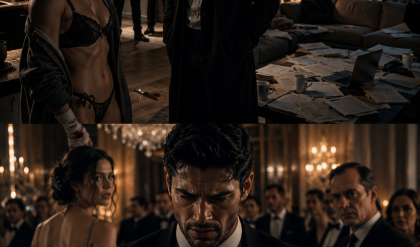
When I came downstairs that evening, the entrance hall was full of men in tuxedos and women glittering under chandeliers. Keegan stood near the door, expression hard. Duke watched the stairs like he had personally supervised gravity.
Silas was speaking to a man near the fireplace.
Then he saw me.
His sentence stopped.
Not faded. Stopped.
The man beside him followed his gaze and wisely disappeared.
Silas crossed the hall slowly. In black tie, his tattoos hidden beneath a white shirt, he looked less like a criminal and more like the law powerful men invented for themselves.
“I thought you’d choose red,” he said softly.
“For you?”
“For the room.”
“I don’t dress for rooms.”
“No,” he said, eyes steady. “You don’t.”
Keegan stepped between us before the silence could become visible.
“Car in ten,” he said. “Duke drives. No wandering.”
“I’m not a toddler.”
“No,” Silas said, still looking at me. “Toddlers listen.”
I smiled. “You would know. You communicate at the same emotional level.”
Duke coughed once. It might have been a laugh.
The benefit was held on the top floor of a Manhattan tower overlooking the East River. It had chandeliers, glass walls, old money, new money, and men who spoke in sentences with trapdoors. Keegan introduced me to donors, lawyers, and two councilmen who had the strange nervous polish of people pretending not to know where the money came from.
I was standing near the bar, studying the ceiling structure because old habits are safer than eye contact, when a man approached.
He wore an Italian suit and a smile too wide for sincerity.
“Miss Vale,” he said. “Marco Bell.”
“We weren’t introduced.”
“No.” His smile grew. “I insisted.”
I did not take his hand.
He took mine anyway, pressing his thumb briefly against my pulse before I pulled away.
“You study architecture, yes?”
My stomach cooled. “Why?”
“You look at rooms like you’re counting exits.”
“Maybe I am.”
“Smart girl.”
“Not a girl.”
His eyes dropped to my mouth. “No. Not that.”
Before I could step back, a hand settled at the small of my back.
Warm. Firm. Possessive.
I knew without turning.
“Bell,” Silas said over my shoulder.
The room seemed to lower its voice.
Marco’s smile did not move, but his eyes changed. “Crowe. I didn’t know she was yours.”
“She’s not a topic for you.”
“I asked a harmless question.”
“You don’t have harmless questions.”
Silas guided me toward a side hallway. It was not a request, and that made me furious enough to obey only because Marco was watching.
The door closed behind us, muffling the party into a hum.
I turned on Silas. “You don’t get to move me like furniture.”
His jaw tightened. “Do you know who that man is?”
“I know what he was doing.”
“No, you don’t. He wasn’t flirting. He was measuring. School schedule. Routine. How close he could stand before someone stopped him.”
“I can defend myself.”
“Not from him.”
“You don’t know what I can survive.”
He stepped closer. I stepped back and met the wall.
His hand came up beside my head, not touching me. His face was so near I could see the faint scar above his eyebrow, the tension at his mouth, the fight he was having with himself.
“You wouldn’t last one day with me, Nora,” he said. “And you have no idea how badly I want to be wrong.”
The sentence should have frightened me.
It did something worse.
It made me understand that the warning was not about what he would do to me. It was about what he was afraid he would feel.
So I smiled.
“Funny,” I whispered. “Men only warn women about how dangerous they are when they’re afraid the women will find out they’re softer than advertised.”
His control cracked.
Not dramatically. Not fully. Just enough.
His gaze dropped to my mouth. His fingers lifted, brushed the corner of my jaw so lightly it might have been a mistake, then withdrew as if he had touched flame.
For one suspended second, I thought he would kiss me.
Instead, he stepped back.
“In forty minutes,” he said, voice rough but controlled, “you leave through the front door with me. Everyone who needs to see will see.”
“See what?”
“That Marco Bell made a mistake when he looked at you.”
“And what am I supposed to be in this performance?”
His eyes held mine.
“My problem,” he said. “Not Keegan’s. Not Bell’s. Mine.”
That should have made me angrier.
It did.
But not only angry.
On the ride home, nobody spoke. Keegan sat in front with Duke. Silas sat beside me in the back, looking out the window as bridge lights slid over his face.
Halfway across the bridge, he dropped a small black key fob into my purse.
“What is this?” I asked.
“A tracker.”
“Absolutely not.”
“It’s not for you.”
I stared. “What does that mean?”
“It means if you decide to walk into trouble, I need to know where to follow.”
“I don’t need a babysitter.”
“I know,” he said, eyes still on the window. “The babysitter is for me.”
That night, I dreamed of tires.
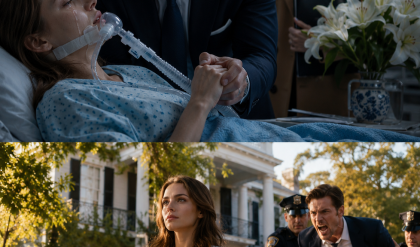
I was six years old again, strapped into the back seat of my mother’s car. Rain struck the windows so hard the world outside vanished. My mother turned around to check my seat belt, and for one perfect second I saw her whole face clearly. Her dark hair stuck to her cheek. Her mouth shaped my name.
Then came headlights.
Then the sound of tires losing the road.
I woke at 3:04 with my throat closed.
I had not had that dream in seven years.
I went downstairs without thinking. The kitchen light over the sink was on, dim and gold. Silas sat at the island with a laptop open and folders spread around him.
He looked up once, then closed the laptop.
“Sit.”
I sat because my knees were not trustworthy.
He did not ask what happened. He put water on the stove, took down my tea, measured the leaves, waited, poured, and placed the mug in front of me. Then he sat across from me with hot water in his own mug and said nothing.
The silence was not empty. It held.
So I spoke into it.
“Tires in the rain,” I said. “That’s how the nightmare starts.”
His eyes did not move from my face.
“My mom died when I was six. Car accident. Wet road. No witnesses. That’s what everyone said. But I remember another car. I remember someone taking me from the hospital afterward. A woman named Eliana. She took care of me until I was eight. Then she disappeared. Everyone said she went home to Florida. I never believed it.”
Silas’s fingers tightened around his mug.
I noticed, but only vaguely. I was too tired to guard every word.
“After Eliana, there was Aunt June. She raised me until I was thirteen. Then she died too. Keegan became… Keegan.” I laughed softly, without humor. “You lose your mother twice in a family like mine. First the woman who gave birth to you. Then every woman who tries to stand where she stood.”
Silas said nothing for a long time.
Then, very quietly, he said, “Eliana was kind to you.”
It was not a question.
I looked at him. “How would you know that?”
His face changed so fast I almost missed it. “Keegan mentioned her.”
“No, he didn’t.”
The silence sharpened.
For the first time since I had entered the house, Silas looked away first.
I was too exhausted to chase it. My hands had stopped shaking. The tea was warm. The kitchen was quiet. At some point, I rested my head on my forearm.
When I woke, sunlight filled the kitchen.
The mug was washed and drying beside the sink. A fresh espresso sat in front of me, along with a croissant from a bakery I had once mentioned loving in Park Slope. Silas’s gray coat lay over my shoulders.
Beside the plate was a note written in his precise capital letters.
EAT.
I folded the note and put it in the coat pocket.
That terrified me more than the tracker.
By then, the thing between us had stopped being a game. Silas no longer taunted me with words. He taunted me with attention.
He appeared in rooms where I worked and pretended to need books. He corrected my grip on a model blade once, touching only my fingers, and then walked out as if he had not left my pulse ruined. He wrote reminders on my schedule when I skipped dinner. I wore his coat to school one rainy morning and pretended not to notice Duke smiling in the rearview mirror.
Maya noticed immediately.
“You’re wearing his coat,” she said.
“It was raining.”
“You own jackets.”
“This one was near the door.”
“His door?”
I ignored her.
She leaned closer. “Nora Vale, you are one dramatic thunderstorm away from kissing a crime lord.”
“He’s not a crime lord.”
“What is he?”
I thought about Silas at the kitchen island, pouring tea without asking what was wrong. I thought about him in the hallway, almost kissing me and choosing not to. I thought about his voice when he said, My problem.
“Complicated,” I said.
Maya sighed. “That word has ruined more women than tequila.”
The kidnapping happened on a Tuesday.
I stayed late in the studio finishing a presentation model. Maya left at four, shouting that if I died under a pile of foam board, she wanted my coffee grinder. I left forty minutes later, carrying my model case, Silas’s coat over my arm because the rain had stopped.
A white van idled across the street.
I noticed it and dismissed it, because Brooklyn is full of white vans.
Then the side door opened.
Three men got out.
Marco Bell came first, smiling.
“Miss Vale,” he said. “We need to talk.”
I opened my mouth to scream. A hand covered my face. A cloth pressed against my nose and mouth, sweet and chemical. Panic exploded through my chest.
They did not let me pass out.
That was the cruelty of it. They wanted me awake.
They shoved me into the van, took my phone, took my watch, and threw my backpack onto the floor near my feet. One man missed the small black key fob in the lining of my purse.
Silas’s tracker.
I closed my fingers around it and said nothing.
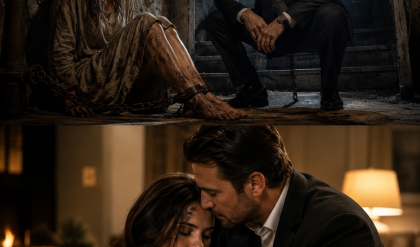
They tied me to a chair in a warehouse that smelled of oil, rust, and old smoke. Gray light leaked through high windows. Four men, plus Marco. Two exits. Metal stairs to a mezzanine. Gasoline smell stronger near the north wall.
Aunt June had loved crime shows. At fifteen, I had mocked them. At twenty-two, tied to a chair with duct tape cutting into my wrists, I thanked every ridiculous survival tip she had ever repeated at the television.
Marco crouched in front of me.
“You’re very calm.”
“I’m very disappointed,” I said. “I expected better staging.”
He laughed. “Keegan will trade the Red Hook access by midnight.”
“For me?”
“For you.”
“My brother doesn’t negotiate well when he’s angry.”
“I’m counting on it.”
“You should count something easier. Like teeth. Yours may become relevant.”
The slap turned my face sideways.
It hurt. It also steadied me.
“You have spirit,” Marco said.
“And you have a van. Everyone brings what they can.”
He stood, smile thinning. “Silas Crowe will come first. Men like him always do. They think violence is love if they bleed enough while doing it.”
I looked at him then.
“Is that why you took me? To punish Silas?”
“To remind him he doesn’t own every room he enters.”
“He doesn’t own me.”
“No,” Marco said softly. “But he wants to. That makes you useful.”
The first sound was not an explosion. It was a vibration under my feet, a deep metallic shudder that ran through the chair.
Then came the helicopter.
Low. Close.
Marco’s smile vanished.
I breathed slowly through my nose.
A blast hit the side door. Lights flickered. Someone shouted. Men ran. The warehouse erupted into gunfire and smoke and the sharp smell of burning gasoline.
I let my head drop forward and pretended to faint.
The man nearest me moved away.
I twisted my right wrist until skin tore. The duct tape loosened by a fraction, then another. My hand slipped free just as the steel door blew inward.
Silas entered through smoke and orange light.
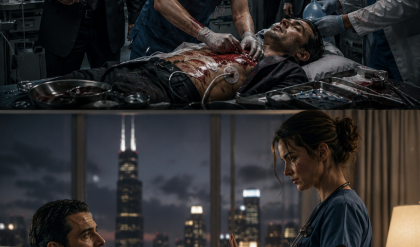
He was covered in blood.
Not movie blood. Not decorative. Real blood streaked his shirt, his jaw, his hands. His eyes swept the warehouse, found me, and something in his face broke so completely that I forgot to be afraid of the gun in his hand.
He crossed the distance to me fast and dropped to his knees.
“Where?” he asked, voice cracked. His hands took my face, turning it toward the light. “Where are you hurt?”
“I’m okay.”
“Where, Nora?”
“The slap. Wrists. Nothing else.”
His breath left him unsteadily. He pressed his forehead to mine for half a second, eyes closed.
“Forty-two minutes,” he whispered. “The tracker stopped here forty-two minutes ago.”
“You came.”
His eyes opened.
“I will always come.”
He cut the tape with a knife and lifted me before I could argue. I told him I could walk. Duke appeared at the exit with a gun in one hand and his usual expressionless calm.
“Miss Trouble,” he said. “Can the lady walk?”
“Yes,” I lied.
Duke looked at Silas. “He’s not putting you down.”
“I noticed.”
Outside, cold air hit my face. The SUV waited with the engine running. Silas placed me in the back seat as if I were glass, got in beside me, and pulled me against him. I did not resist. I put my head against his chest and felt his heart beating too fast.
For a long time, no one spoke.
Then Silas said, “I lied.”
I opened my eyes.
“You would survive one day with me,” he said, voice rough in the dark. “I’m the one who couldn’t survive losing you.”
My throat closed.
“I tried not to want you. I tried because of Keegan, because of the life, because men like me ruin what we touch. Then you walked barefoot into my kitchen and insulted my coffee cup, and every rule I had became decorative.”
I laughed once, shakily.
His hand found mine under his jacket.
“I’m not a man who prays,” he said. “But I prayed on the way to that warehouse.”
A passing car’s headlights swept through the SUV and lit our hands.
They lit my grandmother’s ring.
The old gold band. The tiny blue diamond-shaped stone.
Silas went still.
Not surprised. Not curious.
Stricken.
The blood drained from his face so fast I sat up.
“Silas?”
He closed his hand around mine a little too tightly, then loosened it with visible effort.
“Nothing.”
“That wasn’t nothing.”
He kissed the top of my head and pulled me back against him.
“Sleep, Nora.”
I was too exhausted to fight.
But I saw it.
And I remembered.
Back at the house, Keegan was waiting in the hall with blood on his sleeve and murder in his eyes. He touched my elbow as if confirming I was real. Then he looked at Silas over my head.
Something passed between them.
Something old.
I went upstairs with Silas instead of turning toward the guest room.
He stopped outside his bedroom door and waited, giving me the chance to change my mind without making me say so.
I opened the door myself.
His room was not what I expected. No gold. No trophies. Just books, a wide bed, a window facing the dark garden, a chair with a coat over it, and the smell of cedar and paper.
“Shower,” he said. “The bathroom locks. I’ll stay out here.”
“I don’t need you to stay.”
“Then I’ll stay until you decide that.”
I showered until the smell of smoke left my hair. I did not cry. I trembled instead, long and hard, palms flat on the stone wall while water ran red-brown from my wrists.
When I came out in a white robe, Silas sat on the edge of the bed in a gray sweatshirt, barefoot, hair damp. He had showered too, but a bruise had begun to darken near his ribs.
I stood in the middle of the room.
“In the car,” I said. “When you saw my ring.”
His face did not change, but his breath stopped.
“I will answer,” he said slowly. “Not tonight. Tonight you were taken, tied to a chair, and carried out of a burning warehouse. I won’t begin this night with a half-truth. Give me until morning.”
“Everything?”
“Everything.”
I should have left.
The woman I had been before that house would have left. She would have gone to the guest room, locked the door, and built an escape plan from pride and fear.
But that woman had never watched Silas Crowe kneel in blood and whisper forty-two minutes like a prayer.
“One night,” I said.
He nodded. “One night.”
I crossed the room and touched his face for the first time without sarcasm. He closed his eyes.
“I fell first,” he whispered. “You had no idea.”
“I think I do now.”
He kissed me gently, with restraint so careful it hurt. Not possession. Not conquest. A question asked against my mouth.
I answered by staying.
Morning came clean and golden.
I woke against his chest, his arm heavy around my waist, my body sore from fear but my mind quiet in a way it had not been for years. For the first time since childhood, I had slept through a night without bracing for impact.
There was a knock.
“Breakfast outside,” Duke called. “Also ice. Also the black dog murdered a cushion. No suspects.”
Silas laughed under me, a real laugh, low and surprised.
Then Keegan walked in without waiting for permission, saw us in bed, closed his eyes, and drank coffee like medicine.
“I was going to pretend not to notice,” he said. “But she’s my sister.”
“She’s my choice,” Silas said.
The room went silent.
I watched Keegan absorb that. He did not look pleased. He did not look angry either.
Finally, he looked at me. “You okay?”
“Yes.”
“Truly?”
“Truly.”
He nodded once. “Bell ran. We’ll find him.”
“No,” I said.
Both men looked at me.
I sat up, pulling the sheet around my shoulders. “No more warehouses. No more private wars over me like I’m a stolen shipment. If Marco Bell kidnapped me, we call federal authorities. We use evidence. We end it in daylight.”
Keegan’s jaw tightened.
Silas watched me for a long moment.
Then he said, “Okay.”
Keegan turned to him. “Okay?”
Silas did not look away from me. “She said daylight.”
That should have been the moment the truth began.
Instead, it almost became the moment everything ended.
Two days later, after a doctor checked my wrists and a federal agent took my statement in Keegan’s dining room, I went to Silas’s room to find a sweater. He was downstairs with Keegan. His drawer was half-open, probably from when Duke had pulled clean clothes for him.
I saw the corner of a photograph.
I wish I could say I did not open the drawer.
I did.
Inside was a locked metal file box.
The key was taped beneath the drawer lip. The old Nora, the careful Nora, the Nora who had grown up in houses where adults lied in soft voices, knew exactly where to look.
The first photograph was of my mother.
Not the smiling framed picture I carried everywhere. A surveillance photo. She was getting into her car outside a medical building, one hand on the door, hair loose around her face.
The second document was a toxicology report.
My mother’s name.
Date of death.
Sedative found in blood.
No accident.
My hands went cold.
Then I saw the ring.
An old gold band with a blue diamond-shaped stone lay in a small evidence bag.
Identical to the one on my finger.
No, not identical.
Older.
Real.
Beneath it was a handwritten note.
Payment delivered. Woman silenced. Child survived.
The room tilted.
I do not remember walking downstairs. I remember Silas turning when he saw my face. I remember Keegan standing behind him. I remember placing the evidence bag on the dining table between them.
“Which one of you wants to explain why the ring from my dead mother is in his drawer?”
Keegan went pale.
Silas did not.
That was worse.
“Nora,” he said.
“Don’t.” My voice sounded calm. Too calm. “Do not say my name like that. Did you know?”
Silas’s silence answered too much.
I took off my ring. The replica. The lie I had worn for years.
I set it on the table.
“I thought Marco Bell was the man who kidnapped me,” I said. “Turns out he was only honest about being a monster.”
Keegan stepped forward. “Nora, listen—”
“No. I listened my whole life. To you changing subjects. To Aunt June saying some doors were sealed for my own good. To everyone telling a child she imagined headlights because grief is dramatic.”
My eyes burned, but I would not cry.
I looked at Silas. “You slept beside me with my mother’s murder in your drawer.”
His face flinched then.
Good.
I turned and walked out.
This time, no one stopped me.
I went to Maya’s apartment in Queens because pride is powerful but not waterproof. Maya opened the door, saw my face, and said only, “Shoes off, couch open, murder later.”
For two days, I slept badly, ate what she put in front of me, and refused every call. Keegan called. Silas did not. That hurt more than it should have.
On the third day, Duke appeared outside Maya’s building holding a paper bag from the Park Slope bakery.
Maya looked out the window. “A haunted butler is here.”
“He’s not a butler.”
“He has butler energy.”
I went downstairs.
Duke stood beside the SUV, coat buttoned, expression unreadable.
“If Silas sent you—”
“He didn’t.”
“Then why are you here?”
Duke held out the bag. “Because you don’t eat when you’re angry.”
I stared at him. “Does everyone in that house monitor my blood sugar?”
“Yes.”
I did not take the bag.
Duke sighed, which from him sounded like a building settling.
“I knew your mother,” he said.
The street noise seemed to pull back.
“What?”
“Not well. Enough.”
“Did Silas know?”
“Silas knew more than he was allowed to tell.”
“Allowed by who?”
“By a promise he made to a dying woman.”
I hated the way my heart responded to that.
Duke opened the SUV door but did not gesture me inside. “I’m not here to bring you back. I’m here to take you somewhere your brother and Silas should have taken you years ago.”
Against every reasonable instinct, I got in.
He drove to a small cemetery in Westchester.
Not the cemetery where my mother was buried.
At the far edge, beneath a maple tree, stood a simple stone.
ELIANA RIVERA
BELOVED FRIEND
SHE KEPT THE CHILD SAFE
My knees almost failed.
Duke stood beside me, hands folded in front of him.
“She didn’t go to Florida,” I said.
“No.”
“Who killed her?”
Duke looked at the stone. “Same men who killed your mother.”
“Why?”
“Because your mother saw something she was never meant to see. She worked part-time designing office layouts for a shell company tied to Bell’s father and Silas’s father. She found shipping documents hidden in building plans. Human beings moved through containers under false manifests. She copied evidence. She planned to give it to federal investigators.”
I closed my eyes.
“Eliana was her friend?”
“Her friend, and for a while, your caretaker. After the crash, Eliana knew the accident was staged. She hid you. She gave evidence to a sixteen-year-old boy because every adult around her was bought or afraid.”
My eyes opened. “Silas.”
Duke nodded.
“He was sixteen?”
“His father was one of the men behind it. Silas didn’t know until Eliana came to him. She gave him the original ring, your mother’s ring, because it had been taken as proof the job was done. She had stolen it back. She told him if she died, he had to keep the evidence alive until you and Keegan were old enough to choose what to do with it.”
The ground beneath me felt unreal.
“Why didn’t he tell me?”
“Because Eliana made him promise not to bring that war to your door unless it found you first. Keegan agreed when he learned the truth at eighteen. Aunt June knew pieces. Enough to make you a replica ring so you would have something of your mother without becoming a target.”
I wanted to reject it. I wanted the clean anger back.
Instead, I stared at the grave of the woman who had sung to me in a language I no longer remembered and had died for a child who barely remembered her face.
“Silas kept the original,” I said.
“He kept all of it. Not as a trophy. As a case.”
“Why in his bedroom?”
“Because safes can be breached. Banks can be bought. Silas trusted his enemies to search his offices. He trusted no one to search where he slept.”
That sounded like him.
That made it hurt more.
Duke turned toward me. “He should have told you. Your brother should have told you. Keeping truth from someone to protect them still leaves them living inside a lie.”
I looked at him then, surprised by the softness in his blunt voice.
“Why are you telling me this?”
“Because men like them think love means standing between you and the bullet. Sometimes love means handing you the gun and letting you decide where to aim.”
I gave a weak laugh despite myself.
“Metaphorically,” Duke added.
“Thank you for clarifying.”
At sunset, I went back to Long Island.
Not because I had forgiven them.
Because the truth was mine.
Keegan and Silas were in the library when I arrived. They both stood.
I placed Eliana’s cemetery photo on the desk.
“You had no right,” I said.
Keegan lowered his head. “I know.”
That startled me. My brother did not apologize easily. He usually built walls and called them explanations.
“I was eighteen when I found out,” he said. “June told me enough to make me look. Silas gave me the rest. I wanted to burn every man involved alive.”
“I’m familiar with the family communication style.”
His mouth tightened. “June made me promise. She said your life had already been stolen once. She said I wasn’t allowed to steal the rest by turning you into a witness before you understood what that meant.”
“So you decided I should understand nothing.”
“I decided wrong.”
The room held that sentence.
Then I looked at Silas.
He stood near the window, hands at his sides, face stripped of every mask he had ever worn for me.
“I recognized your ring the first morning,” he said.
“You didn’t say anything.”
“I couldn’t. Not without telling you everything, and I was still trying to keep the past buried until we had enough to end it safely.”
“We?”
“Federal investigators. Two prosecutors. A judge who isn’t for sale. It took years to build a case that wouldn’t collapse the moment Bell’s people touched it.”
“Marco kidnapped me because of the case.”
“Yes.” His voice broke slightly. “And because of me.”
I wanted to punish him with silence. Instead, I asked the question that mattered.
“Did you use me?”
“No.”
“Did you protect me because you loved me, or love me because you were protecting me?”
Pain moved across his face.
“At first, you were a promise,” he said. “A name in a file. A child Eliana died saving. Keegan’s sister. Someone I owed without ever meeting. Then you walked into my kitchen barefoot and insulted my coffee, and you stopped being a promise. You became a person. Then you became the person.”
He stepped closer, but not too close.
“I should have told you before I touched you. Before I kissed you. Before I asked you to trust me. I was afraid if I told you, the only honest thing you could do was leave.”
“You were right.”
“I know.”
I hated that he did not defend himself. I hated that it made forgiveness possible but not easy.
On the desk between us lay my replica ring and the evidence bag with the original.
I picked up both.
“My mother died because men thought silence could be purchased,” I said. “Eliana died because she refused to sell mine. Aunt June raised me on half-truths because half-truths were all she thought would keep me alive. I am done being protected by omission.”
Keegan nodded.
Silas said, “What do you want?”
That question, more than any apology, changed the room.
Not what will you allow us to do. Not what will keep you safe. Not what punishment do you choose.
What do you want?
“I want the case public,” I said. “I want Marco Bell arrested in daylight. I want every record turned over. I want my mother’s name cleared, Eliana’s name spoken, and the companies that carried blood under clean logos dismantled.”
Keegan said, “That will expose our family too.”
“I know.”
“It could send people close to us to prison.”
“Good.”
His eyes held mine for a long time.
Then he gave a small, tired smile. “You sound like Mom.”
I almost cried then.
Silas reached into his jacket and removed a flash drive.
“It’s all here,” he said. “Copies are already with the federal team. I held the last piece because once it goes, there’s no quiet way back.”
I took it.
“There shouldn’t be.”
Three months later, Marco Bell was arrested at a private airfield outside Teterboro with two passports, a broken nose, and the expression of a man offended by consequences.
The indictment was bigger than anyone expected. Shipping executives, port officials, security contractors, one retired police captain, and three men who had spent twenty years pretending philanthropy washed blood from money. Silas’s father, already serving time for unrelated charges, was named as a principal architect of the old network. Keegan’s companies were investigated. Some survived. Some deserved not to.
Keegan testified.
So did Silas.
So did I.
The courtroom was cold, bright, and nothing like revenge. Revenge, I learned, is hot in the imagination and exhausting in practice. Justice is paperwork, waiting rooms, bad coffee, shaking hands, and saying your mother’s name clearly while strangers write it down.
At the hearing where Eliana Rivera’s role was finally entered into public record, I wore the original ring on my right hand.
The replica stayed in my pocket.
Not as a lie anymore.
As proof that people had tried, imperfectly and fearfully, to preserve love when truth was too dangerous to carry uncovered.
After the indictments, Keegan sold the Long Island house.
“I thought you loved that prison,” I said when he told me.
He shrugged. “Too many cameras. Not enough ghosts leaving.”
“What will you do?”
“Something legal enough to bore you.”
“Try very hard.”
He looked at me for a long second. “Mom would have liked who you became.”
My throat tightened. “She would have yelled at you.”
“She would have thrown something first.”
We laughed, and for once, the sound did not break anything.
Silas disappeared for two weeks after testifying. Not vanished. Not hiding. He sent one message.
I am giving you space because I finally understand space is not abandonment. Duke knows where I am. Maya has permission to insult me if needed.
Maya read it over my shoulder and nodded.
“Growth,” she said. “Suspicious, but growth.”
When I was ready, I found him not in a tower or a warehouse or behind the gates of a mansion, but in a small brick building near Red Hook that used to be one of the shell company offices. The sign outside had been taken down. Inside, workers were stripping drywall.
Silas stood in the middle of the gutted space wearing jeans, a black shirt, and dust on his boots.
“What is this?” I asked.
He turned. The expression on his face when he saw me was not relief exactly. It was restraint learned the hard way.
“A legal aid office,” he said. “For families tied up in trafficking cases, immigration threats, debt coercion. Funded by assets surrendered from my side of the mess.”
I looked around at the exposed beams, the broken floor, the light coming through tall dirty windows.
“Who designed it?”
“No one yet.”
I raised an eyebrow.
He almost smiled. “I was hoping to ask an architect.”
“I’m still a student.”
“You once redesigned my entire kitchen traffic flow on a napkin because Duke stood in the wrong place while making toast.”
“He did stand in the wrong place.”
“He fears your notes.”
“Good.”
The silence that followed was gentle, but not easy.
Silas walked toward me and stopped several feet away.
“I love you,” he said. “I should have said it without secrets. I should have said it when it could not be used to cover a locked drawer. I love you, Nora Vale, and I am not asking you to come back to a house, a bed, or a life you didn’t choose. I’m asking if I can stand where you can see me and spend however long it takes becoming someone who deserves not to be feared by you.”
For once, I had no sharp answer ready.
I thought of the man in the kitchen with tea. The man in the warehouse with blood on his hands and terror in his eyes. The man who had lied by omission. The man who had testified against his own blood. The man standing now in a gutted building, offering me not protection, not possession, but patience.
“I love you too,” I said. “But I’m not moving into anyone’s fortress again.”
His eyes softened.
“No fortress.”
“No trackers unless I ask.”
“No trackers.”
“No deciding what truth I can survive.”
His voice lowered. “Never again.”
“And if I design this place, Duke does not get to comment on my hallway widths.”
A voice from the back room said, “Miss Trouble, if the hallway kills a man during evacuation, I will haunt the permit office.”
I closed my eyes.
Silas smiled fully then. A real smile. The kind I had once seen only in pieces.
I stepped forward and took his hand.
Not because I needed saving.
Not because he owned the room.
Because after everything, we had both survived the versions of love that frightened us most. Mine, that trusting someone meant losing myself. His, that loving someone meant controlling every danger before it reached her.
Outside, Brooklyn moved on loudly and without permission. Trucks passed. Someone cursed at traffic. Rain started lightly against the windows, not a wall this time, just weather.
I looked up at the ceiling beams, already imagining where the morning light would fall.
Silas watched me.
“What?” I asked.
“You’re drawing the light before the walls.”
I squeezed his hand.
“That’s how you build something worth staying in.”
He did not say I was his problem.
He did not say I would not survive him.
He only stood beside me in the unfinished room while rain tapped the glass, and for the first time in my life, the sound of weather did not bring back the crash.
It sounded like a beginning.
THE END