At first, he told himself he was listening because she was articulate, because there was something unusual about the calm way she narrated devastation. But as she continued, he realized he was listening because he could not remember the last time someone had spoken to him without wanting something from him.
“I started bruising,” she said. “Then came the fevers. Then exhaustion so deep I would sit in my car outside the school and negotiate with myself for the strength to walk inside. I ignored it. Teachers are good at ignoring their own bodies. There’s always someone else who needs something first.”
Her hand moved unconsciously to the scarf around her head.
“I collapsed during a field trip at the Boston Children’s Museum. One minute I was explaining pulleys to twenty-seven children. The next, I woke up in an ambulance with one of my students crying because she thought she had broken me.”
“What kind of cancer?” Evan asked.
“Stage four Hodgkin lymphoma that decided it wanted to behave like a monster from a worse story.” She smiled faintly at his expression. “I know. There are more technical ways to say it. I’ve heard them all.”
“Your family?”
“My parents died when I was twenty-two. Car accident outside Macon. My aunt raised me the rest of the way, but she passed three years ago. I have a brother in Oregon. We used to be close. Then life made us polite instead.”
“Friends?”
“They came at first. Teachers brought soup. Parents sent gift cards. My students made me cards with rainbows and misspelled promises. One boy wrote, ‘You are strong like a dinosaur but nicer.’ That was my favorite.”
“What happened?”
Ava looked at the ceiling.
“The illness kept going. That’s what happened. People are good at emergencies. They bring casseroles when the diagnosis is fresh. They cry when your hair falls out. They say brave things when they think the story will end neatly. But long sickness makes people uncomfortable. It asks too much of their attention. They don’t know how to keep caring when the miracle doesn’t arrive on schedule.”
Evan felt the quiet accusation again, though she had not aimed it at him.
“My fiancé lasted longer than most,” she continued. “Mason. He was kind at first. He shaved his head when I lost my hair. He slept in this chair during my first round of chemo. He told everyone love was stronger than fear.”
Her mouth trembled once. She controlled it.
“Then the treatment failed. The doctors recommended a more aggressive protocol. The odds were worse. The side effects were uglier. Mason said he couldn’t watch me disappear. He said he needed to protect his heart.”
Evan’s hand closed around the armrest.
“He left?”
“The night before I started the second protocol.”
“That’s cowardice.”
“That’s fear,” Ava said. “Cowardice is what fear becomes when people rename it self-care.”
For the first time in years, Evan did not know what to do with the anger rising inside him. Anger was useful in business. It gave shape to action. Here, it had nowhere to go except into the hollow space where her visitors should have been.
“And the children?” he asked.
This time, Ava’s eyes filled.
“That part hurt most. Their parents decided visits were too upsetting. One mother said her daughter had nightmares after seeing my IV pole. Another said children shouldn’t be exposed to death so young. I wanted to say children are exposed to death all the time. They lose grandparents. Pets. Homes. Neighborhoods. Sometimes childhood itself. What they need is not protection from sadness. They need adults brave enough to show them how love behaves around it.”
She looked toward the notebook.
“So I wrote them stories instead. When I was strong enough.”
Evan followed her gaze. “May I?”
Ava hesitated. The notebook seemed more intimate than any medical chart. Finally, she nodded.
He picked it up with more care than he had handled signed contracts worth hundreds of millions.
Inside were handwritten children’s stories. Some pages had sketches in the margins: a fox with one ear, a lighthouse with cracked windows, a girl carrying a jar of fireflies through a storm. The handwriting weakened halfway through some pages, then steadied again. Evan read silently until he reached a story called “The Clockmaker Who Forgot the Time.”
It was about a man who built magnificent clocks for kings and presidents but never noticed that his own son waited outside his workshop every evening with a broken toy in his hands. By the time the clockmaker finally looked up, the boy had grown tall, and the toy no longer mattered. The clockmaker tried to build a machine that could give back lost afternoons, but no gear, spring, or golden wheel could turn backward. In the end, he sat beside his grown son and asked him to teach him how to spend one honest hour.
Evan closed the notebook.
His throat felt tight.
Ava watched him carefully. “Too sentimental?”
“No.” He looked at the cover of the notebook because looking at her felt dangerous. “It’s good.”
“Good is what people say when they don’t want to hurt your feelings.”
“It’s extraordinary.”
She laughed softly, and for a second he saw the teacher she had been before hospitals learned her name. “You’re intense, Mr. Caldwell.”
“Evan.”
“Evan, then.”
The sound of his first name in her voice unsettled him.
He stayed twenty minutes longer than he planned. Then an hour. Then ninety minutes. His assistant, Marissa, called six times. He ignored four calls and declined two. When he finally stood, Ava looked away quickly, pretending not to care.
“I have to go,” he said. “But I’d like to hear another story tomorrow.”
“You’re very busy.”
“Yes.”
“And very important.”
“No,” he said, surprising both of them again. “Only busy.”
The next day, he came back.
And the next.
By the end of the first week, the nurses on the oncology floor had stopped treating him like a misplaced celebrity and started treating him like part of Room 518’s strange new weather. He came in dark suits, loosened ties, and expensive coats, carrying orchids, contraband coffee he later learned Ava could not drink, books she was too tired to hold, and once a ridiculous stuffed rabbit from the gift shop because she had mentioned her fourth graders used to name every classroom object.
Ava named the rabbit Bartholomew.
Evan pretended not to find this charming.
His life, which had always moved in straight lines toward measurable goals, began bending around a hospital room. He took calls from the hallway. He reviewed acquisition memos while Ava slept. He learned which nurses were gentle with IV changes and which resident explained things too quickly. He learned that Ava hated lemon gelatin, loved old Motown songs, missed the smell of chalk even though her classroom had used whiteboards for years, and believed the word “just” was one of the cruelest words in English.
“Just a teacher,” she said one afternoon, after a news anchor on the muted television described a public school strike. “Just a patient. Just a stranger. People use ‘just’ when they want permission not to care.”
Evan looked up from his tablet. “I used that word about people.”
“I know.”
“You say that as if you’ve been keeping a list.”
“You have the face of a man with a long list.”
He should have disliked how easily she read him. Instead, he found himself waiting for it.
On the ninth day, he arrived to find Ava curled on her side, her breathing ragged, sweat dampening the scarf at her temples. A nurse adjusted her medication with quiet urgency.
“What happened?” Evan demanded.
The nurse turned. “She had a severe pain episode this morning.”
“Then give her something stronger.”
“We’re managing it.”
“Managing is a word people use when they’re failing politely.”
“Evan,” Ava whispered from the bed.
The nurse’s eyes hardened. She was young, maybe thirty, with tired shoulders and the practiced patience of someone underpaid for absorbing other people’s fear. “Mr. Caldwell, I understand you’re concerned. But you don’t get to storm in here and speak to staff that way.”
Evan opened his mouth, then saw Ava watching him.
He closed it.
“You’re right,” he said.
The nurse blinked.
“I apologize. Please tell me what she needs.”
The nurse’s expression shifted from defense to reluctant respect. “Her current treatment isn’t controlling the progression. Dr. Sutter can explain more.”
Dr. Helen Sutter arrived forty minutes later, a silver-haired oncologist with reading glasses hanging from a chain and the unflinching compassion of someone who had long ago learned that false hope was a form of cruelty.
In the hallway, she told Evan the truth.
“The cancer has stopped responding the way we need it to. There are experimental therapies showing promise in cases like Ava’s, including a trial in Houston and another in Seattle. But she doesn’t qualify easily. Her insurance has already denied two appeals, and the out-of-pocket costs are extraordinary.”
“How extraordinary?”
“Several hundred thousand dollars to start. Possibly more than a million if complications require extended care.”
Evan almost laughed. Not because it was funny. Because the number, which could determine whether Ava lived or died, was smaller than what his company spent rebranding a failed software product.
“Submit her for every trial,” he said. “If insurance denies it, my office pays. If a hospital refuses her, I’ll call the board. If a board refuses, I’ll buy whatever building they’re sitting in and ask again.”
Dr. Sutter studied him. “Mr. Caldwell, money can open doors. It cannot guarantee survival.”
“I know.”
“Do you?”
He looked through the small window in Ava’s door. She had fallen asleep, her face turned toward the empty chair.
“No,” he admitted. “But I know what doing nothing guarantees.”
When Ava learned what he had done, she was furious.
Not mildly resistant. Furious.
She waited until the nurses left and then turned on him with a strength he had not seen in days.
“You had no right.”
Evan stood at the foot of her bed. “I had the means.”
“That is not the same thing.”
“It is when the alternative is letting bureaucracy kill you.”
“You barely know me.”
“I know enough.”
“No, you know a lonely woman in a hospital bed who made you feel something for five minutes, and now you’re trying to purchase a redemption arc.”
The words struck clean.
Evan did not answer.
Ava’s anger faltered as she realized she had drawn blood. But she did not apologize. That was one of the first things he respected about her.
“You think this is about you saving me,” she said, quieter now. “Maybe it is. Maybe you need to prove you’re not the man your life has made you. But I am not a charity project. I am not a sad story you can fix because you hate the ending.”
He sat down slowly.
“You’re right.”
She looked startled.
“I don’t know what this is about,” he said. “Not completely. Maybe part of me is selfish. Maybe part of me did walk into this room and see a chance to feel human again. But I also know this. You are a teacher who gave children language for fear. You wrote stories from a bed where everyone abandoned you. You should have more time. If my money can help buy that time, I’m not going to pretend it shouldn’t be used because my motives are imperfect.”
Ava looked away, tears bright in her eyes.
“I don’t want to owe you my life.”
“Then don’t,” Evan said. “Owe me another story.”
For a while, only the machines answered.
Finally, Ava whispered, “That is manipulative.”
“Yes.”
“And effective.”
“I’ve been told that.”
She closed her eyes, exhausted by anger, pain, and the terrifying possibility of hope.
“Fine,” she said. “But no VIP suite.”
“Ava—”
“No. I mean it. If you move me to a private floor with rich people pillows and a view designed to make donors feel holy, I will haunt you before I die.”
“You’re not dying.”
“Everyone is dying. Some of us just have more paperwork.”
He almost smiled. Almost.
They compromised. She remained on the oncology floor but moved to a larger room with better light, space for equipment, and a foldout chair Evan pretended he would never use.
He used it the first night.
Then many nights after.
The treatment battle became a second life running parallel to his first. His old life continued: board meetings, market calls, investor pressure, quarterly forecasts, legal threats, the relentless machinery of a company that had grown too large to care who it crushed when turning. But increasingly, that life felt like a language he had once spoken fluently and now found ugly in his mouth.
His assistant, Marissa Cole, noticed first.
Marissa had worked for Evan for eleven years. She had survived three corporate restructurings, one hostile takeover, two public scandals, and countless mornings when he entered the office carrying the emotional temperature of a winter storm. She was loyal because he paid well, respected competence, and never wasted her time with false warmth.
But one Friday evening, she found him in Ava’s room reading aloud from the worn notebook while Ava slept.
The story was about a tiny boat afraid of the ocean until a child told it that courage was not the absence of waves but the decision to float anyway.
Marissa stood in the doorway, expression unreadable.
Evan lowered the notebook. “What?”
“You missed the Department of Defense call.”
“I told Paul to handle it.”
“Paul handled the first twenty minutes. Then they asked why the CEO of the company requesting a nine-year federal contract was unavailable.”
“And?”
“And Paul said you were dealing with a personal emergency.”
“I am.”
Marissa looked at Ava. “Is she?”
Evan’s expression cooled. “Careful.”
“I’m not being cruel. I’m being practical. The board is asking questions. Investors are asking questions. Your ex-wife called twice today because Noah’s school has been trying to reach you about a disciplinary meeting. And you are here, reading fairy tales.”
Ava’s eyes opened.
Evan saw it and wished he could stop time.
Marissa noticed too late. “Ms. Whitaker, I’m sorry. I didn’t mean—”
“Yes, you did,” Ava said, her voice hoarse. “You just didn’t mean for me to hear it.”
Silence filled the room.
Evan stood. “Marissa, outside.”
“No,” Ava said. “Stay. If I’m important enough to ruin his schedule, I’m important enough to hear why.”
Marissa’s face tightened. She looked between them, then released a long breath.
“Fine. Mr. Caldwell, you are risking control of a company employing forty thousand people for a woman you met because you misread a room number. I understand compassion. I understand medical bills. Write a check. Set up a fund. But this?” She gestured toward the chair, the notebook, the blanket folded over the edge of the cot. “This looks like obsession, guilt, or a breakdown. None of those are leadership.”
Ava flinched, though she tried to hide it.
Evan’s voice dropped. “She has a name.”
“I know her name,” Marissa said. “I also know yours. And your son’s. Does Noah have one of these chairs beside him when he needs you?”
The blow was so precise that Evan did not move.
Ava turned toward him slowly. “Your son’s name is Noah?”
Evan looked at her, confused by the change in her voice.
“Yes.”
“Noah Caldwell?”
The room shifted.
Marissa noticed. Evan noticed. Ava seemed suddenly paler, but not from pain.
“You know my son?” Evan asked.
Ava closed her eyes.
“Oh,” she whispered. “Of course. Of course that would be the part you didn’t know.”
Evan stepped closer. “Ava.”
She opened her eyes again, and the sadness in them was older than the illness.
“Noah was in my class for three months.”
The machines continued their steady rhythm.
Evan stared at her. “What?”
“Fourth grade. Mason Street Elementary. Before Claire transferred him to Brookline Prep. It was during your Helix acquisition. The newspapers had your face everywhere.”
Evan’s mind searched the year and found only fragments: negotiations, private flights, a furious call from Claire, a school change he had approved through an email while boarding a plane to London.
“I don’t remember,” he said, and heard the ugliness of it.
“No,” Ava said softly. “You wouldn’t.”
Marissa’s anger faded into something like regret.
Ava looked toward the notebook on the table. “Noah had anxiety attacks. He hid them well. Smart children often do. He would ask to sharpen his pencil whenever the room got too loud. Then I’d find him in the hallway, trying not to cry because he thought panic meant he was weak.”
Evan felt something inside him give way.
“He never told me.”
“He wanted to. He wrote you three letters. He never mailed them.”
“How do you know?”
“Because he wrote them in my classroom.” Ava’s voice trembled now. “One of them said, ‘Dear Dad, I know robots are important, but I think I am also important.’”
Evan gripped the rail at the foot of her bed.
The room blurred for half a second, then sharpened cruelly.
Ava reached weakly for the notebook. “The clockmaker story was for him.”
He remembered the story. The man who built clocks for the world and missed his son waiting outside the workshop.
“You knew who I was from the beginning,” he said.
“I recognized you from Forbes,” Ava replied. “And from a boy who used to draw your company logo on the margins of his math homework because he was proud of you even when he was angry.”
“Why didn’t you tell me?”
“Because you came back for me before you knew I had mattered to someone who mattered to you.” Her eyes filled, but her voice remained steady. “I needed to know that kindness could still be clean. Not repayment. Not obligation. Not guilt. Just someone choosing not to walk past.”
The false version of the story Evan had been telling himself shattered.
He had thought he had stumbled upon a stranger and discovered purpose through generosity. The truth was more complicated and more painful. Ava had not been a stranger to his life. She had stood in a room with his son when he had not. She had listened to the letters he had not received because he had been too important to be reachable. She had written a story to help a child forgive a father who did not deserve the gift.
Evan turned away.
For once, there was nowhere to put his face.
Marissa, who had seen him humiliate executives without blinking and negotiate through catastrophes with ice in his veins, watched him cover his mouth like a man trying to hold in a sound from childhood.
Ava whispered, “Evan.”
“I missed it,” he said.
His voice was raw.
“I missed all of it.”
No one comforted him. That was right. Some pain should not be interrupted too quickly.
That night, Evan did not sleep at the hospital. He drove to Claire’s house in Newton and sat in the car for ten minutes before knocking.
Claire opened the door in sweatpants, her hair tied up, suspicion immediate.
“If this is about rescheduling Sunday again, don’t bother. Noah already assumed you would.”
“I need to see him.”
“It’s almost ten.”
“Please.”
The word changed her expression. Evan Caldwell rarely said please unless cameras were nearby or legal strategy required humility.
Claire studied him, then stepped aside.
Noah was in the den, headphones on, sketching something on a tablet. At fourteen, he had Claire’s eyes and Evan’s guarded mouth. He looked up and immediately braced, as if his father’s presence always arrived with disappointment preinstalled.
“Hey,” Evan said.
“Hey.”
Claire remained in the doorway, arms folded.
Evan sat across from his son. He did not know how to begin. He had given speeches before Congress, negotiated with foreign ministers, calmed shareholders during a stock collapse. None of those skills helped him now.
“I met Ava Whitaker.”
Noah’s stylus froze.
For the first time in years, Evan saw an unguarded expression cross his son’s face.
“Ms. Whitaker?”
“She’s sick.”
“I know.” Noah looked down. “Mom told me last year. I wanted to visit, but then… I don’t know. It got weird. People said she needed rest. Then too much time passed.”
Evan heard Ava’s voice: People count what they’re afraid no one else will remember.
“She remembered you,” Evan said. “She told me about the letters.”
Noah’s face flushed. “That was stupid.”
“No.” Evan leaned forward. “It wasn’t.”
“You weren’t supposed to know.”
“I should have known then.”
Noah said nothing.
Evan forced himself to continue. “I’m sorry.”
His son’s expression hardened, automatic defense rising.
“You’re always sorry after.”
“I know.”
“You buy stuff after. You send tickets after. You send Mom emails about making it up to me after. Then you miss the next thing too.”
“I know.”
Noah looked at him sharply, thrown by the absence of argument.
Evan’s hands were open on his knees. They looked like someone else’s hands. “I don’t have a defense.”
The room was quiet except for the low hum of the refrigerator in the kitchen.
“I thought building something huge would make everything I missed worth it,” Evan said. “I told myself there would be time later. I told myself you would understand when you were older. That was a lie I used because ambition sounded better than neglect.”
Claire looked away.
Noah’s eyes shone, but his voice was hard. “Is Ms. Whitaker going to die?”
“I don’t know.”
“Are you paying for her treatment?”
“Yes.”
“Because of me?”
Evan shook his head. “I started before I knew. But now that I do know, I understand something I should have understood a long time ago.”
“What?”
“That showing up after damage is not the same as love. But it may be the only place to start.”
Noah stared at him.
Then he looked down at his tablet. “Can I see her?”
Evan swallowed. “If she says yes.”
Ava said yes.
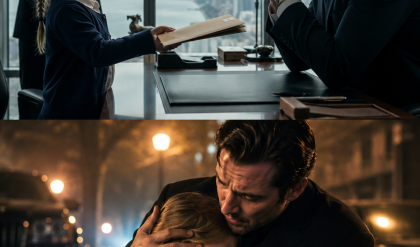
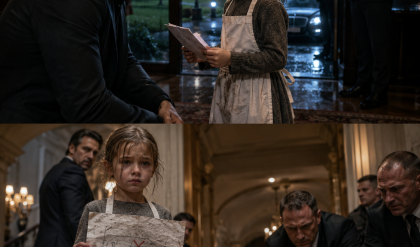
Two days later, Noah Caldwell walked into Room 518 carrying a folded piece of construction paper he had kept for four years. He had grown nearly a foot since Ava last saw him, but the moment she looked at him, her whole face changed. Not into the face of a patient receiving a visitor. Into the face of a teacher finding a missing child.
“Noah Caldwell,” she said. “You got tall.”
Noah laughed and cried at the same time. It embarrassed him, which made Ava pretend not to notice.
“I still have Bartholomew,” she told him, pointing to the stuffed rabbit. “Your father brought him. Terrible taste, but generous.”
Noah glanced at Evan. “Yeah. That sounds like him.”
It was the first joke his son had made at his expense without cruelty.
Noah unfolded the construction paper. It was one of Ava’s old classroom cards, the kind students had made when she first got sick. The drawing showed a dinosaur wearing glasses. Beneath it, in crooked child handwriting, were the words: YOU ARE STRONG LIKE A DINOSAUR BUT NICER.
Ava covered her mouth.
“That was you?” Evan asked.
Noah nodded, embarrassed. “I wanted to mail it. Mom said we did. But I made another one just for me and kept it.”
Ava reached out. Noah placed it in her hand carefully, as though returning an heirloom.
The visit lasted forty minutes. Noah told her about high school applications, lacrosse, how he hated robotics club because everyone expected him to love robots because of his father. Ava listened with the complete attention that had once made her classroom a refuge. Evan watched and understood, with a grief that felt almost sacred, that his son had been loved well by adults he had never thanked.
After that, Noah came twice a week.
Then Claire came once, standing awkwardly in the doorway with flowers and a guilt that matched Evan’s in a different key. Ava welcomed her without accusation. That was one of the things illness had not taken from her: the ability to give people a place to put their shame without letting them pretend it was innocence.
By the third month, the experimental treatment began to show signs of working.
Not a miracle. Ava hated when people used that word too quickly.
“A miracle,” she told Evan one morning after Dr. Sutter reported a measurable reduction in tumor activity, “is what people call medicine when they don’t want to credit nurses, scientists, donors, janitors, insurance clerks who finally approve something, and the body for surviving what it had no obligation to survive.”
“So what should I call it?”
“Progress.”
“Progress sounds small.”
“Small things are how people stay alive.”
Her scans improved again four weeks later.
The room changed with them. Not dramatically, not like a movie montage. No sudden dancing in hallways. No violin music. But the air became less afraid. The orchid bloomed again. Noah taped one of his sketches to the wall. Claire brought a blanket from home after Ava admitted hospital blankets felt like paper towels pretending to be fabric. Nurses lingered when Ava read aloud from her stories. A custodian named Mr. Ruiz began stopping by on night shifts to hear one paragraph at a time, claiming he was “checking the trash” while standing motionless for ten minutes.
Evan changed too, though not everyone liked the shape of it.
He moved meetings. Then canceled them. Then began asking questions during executive briefings that made his leadership team deeply uncomfortable.
“How many injury claims are still open from the warehouse automation rollout?”
His chief operations officer frowned. “We settled the major ones.”
“That wasn’t my question.”
The room went silent.
“How many families did we force into arbitration?”
Legal shifted in his chair. “Evan, this is not the forum—”
“It is now.”
He ordered an independent review. He froze a profitable but ethically rotten contract. He created a medical hardship fund for employees after discovering three warehouse workers had started GoFundMe pages while Caldwell Systems spent millions on executive retreats. He began answering Noah’s texts himself instead of through Claire. He started leaving the office before midnight.
The board called it instability.
The press called it a mystery.
One investor called it “the Whitaker effect” on a private call that leaked within hours.
By month five, Caldwell Systems stock had dropped eleven percent. Analysts speculated that Evan was ill, in love, being blackmailed, or preparing a political run. A tabloid published a photograph of him leaving St. Catherine’s at dawn under the headline: BILLIONAIRE’S SECRET HOSPITAL OBSESSION.
Ava saw it on a nurse’s phone and laughed so hard she had to hold her ribs.
“I’m an obsession now,” she said. “How glamorous.”
Evan was less amused. “I can sue.”
“For what? Making you look mysterious? That’s your whole brand.”
“It implies something inappropriate.”
“Evan, people will always choose gossip over grace. Gossip asks nothing of them.”
He sat beside her bed, angry in a way that no longer knew how to become useful.
Ava grew serious. “They’re going to make me the reason for every decision you were already afraid to make.”
“They don’t know you.”
“They don’t need to. A sick woman makes a convenient villain if the alternative is admitting a billionaire developed a conscience.”
The next day, the board summoned him.
Not requested. Summoned.
They gathered on the forty-sixth floor of Caldwell Tower, in the glass conference room overlooking the city Evan had once believed belonged to him because so many buildings carried tenants who used his products. Twelve board members sat around the table, along with legal counsel, Marissa, and Malcolm Reed, the retired CEO who had chaired the board since Caldwell Systems went public.
Evan arrived four minutes late.
Once, this would have been unthinkable. Now, he had stopped in the lobby to answer a text from Noah about whether Ava preferred colored pencils or watercolor markers.
Malcolm removed his glasses. “Evan, we need to discuss your capacity to lead.”
“No,” Evan said, taking his seat. “You need to discuss whether my priorities still serve your portfolios. Let’s be honest at least once.”
A murmur moved around the table.
A director named Caroline Voss leaned forward. “Your behavior has become erratic. You’ve redirected corporate resources without proper review.”
“I redirected my personal assets.”
“You pressured staff to support non-core initiatives.”
“I asked our legal team to help a dying teacher appeal an insurance denial.”
“You missed the NovaDyne acquisition vote.”
“I voted no in writing.”
“You were not present to defend that vote.”
“Because it was a bad acquisition built on inflated patents and a workforce you planned to cut by thirty percent after closing.”
Caroline’s mouth tightened.
Malcolm raised a hand. “This is not about one decision. This is about a pattern. You are publicly distracted, emotionally compromised, and increasingly hostile to shareholder interests.”
Evan looked around the table at faces he knew well. Men and women who had praised his ruthlessness when it made them rich and now called his restraint a disorder.
“What do you want?” he asked.
Malcolm sighed. “A leave of absence. Temporary. Announce exhaustion. Spend time with your son. Support Ms. Whitaker privately. Let operations stabilize under an interim executive.”
“And if I refuse?”
Legal counsel looked down.
Malcolm’s voice softened. “Then we consider removal.”
There it was.
For twenty years, Evan had built a fortress out of voting shares, loyalty agreements, and fear. Yet even fortresses had gates, and he had taught everyone around him that power existed to be challenged when it became inconvenient.
Marissa watched him from the far end of the room.
He thought of Ava’s clockmaker. The man who built clocks for kings and presidents but lost the only hour that mattered.
“Do you know what Ms. Whitaker asked me the day I met her?” Evan said.
No one answered.
“She asked why someone who had everything looked lonely.”
Caroline exhaled impatiently.
“I was offended because she was right,” Evan continued. “I had everything this room understands how to measure. Market share. Capital. Influence. Access. Control. And I was empty enough that a stranger in a hospital bed recognized it in thirty seconds.”
Malcolm’s expression tightened with pity, which irritated Evan more than anger would have.
“This is exactly what concerns us.”
“I know.” Evan stood. “And that’s why I’m not taking a leave.”
Several directors exchanged glances.
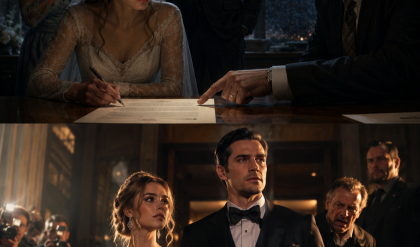
“I’m resigning as CEO.”
The room went still.
Marissa’s face changed first. Shock, then comprehension, then something like grief.
Malcolm rose halfway from his chair. “Evan, don’t be impulsive.”
“I’m not. Impulse is what built half of this company. Hunger disguised as vision. Fear disguised as discipline. This is the first non-impulsive decision I’ve made in years.”
Caroline stared at him. “You can’t simply abandon your responsibilities.”
“I’m not abandoning them. I’m naming them correctly.” He placed a folder on the table. “Inside are transition plans, succession recommendations, voting commitments, and my proposal to convert eleven percent of my personal holdings into a charitable trust focused on pediatric rare disease treatment access, caregiver housing, and educational materials for children facing serious illness.”
Malcolm looked at the folder but did not touch it.
“There’s more,” Evan said. “The South Boston warehouse project is canceled. The site will be transferred to the trust and redeveloped as a treatment navigation center and temporary housing facility for families traveling for care. Caldwell Systems will have first right to support logistics technology there at cost, not profit.”
Caroline looked as if he had slapped her. “That project is worth hundreds of millions.”
“Yes.”
“You are destroying value.”
“No.” Evan looked through the glass wall toward the skyline. “I am returning stolen attention.”
A director scoffed. “That’s a slogan, not governance.”
“It’s a confession.”
The meeting dissolved into outrage, legal warnings, urgent whispers, and attempts to delay him. But Evan had spent his entire adult life mastering the machinery of corporate control. Now he used that knowledge against the thing he had built. By the time he left Caldwell Tower, the resignation announcement was scheduled, the transition documents were signed, and three board members had privately asked whether they could contribute to the trust without their colleagues knowing.
When Evan told Ava, she cried.
Not because she was moved. Because she was angry again.
“You did what?”
They were in the hospital garden, bundled against the early autumn air. Her wheelchair was parked beneath a maple tree just beginning to turn red at the edges. She had been strong enough to come outside for twenty minutes. Evan had planned to tell her gently.
There turned out to be no gentle way to say he had stepped down from a company valued at nearly twenty billion dollars.
“I resigned.”
“Undo it.”
“That’s not how resignations work.”
“You’re Evan Caldwell. Everything works how you decide it works.”
“Not everything.”
She pointed a shaking finger at him. “Do not make me the woman who cost forty thousand people their leader.”
“You’re not.”
“That is exactly what they’ll say.”
“They’re already saying worse.”
“Then why give them ammunition?”
“Because staying would be a lie.”
Ava’s eyes flashed. “Don’t you dare make this noble if it’s avoidance. Don’t run from one life because another life finally made you feel clean.”
That stopped him.
She knew where to aim. She always had.
Evan crouched in front of her wheelchair so they were eye to eye. “I’m not running from responsibility. I’m running toward the first responsibility I understand.”
“To me?”
“To what you showed me.” He took a breath. “And to Noah. And to the people my company learned to count as costs. And to the children who sit in hospital rooms while adults outside argue over coverage codes and quarterly margins.”
Ava looked away. “You could have done that as CEO.”
“Maybe.” He nodded. “But I wouldn’t have. Not honestly. The company trained itself around my worst instincts. It needs someone better at running it than the man who built it as a monument to never needing anyone.”
“And you think a foundation fixes that?”
“No. Nothing fixes it. But it can answer it.”
The wind moved through the maple leaves.
Ava’s anger slowly folded into fear. “What if I die anyway?”
The question was so quiet that it stripped everything else from the garden.
Evan reached for her hand. It was cold. He held it between both of his.
“Then I will grieve you,” he said. “And I will keep my promises. But I am not making choices based on the fantasy that love is only worthwhile if it wins.”
Her face crumpled.
For the first time since he had known her, Ava cried without trying to make it easier for anyone watching.
He stayed kneeling on the path until his knees hurt, holding her hand while the leaves loosened above them one by one.
The press conference happened exactly six months after Evan first entered the wrong room.
Reporters expected drama. They got it, though not the kind they had predicted.
The event was held not at Caldwell Tower but in the atrium of the unfinished South Boston warehouse, a cavernous brick building once meant to become an automation hub that would have replaced hundreds of workers with machines. Now temporary banners covered construction fencing with architectural renderings of what the space would become: family suites, treatment counseling offices, a children’s library, legal aid clinics, classrooms for patients who missed school, and a publishing studio for books designed to help children understand illness without fear.
Ava sat beside Evan in a wheelchair, wearing a deep blue dress Claire had helped her choose and a scarf patterned with tiny gold stars. Noah stood behind them, trying to look invisible and failing because pride kept breaking through his teenage indifference. Marissa stood near the side wall, no longer only Evan’s assistant but interim director of operations for the new trust, because she had shocked everyone, including herself, by resigning two days after he did.
The cameras flashed violently when Evan stepped to the microphone.
For a moment, the old version of him returned by instinct. The posture. The controlled expression. The room-reading silence. He knew how to command attention.
Then Ava touched the back of his hand.
The old performance left him.
“Six months ago,” he began, “I walked into the wrong hospital room.”
The room quieted.
“I thought I was there to reassure an investor. Instead, I met a teacher named Ava Whitaker, who had spent fifty-three days without a visitor. No flowers. No cards. No family in the chair beside her. Just a notebook full of stories she had written for children who had been taught, by adults, to be afraid of sickness.”
A reporter raised a hand. Evan ignored it.
“At the time, I was considered one of the most successful men in America. That was the public story. The private truth was simpler. I was rich, powerful, and absent from everything that should have mattered.”
Noah looked down.
Evan continued, voice steady but no longer polished smooth.
“What I did not know then was that Ms. Whitaker had once been my son’s teacher. She had sat with him during panic attacks I never knew about because I was too busy building machines to notice the child waiting for me. She wrote a story for him about a clockmaker who lost time. I read that story before I knew it was about me.”
The room stirred.
There it was. The twist the media would seize. The stranger was not a stranger. The billionaire had not rescued an anonymous woman from loneliness. He had stumbled into the life of someone who had already shown up for his family when he had not.
Evan let the murmurs pass.
“So no,” he said, “this is not a romance scandal. It is not a breakdown. It is not charity theater. It is a correction.”
Ava lowered her eyes, tears shining.
“Today I am announcing the launch of the Whitaker House and the Wrong Room Fund, beginning with four hundred million dollars from my personal holdings. This center will help families navigate experimental treatment, insurance appeals, travel costs, caregiver housing, and educational support for children with rare and aggressive illnesses. No parent should have to become a lawyer, fundraiser, travel agent, and medical researcher while their child is fighting to live.”
Cameras clicked.
“The publishing studio inside this building will release books written with teachers, doctors, child psychologists, and patients. Its first collection will be based on Ms. Whitaker’s stories. All profits will return to treatment access and classroom programs that teach children not to abandon people because illness makes adults uncomfortable.”
A reporter shouted, “Mr. Caldwell, do you regret stepping down from Caldwell Systems?”
Evan looked at Ava, then Noah.
“No,” he said. “I regret that it took a wrong room to teach me where I should have been walking all along.”
Another reporter called, “Are you doing this because Ms. Whitaker may not survive?”
Evan’s expression changed. For the first time, the room glimpsed the dangerous man who had once terrified boardrooms.
“I am doing this because she is alive.”
The silence after that answer was complete.
Then Ava asked to speak.
Evan bent to adjust the microphone. She pushed his hand away gently and adjusted it herself.
The room smiled.
“I am not a symbol,” she said.
Her voice was softer than Evan’s, but every person leaned closer.
“I am a woman who got sick. I am a teacher who misses her classroom. I am sometimes brave and often terrified. I am grateful for help, but I am not proof that every story ends the way people want if they donate enough money or love hard enough. Some people do not survive. Some treatments fail. Some prayers are answered with silence.”
The reporters stopped typing.
Ava continued.
“But loneliness is not a medical necessity. Abandonment is not a side effect of cancer. Children do not become kinder by being shielded from suffering. They become kinder when adults show them how to sit beside it.”
She turned slightly toward Noah.
“One of my students once wrote that I was strong like a dinosaur but nicer. I have thought about that on days when I did not feel strong at all. The truth is, children give us language before they understand how much we need it.”
Noah wiped his face quickly with his sleeve.
Ava looked back at the cameras.
“If you know someone in a hospital room, go. If you are afraid you won’t know what to say, say that. If too much time has passed, go anyway. Bring a bad drawing, a ridiculous stuffed animal, a story, a song, a memory. The chair beside the bed is not there for perfect people. It is there for people who choose to come back.”
That clip traveled farther than any headline about Evan’s resignation.
The first year was not easy.
The Whitaker House opened behind schedule and over budget. Insurance companies did not become merciful because Evan Caldwell had discovered compassion. Some hospitals cooperated. Others protected their systems like fortresses. The first child helped by the Wrong Room Fund, a seven-year-old from Maine with a rare immune disorder, died before Christmas. Evan attended the funeral and stood in the back until the boy’s mother found him, hugged him, and whispered, “We got three more months with him. Don’t you dare think that was nothing.”
Ava’s health rose and fell.
There were good scans and frightening labs. Days when she walked through the unfinished library with a cane, arguing cheerfully about shelf height, and nights when fever returned with old menace. She lost her appetite, regained it, lost it again. Her hair grew back in soft curls she called “medically confused.” She recorded audio versions of her stories on days when writing tired her hands. On bad days, Evan read to her from the same notebook that had first undone him.
Noah became a regular at the center before it opened. At first, he came because Ava was there. Then he started helping in the children’s art room, pretending it was for community service hours until everyone agreed not to embarrass him by noticing how carefully he sharpened colored pencils for younger kids.
Claire joined the education advisory board. She and Evan did not fall back in love, which disappointed certain corners of the internet but relieved both of them. Forgiveness, they discovered, did not require pretending the marriage had not been lonely. It meant building a better family from the honest wreckage of the old one.
Marissa became indispensable. She ran the center with the ferocity she had once used to protect Evan’s calendar, and when donors tried to turn suffering children into gala decorations, she developed a smile so cold it could freeze champagne.
Caldwell Systems survived without Evan.
That was another lesson. The empire did not collapse because one man stopped mistaking himself for its spine. A new CEO took over, steadier and less theatrical. The stock recovered. The board issued carefully worded statements about Evan’s “visionary philanthropic transition,” as if they had not nearly declared him unstable for having a conscience.
Evan moved out of the penthouse.
Not into poverty, not into some false performance of simplicity. He was still wealthy beyond ordinary imagination, and Ava never let him pretend otherwise. But he bought a brick townhouse near the center, learned the names of his neighbors, burned grilled cheese six times before Noah taught him the correct heat setting, and discovered that a smaller bedroom could hold more sleep than a penthouse if you had fewer ghosts pacing the floor.
On the anniversary of the wrong room, Ava returned to Mason Street Elementary.
The visit had been planned quietly, but schools are not good at quiet joy. By the time she arrived, the hallway was lined with construction paper orchids and dinosaur drawings. Some of her former students were in middle school now. They stood awkwardly near the back, suddenly too old to run but not too old to cry when she recognized them.
Ava read “The Clockmaker Who Forgot the Time” to a new fourth-grade class while Evan stood in the doorway.
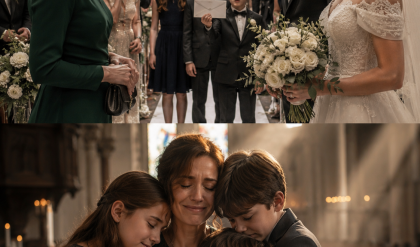
When she reached the ending, where the clockmaker sat beside his grown son and asked to be taught how to spend one honest hour, Noah slipped his hand into Evan’s.
He did it casually, as if by accident.
Evan did not move. He was afraid that if he reacted too much, the moment would vanish.
Ava saw anyway.
Of course she did.
Months later, on a rainy evening after the Whitaker House library finally opened, Evan found Ava sitting alone beside the tall windows overlooking the courtyard. Children’s books lined the shelves around her. Some bore her name. Others carried names of patients, teachers, doctors, parents, siblings, and children who had turned fear into language.
The rain painted the glass silver.
“You disappeared,” Evan said.
“I’m allowed. I’m mysterious now.”
“You’re tired.”
“I’m always tired. Tonight I’m also happy.”
He sat beside her.
For a while, they watched rain gather in the courtyard lights.
“Do you ever miss it?” Ava asked.
“What?”
“Being the man who never loses.”
Evan thought about the old office, the private elevator, the fear in people’s faces when he entered a room, the clean violence of getting exactly what he wanted. He thought about the penthouse view and the Scotch he never drank. He thought about how success had once felt like outrunning a shadow, and how the shadow had always arrived first.
“No,” he said. “He was exhausted.”
Ava smiled.
“Do you ever regret letting me walk into your room?” he asked.
“I didn’t let you. You barged in.”
“That sounds like me.”
“It did.” She turned her hand palm-up on the bench between them. He took it. “No, Evan. I don’t regret it.”
“I thought I was saving you.”
“I know.”
“I wasn’t.”
“No,” she said gently. “But you helped.”
He laughed softly. “That’s humbling.”
“You needed humbling.”
“I did.”
She looked toward the shelves. “You know what the real miracle is?”
He waited.
“Not that I’m still alive. I’m grateful, but that was never promised. The miracle is that the room didn’t stay empty.”
Evan followed her gaze.
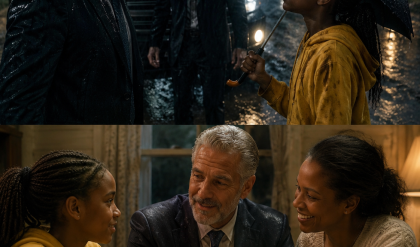
In the library, a little girl in a knit cap was showing Noah a drawing. Her father stood nearby with the stunned, sleepless expression of a parent living between test results. Marissa argued quietly with a donor near the coffee table. Claire helped a boy choose between two picture books. Mr. Ruiz, the custodian from the hospital, now part of the center’s evening staff, pretended not to listen while turning pages of Ava’s newest story.
The chair beside the bed had become a building.
The wrong room had become a door.
Ava leaned her head against Evan’s shoulder. “Promise me something.”
“Anything.”
“Don’t make my life meaningful only because I got sick.”
His throat tightened.
“I mean it,” she said. “Tell people I was funny. Tell them I was impatient. Tell them I hated hospital oatmeal and loved thunderstorms. Tell them I was a teacher before I was a patient. Tell them I wrote stories not because I was dying, but because children deserve beautiful things while they’re living.”
“I promise.”
“And tell them you were bossy.”
“I don’t see why that’s necessary.”
“It’s central to the story.”
He smiled. “Fine. I was bossy.”
“And lonely.”
“Yes.”
“And lucky.”
He looked around the library, at his son, at the shelves, at the woman whose life had collided with his because he had misread a room number and then finally learned to read everything else.
“Yes,” he said. “Very lucky.”
Ava closed her eyes, still smiling.
The future remained uncertain. Doctors still spoke carefully. Scans still mattered. Pain still came. Hope still had to be rebuilt some mornings from almost nothing. But Evan no longer believed certainty was required before love could act. He had spent half his life waiting for the right time to become the man he meant to be. Then a wrong room taught him that time was not something people found later. It was something they entered, trembling and imperfect, before the door closed.
A year after Evan Caldwell walked into Room 518, a brass plaque was installed beside the entrance of the Whitaker House library.
Ava hated plaques, so they kept it small.
It read:
For every empty chair.
For every child who needs a story.
For every person who comes back.
No names.
No billionaire title.
No mention of sacrifice, scandal, or legacy.
Just the truth.
Sometimes the wrong room is the first honest place a person has ever entered. Sometimes the stranger in the bed is not a stranger at all, but the keeper of a story you should have heard years ago. And sometimes, if grace is feeling particularly stubborn, a man who thought he had everything loses the life that made him empty and finds, in its place, one honest hour after another.
THE END