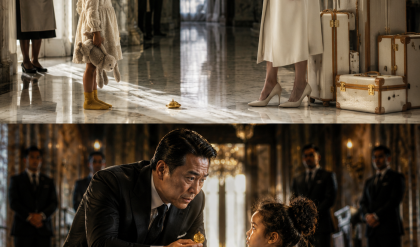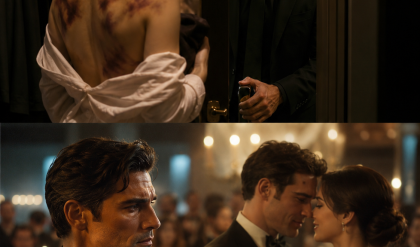
Then looked back.
Only for a second.
Longer than he meant to.
That evening, alone in his office, Damian ignored the city skyline glowing beyond the glass and reviewed contracts until the numbers blurred.
His wheelchair was positioned beside a black walnut desk. Near the bookshelf, untouched for two decades, rested a small violin in a velvet-lined stand.
Sophia’s violin.
He did not touch it.
He almost never did.
But every year he paid a specialist to preserve it, tune it, clean it, protect it from dust, humidity, time, and everything else that had failed to protect Sophia Cross when she was twelve years old.
The accident had happened twenty years ago on a bright summer afternoon.
Damian had been eighteen, newly accepted to an engineering program, arrogant in the harmless way boys are arrogant before life teaches them cruelty. Sophia had been beside him in the passenger seat, hugging her violin case and talking too fast about a charity recital she wanted to perform in.
“You should come,” she told him.
“I have plans.”
“You don’t have plans. You have brooding practice.”
“I don’t brood.”
“You absolutely brood. You brood in designer shoes.”
He remembered laughing.
That was the last sound he remembered clearly before the horn.
A truck.
A white line.
A scream.
Glass exploding into sunlight.
When Damian woke in the hospital, his legs were gone from his life though they remained attached to his body. Doctors called it a miracle he survived. His parents cried in hallways. Nurses spoke gently, which terrified him.
He asked for Sophia.
No one answered fast enough.
After the funeral, he stopped believing in miracles.
After the wheelchair, he stopped believing in fairness.
After the guilt, he stopped believing in love.
Because love, he decided, was just life handing someone a weapon and telling them where to stab.
So he built.
He built companies, towers, airports, hotels, wealth, power, walls. Especially walls.
By thirty-eight, he could destroy a competitor with one phone call, buy silence with a check, and make boardrooms sweat without raising his voice.
But he still wrote one letter to Sophia every month.
He kept them in a wooden box inside her bedroom, the forbidden room, where her bed remained made, her trophies still gleamed, and her drawings stayed pinned to the walls like she might come home from school and complain someone had moved them.
No one entered.
No one except Damian.
Until Olivia.
But first, she ruined his suit.
For days after the coffee incident, the mansion whispered about her survival.
“She should’ve been fired.”
“She made a joke.”
“She joked after spilling coffee on him.”
“Maybe he didn’t hear her.”
“He heard.”
Olivia heard all of it while scrubbing, folding, sweeping, carrying towels, and trying not to get lost in hallways that seemed designed by someone with a grudge against maps.
The strange thing was, after she arrived, the mansion began to change.
It started in the kitchen.
A young cook named Mia ruined a lemon cake for an upcoming luncheon. The center collapsed into a sad crater, and Mia looked ready to cry.
Olivia leaned over it. “Honestly, I think it looks expensive.”
Mia sniffed. “It looks terrible.”
“No, it looks like modern art. Tell people it represents emotional instability.”
The older cook, Angela, pressed her lips together.
Olivia pointed at the cake. “Mr. Cross owns a construction company, right? Say it’s inspired by one of his buildings during the planning stage.”
Mia laughed.
Angela tried not to.
Failed.
By the end of the week, gardeners were smiling, security guards were trading jokes, and Beatrice had said “That is ridiculous” three times in a tone dangerously close to affection.
Damian noticed.
He noticed everything, though he pretended not to.
He noticed laughter drifting from the courtyard in the evening. He noticed staff walking with less fear in their shoulders. He noticed flowers appearing in rooms that had been empty for years.
He noticed Olivia feeding crumbs to a stray orange cat near the fountain.
“You’re not supposed to feed stray animals,” he said one evening from the stone path.
Olivia looked up, guilty but not very. “He told me he’s not a stray.”
Damian raised an eyebrow. “He told you?”
“Yes.”
“And what exactly did he say?”
“He said he owns this fountain and allows us to use it.”
The corner of Damian’s mouth moved before he could stop it.
Olivia gasped. “Was that a smile?”
“No.”
“That was absolutely a smile.”
“It was a muscle spasm.”
“On your face?”
“Good night, Miss Reed.”
He rolled away.
Behind him, Olivia grinned.
He hated that he heard himself almost laugh.
He hated even more that he wanted to.
Part 2
The forbidden room opened on a Thursday afternoon when the whole mansion was too busy pretending rich people charity dinners were not just anxiety with flowers.
Florists carried white roses through the front hall. Caterers argued in whispers. Silverware was polished, repolished, and judged by Beatrice like it might embarrass the family name. Olivia had been sent upstairs with fresh linens for the guest suites, which was how she ended up near the east wing of the third floor.
She would later tell herself she had not planned to go near the door.
That was mostly true.
The door had always called to her, not loudly, but in the way sad things sometimes do. She had heard music there twice, faint and broken, like memory leaking through wood. She had seen small delivery boxes from restoration companies left outside the hall. She had noticed employees avoiding that corridor as if grief itself lived at the end.
But she had stayed away.
Until that day.
Because that day, the door was open.
Only an inch.
Maybe less.
Still, for a room no one was ever supposed to enter, an inch felt like an invitation written by fate.
Olivia stopped.
“Nope,” she whispered to herself. “We are not doing this. We enjoy employment. Employment buys groceries.”
She took one step away.
Then a draft moved through the hall, and the door opened a little wider.
She saw a bookshelf.
A pale curtain.
A corner of a bed.
Not an office.
Not a vault.
A child’s room.
Her breath caught.
Slowly, with guilt already burning in her chest, Olivia stepped closer and pushed the door open.
The room stole every joke out of her.
Time had frozen there.
A twin bed stood beneath the window, covered by a quilt patterned with tiny blue flowers. Stuffed animals lined a shelf. Music trophies filled a glass cabinet. Framed drawings covered the walls, some signed in a child’s careful handwriting: Sophia Cross.
Near the window stood a violin.
Polished.
Loved.
Waiting.
Beside it sat a photograph of a teenage Damian with a younger girl who had bright eyes, a gap-toothed smile, and one arm hooked around his neck like he was her whole world.
Olivia’s throat tightened.
This was not a room.
It was a heartbeat someone refused to let stop.
On the desk rested a wooden box filled with envelopes. Every one bore the same name.
Sophia.
The newest envelope looked only weeks old.
Olivia stared.
He still writes to her.
The thought hurt more than she expected.
“What are you doing?”
The voice came from the doorway.
Quiet.
Controlled.
Devastating.
Olivia turned.
Damian sat in his wheelchair at the threshold, his face unreadable. But she had learned enough about him by then to understand that his stillness was not emptiness.
It was pain wearing armor.
“I’m sorry,” she said.
“You were told not to enter.”
“Yes.”
“And yet you entered.”
“Yes.”
Most people would have lied. Olivia did not.
That seemed to disarm him more than any excuse could have.
“I should fire you,” he said.
“Probably,” she admitted.
His eyes narrowed slightly. “You agree?”
“I broke a rule. A big one. The kind with dramatic hallway silence attached.”
For one fragile second, something almost like amusement touched his face.
Almost.
Then it disappeared.
He wheeled into the room, slowly, and stopped beside the violin.
“This was Sophia’s room,” he said.
Olivia stayed near the door. “Your sister.”
His hand rested on the violin’s polished wood.
“She was twelve.”
Only two words.
But the room filled with all the years he had survived after them.
Olivia looked around again, this time with more care. She understood the room differently now. It had not been preserved from obsession, but from love. From guilt too, maybe. From a grief so old it had grown roots through the walls.
“She must have been very special,” Olivia said softly.
Damian’s jaw tightened.
“She was everything good in this house.”
The honesty surprised both of them.
Outside, the muffled sounds of preparation drifted up through the floors. Inside Sophia’s room, another kind of life stirred—quiet, painful, necessary.
Damian opened the wooden box.
“I write to her.”
Olivia’s eyes burned.
“How often?”
“Every month.”
Twenty years.
Two hundred and forty letters.
A lifetime of conversations with someone who could never answer.
“What do you write about?” she asked.
“Everything.” His voice was low. “The company. My parents before they passed. Business victories. Failures. Birthdays. Things she should have been here to see.”
Olivia stepped closer, careful not to cross too quickly into his grief.
“My grandmother used to say love has terrible storage habits,” she said. “It keeps everything.”
Damian looked at her.
For a second, she feared she had said too much.
Then he looked back at the box.
“She would have liked you,” he said.
The words came out so quietly Olivia wondered if he meant to say them at all.
Her heart did something foolish.
Something dangerous.
The charity dinner that night went perfectly, at least by the standards of people who measured success in crystal glasses and silent waiters.
But Damian barely remembered it.
He kept thinking of Olivia standing in Sophia’s room, not afraid, not pitying him, not trying to fix his grief with empty words. She had simply stood there and treated Sophia like someone real.
Not a tragedy.
Not a secret.
A person.
After that day, their conversations changed.
Not all at once. Damian did not become warm overnight. He did not suddenly turn into the kind of man who made casual speeches at breakfast and hugged employees in hallways. But something softened.
One morning, Olivia entered the library with coffee and set it beside him.
“Careful,” she said. “This one is meant for drinking, not wearing.”
His shoulders moved.
It was small.
But she saw it.
“So close,” she said.
“To what?”
“A laugh.”
“I don’t laugh.”
“You keep saying that, but your face is gathering evidence against you.”
He looked at her over his blueprints. “You always talk this much?”
“Only when I’m awake.”
A sound escaped him.
Short.
Rough.
Real.
Olivia nearly dropped the coffee again.
“There it is!”
Damian frowned. “There what is?”
“The laugh.”
“That was not a laugh.”
“Mr. Cross, that was a laugh with commitment issues.”
For the first time in twenty years, Damian Cross laughed in his library.
Not loudly.
Not freely.
But enough that Beatrice, passing outside the door, stopped dead in the hallway with one hand pressed to her chest.
By summer, Olivia had become the pulse of Cross Manor.
She helped Mia practice recipes. She named the stray cat Sir Cheddar. She convinced the gardeners to let her plant marigolds near the fountain because “rich houses need at least one flower that looks like it has a personality.” She kept a jar of peppermint candies in the laundry room for anyone having a bad day.
And Damian kept finding reasons to be where she was.
He told himself it was coincidence.
It was not.
He asked for reports in the library instead of his office because Olivia cleaned there in the mornings. He took afternoon tea in the garden because she walked through with laundry baskets. He approved a minor renovation in the west corridor because she once complained the lighting made everyone look like “haunted tax documents.”
He was falling in love.
The realization came to him beside the fountain, watching her argue with Sir Cheddar.
“You cannot keep stealing roast chicken,” she told the cat. “We live in a society.”
The cat stared at her.
Damian watched from the path. “Does he often respond to legal lectures?”
“Only when he respects the court.”
Damian laughed.
Olivia turned toward him with a smile so warm he felt it in places he had kept frozen for half his life.
And suddenly he knew.
He loved her.
Not as a distraction. Not as gratitude. Not because she made the house brighter.
He loved her because she saw him without flinching.
The disabled man, the grieving brother, the ruthless CEO, the lonely boy still trapped in a hospital room twenty years ago. She saw all of him, and somehow did not turn away.
The truth terrified him.
Because love had taken Sophia.
That was what he believed.
Love made losing unbearable. Love made memory cruel. Love gave the world something it could use against you.
So he pulled back.
For three days, Damian became colder.
He canceled garden tea. Worked late at headquarters. Answered Olivia’s jokes with one-word replies. Returned to his office and shut the door.
The mansion felt it immediately.
Olivia felt it most.
On the fourth evening, she found him in Sophia’s room.
He was reading one of the letters, the worn one that looked as if it had been opened a hundred times.
“You’ve been avoiding me,” Olivia said from the doorway.
Damian did not look up. “I’ve been busy.”
“You own a billion-dollar company. You’re always busy. This is different.”
His fingers tightened around the letter.
“You should not be here.”
“I know.”
“That never stops you.”
“Usually because the places I’m not supposed to be are where people are hurting.”
He looked at her then.
His eyes were sharp, but tired.
“You think everything can be fixed with jokes?”
“No,” she said. “I think jokes are what people use when they’re trying not to fall apart in public.”
That silenced him.
Olivia stepped into the room.
“Did I do something wrong?”
“No.”
“Then why are you punishing me?”
“I’m not.”
“You are. You just don’t call it that because billionaires probably have a nicer word for it.”
Damian turned his chair toward the window.
“I am not a good person to care about.”
Olivia’s heart hurt at the plainness of it.
“Who told you that?”
“No one had to.”
“That’s not an answer.”
He looked at Sophia’s photograph.
“I was driving.”
Olivia went still.
The room changed.
“I was driving when she died,” he said. “She was twelve. She trusted me. She was sitting beside me, laughing, and I…” His voice tightened. “I survived. She didn’t.”
Olivia’s eyes filled, but she kept her voice steady.
“You were eighteen.”
“I was responsible.”
“You were a kid.”
“I was her brother.”
The words hit the room like a sentence he had been serving for twenty years.
Olivia understood then.
He did not just miss Sophia.
He believed he had killed her.
And no amount of wealth, success, or time had touched that belief.
He folded the letter and placed it back in the wooden box.
“You should leave before you decide I’m more broken than you thought.”
Olivia walked closer.
“I already knew you were broken.”
His eyes snapped to hers.
She smiled sadly.
“Everyone is. Some people just have better lighting.”
He stared at her for a long moment.
Then, quietly, he said, “You make it sound easy.”
“It’s not.”
“Then why stay?”
Olivia had no joke for that.
Because the answer was sitting too close to her heart.
So she said the safest truth.
“Because you shouldn’t have to sit in this room alone forever.”
That night, Olivia could not sleep.
Damian’s words kept circling her mind.
I was driving.
I was responsible.
She thought of the accident. The highway. The truck. The grief. The way everyone in the mansion tiptoed around him as if the truth were already settled.
But something bothered her.
No one had ever mentioned details.
No one said Damian had caused the crash.
They said he blamed himself.
Those were not the same thing.
The next afternoon, while helping Beatrice sort old storage records, Olivia found a dusty box marked with dates from twenty years earlier. Most of it contained estate paperwork, insurance forms, and old correspondence.
Then a thin folder slipped loose.
Traffic Accident Investigation.
Olivia’s pulse jumped.
She knew she should call Beatrice.
She knew she should close the folder.
Instead, she opened it.
The first pages were newspaper clippings.
Fatal collision outside Lake Forest.
Teen driver survives.
Younger sister dies.
No criminal charges filed.
Olivia frowned and kept reading.
Then she saw it.
A witness statement.
Partially faded, but readable.
The commercial truck crossed into the Cross vehicle’s lane seconds before impact.
Her breath stopped.
She read it again.
The truck crossed into their lane.
Not Damian.
The truck.
Olivia flipped through the pages faster. Another report mentioned the truck driver’s history of reckless driving citations. Another referenced medical treatment after the collision. A name appeared in one article.
Raymond Holt.
The truck driver.
Olivia sat back on her heels.
For twenty years, Damian had believed his hands caused the crash.
But the file in front of her suggested something else entirely.
Something devastating.
Something that could free him.
Or destroy him all over again.
Part 3
Once Olivia found the first crack in Damian’s guilt, she could not stop digging.
She told herself she was not investigating.
That was a lie.
She told herself she only wanted context.
That was also a lie.
The truth was simpler and far more dangerous: she loved Damian Cross, and she could no longer watch him kneel before a punishment that might never have belonged to him.
She searched quietly.
Old archives. Newspaper databases. Legal storage boxes. Insurance records Beatrice had forgotten existed. She learned to read between formal lines, to follow dates, names, missing attachments, and references to documents no one had opened in years.
Raymond Holt, the truck driver, had been forty-six at the time of the crash. He had been cited twice before for reckless driving. One article mentioned his employer had been under investigation for overworking drivers. Another said Holt had been hospitalized for weeks and later left Illinois.
But the most important detail came from a digitized article in a small county paper.
Olivia sat in the archive room at midnight, laptop glowing against her tired face, when she found an interview with a retired highway patrol officer discussing “tragic cases that changed road safety policy.”
Halfway down the article, there it was.
Toxicology reports confirmed alcohol in Raymond Holt’s system after the crash.
Olivia covered her mouth.
The truck driver had been intoxicated.
Witnesses saw him cross into Damian’s lane.
No criminal charges had been filed because Holt died months later from complications related to his injuries, and the investigation closed without a trial.
But the facts were there.
Damian had not caused the accident.
He had not killed Sophia.
He had been a teenage survivor of another man’s reckless choice.
Olivia cried quietly in the archive room, not because she had found the truth, but because of everything that truth had failed to save.
Twenty years.
Twenty years of birthdays spent alone.
Twenty years of letters written to a dead sister.
Twenty years of believing happiness would be betrayal.
Twenty years of a man refusing to live because no one had placed the right papers in the right hands.
But one question still haunted her.
Why had Damian never known?
The answer came two days later in a legal file mislabeled under old insurance correspondence.
Olivia opened it expecting duplicates.
Instead, she found an envelope addressed to Damian Cross.
It was yellowed with age.
Unopened.
Her hands trembled as she slid out the letter.
It was from an investigator assigned to the case shortly after the accident. The letter summarized updated findings: witness statements, toxicology confirmation, road marks, the truck’s lane position, and the conclusion that Damian had not caused the collision. The investigator recommended survivor counseling, noting that young survivors often blame themselves even when evidence proves otherwise.
Olivia stared at the date.
It had been written three months after the crash.
When Damian was still in recovery.
When his parents were grieving.
When the mansion was drowning in funeral arrangements, medical decisions, insurance battles, and silence.
The letter had never reached him.
One administrative error.
One unopened envelope.
One truth buried in a box.
And Damian Cross had built his entire life around a lie.
That evening, Olivia asked Beatrice where Damian was.
The house manager studied her face. “What happened?”
“I found something.”
Beatrice looked down at the file in Olivia’s arms.
For the first time since Olivia had known her, the older woman seemed afraid.
“Is it about Miss Sophia?”
Olivia nodded.
Beatrice pressed a hand to the wall.
“Then be gentle,” she whispered. “That wound is the center of him.”
Olivia found Damian in Sophia’s room.
Golden evening light spilled through the windows. The violin rested near the desk. The wooden box of letters sat open, as if he had been writing again.
He looked up when she entered.
“What’s wrong?”
Olivia closed the door behind her.
Her mouth went dry.
For once, humor abandoned her.
“There’s something you need to see.”
Damian’s expression sharpened. “Olivia.”
“Please.” Her voice broke slightly. “Read it before you say anything.”
She handed him the file.
He stared at it, then at her, then opened the first page.
The room fell silent.
One minute passed.
Then another.
His eyes moved across the witness statement. The toxicology report. The investigator’s summary. The unopened letter addressed to him.
Slowly, the color drained from his face.
His hands began to shake.
“This is not…” He stopped. Swallowed. Started again. “Where did you get this?”
“In the old legal storage.”
His gaze returned to the pages.
He read the letter once.
Then again.
Then a third time, slower, like each sentence had to fight through twenty years of self-hatred before it could reach him.
The truck crossed into your lane.
The driver had alcohol in his system.
You were not at fault.
Survivor guilt is common after traumatic loss.
You were not at fault.
Damian’s breath fractured.
“No.”
Olivia’s eyes filled.
He looked at her like a man standing at the edge of a life he no longer recognized.
“No,” he whispered again.
Then, weaker, “I didn’t…”
The words would not come.
Olivia knelt in front of his wheelchair, the file between them.
“You didn’t cause it.”
His face crumpled.
“I was driving.”
“You were eighteen.”
“She was beside me.”
“And someone else crossed the lane.”
“I should have…” His voice broke. “I should have protected her.”
“You were hit by a drunk driver, Damian.”
The truth landed harder spoken aloud.
He closed his eyes.
For twenty years, he had remembered Sophia’s death as a crime committed by his own survival. Now the memory shifted beneath him, rearranging itself around facts he had never been allowed to know.
He saw the highway again.
Sophia laughing.
The sunlight.
The horn.
But this time, he saw the truck crossing the line.
He saw his younger self not as guilty, but helpless.
A boy.
A brother.
A survivor.
The first sob tore out of him like something buried alive.
Olivia reached for his hand.
He gripped hers with desperate strength.
“I lost her,” he said.
“I know.”
“I lost everything.”
“I know.”
“I hated myself for twenty years.”
Olivia could not stop her tears.
“I know.”
Damian bent forward, pressing her hand to his forehead.
“I don’t know who I am without the guilt.”
The confession devastated her.
She squeezed his hand.
“Maybe you don’t have to know tonight.”
He looked at her through tears.
“Then what do I do?”
“Breathe,” she whispered. “And let Sophia be someone you loved, not someone you think you failed.”
He broke then.
Not elegantly. Not quietly. Not like a powerful man used to controlling rooms.
He cried like the eighteen-year-old boy who had woken up in a hospital and never been told the truth.
Olivia stayed.
Outside, the mansion moved gently around them. Dinner cooled in the kitchen. Beatrice sent everyone away from the third floor. The gardeners turned off the fountain. Even Sir Cheddar sat beneath a rosebush as if the estate itself knew something sacred was happening upstairs.
Hours later, Damian was still in Sophia’s room, but the air had changed.
The grief remained.
Of course it did.
Truth did not erase love.
But it loosened the chains around it.
Damian looked at Sophia’s photograph on the desk. For the first time in twenty years, he saw her smile without hearing an accusation.
He heard her voice in memory.
If I disappear first, don’t become boring.
A sound escaped him.
Half laugh.
Half sob.
Olivia looked up.
“What?”
“She said something once,” he murmured. “When we were kids. She said if she disappeared first, I wasn’t allowed to become boring.”
Olivia’s lips trembled. “She knew you well.”
“I became worse than boring.”
“You became hurt.”
He turned to her.
Moonlight touched her tired face, her messy hair, her swollen eyes. She had spent weeks searching through dust, records, and pain for a truth no one had asked her to find. She had risked her job, his anger, and her own heart because she believed he deserved freedom.
“Why did you do this?” he asked.
“Because you deserved the truth.”
“No.” His voice softened. “Why did you fight this hard for me?”
Olivia looked down.
For once, there was nowhere to hide.
Not behind jokes. Not behind kindness. Not behind cheerful bravery.
“Because I couldn’t stand seeing someone I love suffer for something he didn’t do.”
The room went still.
Her eyes widened as if she had betrayed herself.
Damian stared at her.
“You love me?”
A nervous laugh slipped out of her. “This would be a terrible time to pretend I meant the cat.”
For one second, he looked stunned.
Then he smiled.
Not the small reluctant smile she had been collecting like rare coins.
A real smile.
Open.
Shaken.
Beautiful.
“I love you too,” he said.
Olivia stopped breathing.
Damian reached for her hand again. This time, gently.
“I tried not to,” he admitted. “I thought caring about someone meant giving life another way to destroy me.”
“And now?”
His thumb brushed her knuckles.
“Now I think not caring was already destroying me.”
Olivia cried again, but this time she laughed through it.
“That was almost poetic.”
“I’m a billionaire. We outsource poetry.”
She laughed harder.
And Damian laughed with her.
Inside Sophia’s room, surrounded by letters, music, grief, and truth, the man who had not believed in love for twenty years finally let it enter.
Healing did not happen all at once.
The next months were not a fairy tale painted over pain.
Damian still had hard mornings. Some nights he woke from dreams of glass and headlights. Some days Sophia’s room felt peaceful. Other days it hurt too much to enter. He began therapy, reluctantly at first, then honestly. He reread the accident report until the facts stopped feeling like strangers.
Olivia stayed at Cross Manor, though not as a maid for long.
That was Damian’s idea.
Her first response was, “Please don’t say something dramatic like you want to make me mistress of the mansion. I have laundry trauma.”
He created a new role for her at the Sophia Cross Foundation, a project he had quietly funded but never fully opened to the public. Olivia became its community director, because she knew what it meant to grow up with more hope than money.
Together, they transformed Sophia’s locked room into something living.
Not a museum.
Not a shrine.
A music room.
The bed remained. The drawings stayed. The violin still stood near the window. But now, once a week, children from underfunded schools came to Cross Manor for free lessons. Some arrived shy and silent. Others came loud and nervous. Olivia greeted every one like they were expected.
The first time a little girl played a squeaky version of “Twinkle, Twinkle, Little Star” on Sophia’s violin, Damian cried in the hallway where no one could see.
Olivia saw anyway.
She always did.
“You okay?” she asked.
He wiped his face. “That was the worst violin performance I’ve ever heard.”
“She’s seven.”
“Sophia would’ve loved it.”
“Yes,” Olivia said. “She would have.”
The mansion changed.
Laughter returned like spring through open windows.
Mia’s ruined cakes became legendary. Beatrice pretended to hate the chaos and then quietly kept extra cookies for the scholarship kids. Sir Cheddar officially moved into the garden and acted like this had been his plan all along. Employees no longer whispered as if grief might punish them.
Cross Manor became a home.
And Damian became a man learning, slowly, that surviving was not the same as living.
One year after Olivia found the letter, the gardens were filled with white flowers.
Not for a funeral.
For a wedding.
The ceremony was small by billionaire standards and enormous by emotional ones. Employees sat beside executives. Scholarship children sat in the front row, kicking their shoes under white chairs. Henry Reed, Olivia’s grandfather, wore a navy suit Damian had secretly arranged to have tailored, though Henry insisted he looked “too rich to be trusted.”
Beatrice cried before the music even started and threatened to fire anyone who mentioned it.
Damian waited beneath an arch of flowers, seated in his wheelchair, hands folded tightly in his lap.
He had faced hostile takeovers with less fear.
His best man, a longtime company attorney named Marcus Bell, leaned down and whispered, “You look terrified.”
Damian kept his eyes on the aisle. “I am.”
“Good. Means you’re paying attention.”
Then the music began.
Not a recording.
A violin.
One of the foundation students, now thirteen, played Sophia’s favorite piece. The notes trembled at first, then steadied, rising into the afternoon light.
Damian closed his eyes.
For a moment, he saw Sophia as she had been: twelve years old, grinning, impatient, alive in memory instead of trapped in guilt.
Then everyone stood.
Olivia walked toward him in a simple white dress, no diamonds except the small earrings that had belonged to her grandmother. She looked nervous, radiant, and amused by her own tears.
When she reached him, Damian took her hands.
“You’re smiling,” she whispered.
“You’re crying.”
“I contain multitudes.”
He laughed.
The sound moved through the guests like sunlight.
During the vows, Damian’s voice shook only once.
“For twenty years,” he said, “I thought my life ended on the worst day I ever survived. I built walls and called them strength. I confused silence with peace. Then you walked into my house, spilled coffee on me, insulted my suit, fed my cat without permission, and somehow made every locked room in my life less frightening.”
The guests laughed softly.
Olivia wiped her eyes.
Damian continued.
“You did not save me by loving a perfect man. You saved me by seeing the broken one and staying. You gave me truth when I was living inside a lie. You gave me laughter when I had forgotten the sound. You gave me tomorrow. I love you, Olivia Reed. Not because you healed every wound, but because with you, I am no longer afraid to heal.”
Olivia had to breathe twice before speaking.
“I came into this house because I needed a job,” she said. “I had worn-out shoes, overdue bills, and absolutely no plan beyond not getting fired before Friday.”
A ripple of laughter passed through the garden.
“Then I met you,” she said, looking at Damian. “And at first, I thought you were the coldest man I’d ever seen. But then I found the letters. I found the brother who still loved his sister. I found the boy who blamed himself. I found the man who was still kind underneath all that pain. And I fell in love with him. Not the money. Not the mansion. Not the name. You. I promise to laugh with you, fight beside you, tell you when you’re being dramatic, and remind you every day that living matters.”
Damian’s eyes filled.
Above them, wind moved through the trees.
For a second, he could almost hear Sophia.
Don’t become boring.
He smiled at the sky.
“I’m trying,” he whispered.
Olivia squeezed his hands. “What was that?”
“Nothing.”
“Liar.”
He laughed again.
When they kissed, the mansion erupted in applause.
Henry cried openly. Beatrice cried secretly and denied it while holding three tissues. Sir Cheddar walked across the aisle halfway through the applause with the confidence of a paid performer.
Later, during the reception, Damian wheeled Olivia through the garden paths while children chased bubbles near the fountain.
“You know,” Olivia said, “technically, this all started because I ruined your suit.”
“It was an expensive suit.”
“It was a boring suit.”
“It was Italian.”
“It was depressed.”
Damian looked at her. “You’re never going to apologize properly for that, are you?”
“I’m sorry your suit couldn’t handle joy.”
He laughed so hard he had to stop moving.
Olivia watched him, and her own smile softened.
That laugh was worth every risk.
Every dusty file.
Every hard truth.
Every step through a forbidden door.
At sunset, Damian took Olivia to Sophia’s room.
The door was open now.
It stayed open most days.
Golden light filled the space. The violin rested by the window. The wooden box of letters remained on the desk, but something new sat beside it: a second box filled with letters from scholarship children.
Thank you for my first violin.
My mom cried when I played for her.
I want to be brave like Sophia.
Damian picked up one of his old letters to his sister.
For years, every letter had ended the same way.
I’m sorry.
Tonight, he wrote a new one.
Dear Sophia,
I married her today.
You would have laughed at her jokes before I did. You would have told me she was trouble. You would have been right.
I know the truth now. I know I did not cause the crash. Some days I believe it more easily than others, but I am learning. Olivia says healing is rude because it takes longer than people want. She is usually right, which is inconvenient.
The house is loud again. Children play music in your room. Beatrice pretends not to love them. There is a cat who believes he owns the fountain.
And me?
I am trying not to be boring.
I miss you every day.
But I am living now.
I think that is what you wanted.
Your brother,
Damian
He placed the letter in the box.
For the first time, he did not feel like he was burying a confession.
He felt like he was sending love forward.
Olivia stood beside him, quiet.
Damian reached for her hand.
“You gave me my life back,” he said.
She leaned down and kissed his forehead.
“No,” she whispered. “I just opened the door. You walked through.”
He looked around Sophia’s room, then toward the open hallway where music, laughter, and voices drifted through the mansion.
For twenty years, he had believed love was the thing that destroyed him.
Now he understood the truth.
Love was the only reason anything had survived.
The sister he lost.
The letters he wrote.
The maid who refused to let sadness have the last word.
The future waiting beyond grief.
Damian Cross had spent half his life inside darkness, guarding a wound built from silence. But a poor funny maid with worn-out shoes had walked into his mansion, spilled coffee on his suit, found the truth hidden in dust, and taught him that the heart does not die because it breaks.
Sometimes, with enough courage, enough laughter, and one person willing to stay, it learns to beat again.
THE END