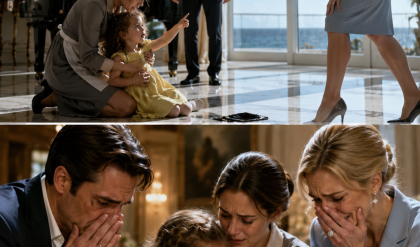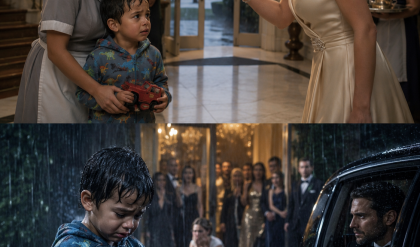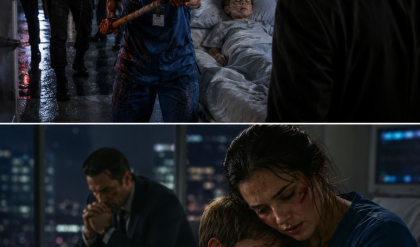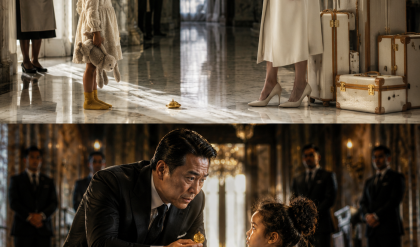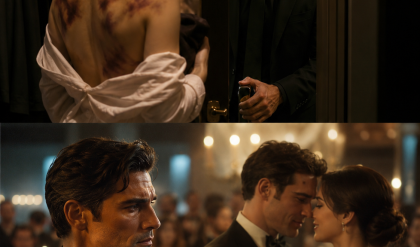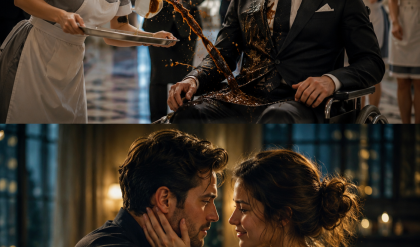
“Tell me everything,” he said.
Meredith told him without decoration. She told him Sloane had invited her only because reporters had begun asking why the older Bellamy daughter was never photographed with the family anymore. She told him Evelyn had taken Oliver to the rail to show him the fireworks. She told him Charles had stopped her from running. She told him the yacht had not slowed down.
Ethan listened, his jaw hardening by degrees.
When she finished, he said, “They aren’t just hiding an attempted murder. They’re building a story where you look unstable before you can accuse them.”
“They already did.”
“Then we build faster.”
The next morning, Ethan brought in Grace Mallory, a private investigator with cropped silver hair, scuffed boots, and the calm manner of someone who had spent years watching respectable people lie badly. Grace did not waste Meredith’s time with sympathy. She asked where everyone had been standing, which crew members saw the deck, whether there were cameras, who owned the yacht, and whether Charles had recently changed security companies.
“The yacht has cameras,” Meredith said. “Charles bragged about the system when he bought it. He said no one could steal a spoon without him knowing.”
Grace’s mouth tightened. “Men like him always love cameras until the cameras remember more than their friends do.”
For three days, everyone lied.
The captain claimed Meredith had been drinking heavily. A server said she saw Meredith crying near the bar. A guest insisted Meredith had shouted that Sloane “stole everything.” Another guest remembered hearing a splash but said she assumed someone had dropped a tray. Every statement arrived polished, aligned, and empty of the messy details real memories usually carried.
“They rehearsed,” Meredith said after Ethan read the summaries aloud in the hospital conference room.
Grace nodded. “Or someone wrote it for them.”
The first crack came from a nineteen-year-old deckhand named Micah Price.
He was supposed to have left Rhode Island with five thousand dollars in cash and a bus ticket to Florida. Instead, Grace found him in a cheap motel outside Providence, scared enough to keep a chair wedged under the doorknob and angry enough to talk once she promised his statement would not vanish into a Bellamy lawyer’s drawer.
On video, Micah sat in a hoodie two sizes too big, his hands shaking around a paper cup of coffee.
“I saw Mrs. Bellamy push the little boy,” he said. “I was by the service door. I saw her look around first, then push him. Mrs. Meredith ran for the rail, and Mr. Bellamy grabbed her. I tried to throw a life ring, but Mr. Bellamy turned and said if I touched it, my mother would lose her house by Friday.”
Meredith stepped out of the room and vomited into a trash can.
Not because she doubted him. Because some small, wounded part of her had still been waiting for a less monstrous explanation.
That night, Sloane made the mistake that would later help destroy her.
Meredith’s phone buzzed while Oliver slept curled against her side.
The text read: You always were desperate for attention. Couldn’t even drown without making it about you.
Meredith stared at the screen until the words blurred.
Ethan took the phone gently from her hand. “Don’t answer.”
“I wasn’t going to.”
But she wanted to. She wanted to ask Sloane whether the flowers had still looked pretty after Oliver went overboard. She wanted to remind her that Oliver had drawn her a picture of a unicorn two months earlier because he thought her engagement ring looked like magic. She wanted to ask how much applause a woman needed before a child’s life became an inconvenience.
She did not write a word.
The Bellamys pushed harder.
Evelyn appeared on morning television wearing a cream suit, dark glasses, and the expression of a woman brave enough to suffer publicly. She spoke outside the family’s Newport estate while reporters leaned toward her like flowers toward the sun.
“We love our daughter,” Evelyn said, her voice trembling at precisely the right moments. “Mental illness is not a scandal. It is a tragedy. Meredith has refused help for years, and now an innocent child has been placed in danger. We are doing everything we can to protect Oliver.”
Meredith watched from a hospital room with the sound low. Oliver was awake, eating dry cereal from a paper bowl. He looked at the screen, then at his mother.
“Why is Grandma lying?”
Meredith put the bowl aside and gathered him close. “Because some people are more afraid of the truth than they are of hurting someone.”
“Are we going back to their house?”
“No, baby.”
“Ever?”
“No.”
He considered that with the grave seriousness only children and old men can carry. Then he whispered, “Good.”
Something inside Meredith closed forever.
The next turn came from a dead woman.
Ethan found it first in a dusty probate file in Boston, then confirmed it through a retired trust officer who sounded both guilty and relieved when he realized someone was finally asking the right questions. Meredith’s grandmother, Abigail Bellamy, had left a private trust for Meredith and any children Meredith might have. Charles had told Meredith years ago that Abigail’s money had been absorbed by estate taxes and old debts.
That was a lie.
The trust existed. It held a voting block large enough to challenge Charles’s control of Bellamy Development, the family company that owned luxury hotels, marinas, and half the waterfront properties in Newport. Even more importantly, Abigail had written a clause that would activate when Meredith’s first child turned seven. Once Oliver reached that birthday, Meredith would gain voting control of the shares until he became an adult.
Oliver’s seventh birthday was in twenty-six days.
Ethan laid the documents on the hospital table one by one. “Charles has been using those shares as if they were his. Loans, board votes, collateral. If the trust activates, an audit follows. If an audit follows, he has a problem.”
Meredith looked at the papers, then at Oliver’s sleeping face. “They weren’t just ashamed of us.”
“No,” Ethan said quietly. “You and Oliver were about to become dangerous.”
Grace arrived an hour later with a black flash drive hanging from a key ring. For the first time since Meredith had met her, the investigator looked unsettled.
“I found the backup.”
Meredith’s breath caught. “From the yacht?”
Grace nodded. “Charles switched security vendors last year, but he didn’t know Abigail had installed the original system with off-site mirroring after she suspected him of moving money through shell contractors. The current crew wiped the onboard storage after the party. The backup kept running until someone cut the feed at the marina.”
Meredith looked at the flash drive as if it were a live thing. “What’s on it?”
Grace’s face hardened. “Everything.”
Meredith watched the footage only once.
The camera angle was high and slightly distorted, mounted beneath the upper deck awning. It showed the party from above: white flowers, black tuxedos, waiters moving like chess pieces, Sloane laughing beside Preston. Then it showed Evelyn leading Oliver toward the rail. Oliver pointed at fireworks over Narragansett Bay. Evelyn smoothed his collar. Sloane looked toward the nearest guests, then toward the captain’s passage, checking who mattered and who might notice.
Evelyn pushed.
The image was bad enough. The sound was worse.
Oliver cried out. Meredith screamed. Charles moved fast, faster than anyone would expect from a man who pretended age had softened him. He caught Meredith’s wrist and dragged her back. She fought him. Evelyn turned, her face no longer grieving or elegant but flat with purpose.
A crewman’s voice shouted, “Man overboard! Sir, we have to stop!”
Charles answered, “If they live, it was a breakdown. If they die, it was an accident.”
Then Evelyn went inside, took a glass of champagne from a passing tray, and said to Sloane, “By morning, your sister will be dead or crazy. Either way, the problem ends before your wedding.”
Sloane did not flinch. She only looked down at the diamond on her finger and whispered, “It better.”
Meredith closed the laptop before the video finished.
She did not cry. Tears belonged to the woman who had still believed blood created obligation. The woman sitting in that room now understood that blood could become evidence.
“What do you want to do?” Ethan asked.
Meredith looked at the flash drive, then at the trust documents, then toward the window where late afternoon light washed the hospital wall clean.
“Sloane’s engagement dinner is tomorrow at the Plaza in New York,” she said. “The press will be there. So will the board.”
Grace smiled for the first time. “That sounds inconvenient for them.”
“It should be,” Meredith said. “They made a stage out of my grief. I’m going to use theirs.”
Ethan warned her that public exposure carried risks. Bellamy lawyers would attack. Reporters would swarm. Charles might try to paint the video as edited until forensic experts finished their certification. Meredith listened because she respected him, but her decision had already settled into her bones.
For years, the Bellamys had taught her that silence was the cost of belonging. She had paid it until she had nothing left to buy with it.
Now she had the truth, and she was done negotiating.
The engagement dinner took place in the Grand Ballroom of the Plaza Hotel, where money disguised itself as tradition beneath chandeliers and gilded ceilings. The Bellamys had arranged white orchids in crystal vases, a string quartet near the balcony, and a photographer from a society magazine who had been promised an exclusive spread titled “Two Great American Families Become One.”
Charles moved through the ballroom like a king visiting provinces. He clasped hands with board members, kissed donors on both cheeks, and accepted murmured sympathy about Meredith with the heavy patience of a man pretending not to enjoy being pitied. Evelyn stood beside a senator’s wife, accepting compliments on her strength. Sloane wore a silver dress and an expression bright enough to cut glass. Preston Vale, handsome and unaware of the depth of the swamp he was marrying into, kept one hand at Sloane’s waist and smiled whenever cameras flashed.
At eight fifteen, Meredith walked in.
The room changed before anyone spoke. It was subtle at first, the way conversations thinned at the edges, the way heads turned and did not turn back. Meredith wore a dark green dress with long sleeves to hide the bruises and Abigail’s pearl earrings because she wanted her grandmother present in the only way available. Her hair was pinned back. Her face was pale, but not weak.
Oliver was not with her. She would not place him under chandeliers as proof. He was safe in Boston with a nurse Ethan trusted and a retired police officer Grace had hired to sit outside the door.
Ethan entered at Meredith’s right side. Grace entered at her left.
Sloane saw her first. The smile fell from her face so quickly it almost made her look honest.
“Who let her in?” she snapped.
Charles turned, and for one unguarded second Meredith saw panic break through his polish. Then the public smile returned.
“My God,” he said loudly enough for nearby guests to hear. “Meredith, sweetheart, this is not the place.”
“No,” Meredith said, walking toward him. “This is exactly the place.”
Evelyn drifted forward, all maternal sorrow and diamond restraint. “Darling, you’re not well.”
“Don’t call me darling.”
Several people inhaled. The photographer lowered his camera, then slowly raised it again.
Charles reached for Meredith’s elbow. Ethan stepped between them.
“Touch her,” Ethan said evenly, “and the first video goes live before your hand leaves her sleeve.”
Charles’s eyes flicked to him. “You.”
“Yes,” Ethan said. “Still without a foundation, apparently.”
Meredith moved past them to the small stage where a microphone waited for toasts. Sloane rushed after her.
“Cut the sound,” Sloane hissed toward the event staff. “Now.”
No one moved. Grace had already spoken with the hotel’s audiovisual manager and handed him a copy of the police complaint, the emergency protective order, and the kind of look that made sensible people reconsider loyalty to strangers.
Meredith stood at the microphone and looked over the crowd. She saw people she had known since childhood, people who had sent Oliver birthday gifts through assistants, people who had smiled at her in grocery stores and whispered about her in club dining rooms. She felt fear rise, then pass. Fear had nearly drowned with her. What remained was colder and more useful.
“My name is Meredith Bellamy,” she said. Her voice carried through the ballroom. “Three nights ago, during my sister’s engagement party aboard my father’s yacht, my mother pushed my six-year-old son into the Atlantic Ocean.”
The room erupted.
Evelyn cried, “She’s delusional!”
Meredith did not raise her voice. “When I tried to save him, my father stopped me. Then my mother pushed me in after him. The yacht did not stop. No life ring was thrown. No rescue was attempted.”
Charles barked, “Security.”
Ethan lifted his phone. “The video has already been sent to three newsrooms, two prosecutors, and your board counsel. Security can decide whether they want to be witnesses or participants.”
The screen behind the stage came alive.
For a moment there was only the frozen image of The Gilded Swan’s deck. Then the footage began.
There was Evelyn in white satin, bending toward Oliver. There was Sloane looking around. There was the push. A sound moved through the ballroom, not quite a scream and not quite a gasp, as if the entire room had suddenly lost the ability to pretend politely.
Preston’s hand dropped from Sloane’s waist.
The video continued. Meredith ran. Charles grabbed her. Oliver’s small cry came through the speakers. Someone in the crowd said, “Oh my God,” and then Charles’s recorded voice filled the ballroom.
“If they live, it was a breakdown. If they die, it was an accident.”
A chair scraped backward. The senator’s wife covered her mouth. One of Charles’s oldest board members stood slowly, his face gray.
On screen, Evelyn took champagne and said, “By morning, your sister will be dead or crazy. Either way, the problem ends before your wedding.”
Sloane’s recorded whisper followed. “It better.”
The ballroom went silent in a way Meredith had never heard silence before. It was not absence of noise. It was judgment arriving.
Preston turned to Sloane. “Tell me that isn’t real.”
Sloane’s mouth opened. Her eyes darted from Preston to the guests to the screen, searching for the safest lie and finding none ready.
“Preston,” she said, “you don’t understand what she’s done to this family.”
He stepped back as if her words had a smell. “A child was in the water.”
“She survived. They both did.”
That sentence condemned her more completely than a confession.
Preston reached into his jacket, removed the engagement ring box he had been carrying for some ceremonial toast, and placed it on the nearest table. “I won’t marry someone who watched a boy drown and worried about her dinner.”
Sloane lunged for his arm. “Don’t humiliate me in front of everyone.”
Preston looked at the screen, where Oliver’s fall had frozen again on the final frame. “You did that yourself.”
Meredith changed the file.
Micah Price appeared on screen, pale and shaking, giving his statement. Then Sloane’s text filled the ballroom in large black letters: You always were desperate for attention. Couldn’t even drown without making it about you.
A reporter near the back whispered into her phone. Another lifted a camera. The society magazine photographer, perhaps realizing his exclusive had become history of a different kind, kept shooting.
Then the doors opened.
The police entered first, followed by two federal agents and a woman from the state attorney general’s office. They did not rush. They did not need to. Men like Charles Bellamy expected raids to look dramatic because drama suggested chaos, and chaos could be managed. This was worse. This was procedure.
Charles laughed once, loud and ugly. “Do you have any idea who I am?”
One detective answered, “Yes, sir. That’s why there are so many of us.”
They did not arrest him only for attempted murder. Ethan had spent the morning delivering documents: the trust papers, evidence of threats against Micah, signed statements from two crew members who had been paid to lie, and financial records showing Charles had pledged trust assets he did not control. The attempted drowning was the sin. The paper trail was the shovel that dug up the rest of the grave.
Evelyn stared at Meredith as if hatred could still command obedience. “You’re destroying your own family.”
Meredith stepped down from the stage and met her mother’s eyes. For the first time in her life, she did not search them for love.
“No,” she said. “I opened the door. You filled the house with bodies and called it tradition.”
“I am your mother.”
“Then you should have known how to love before you learned how to perform it.”
Evelyn’s face cracked, not with sorrow but with rage. “You think those people care about you? They’ll forget you by next week.”
“Maybe,” Meredith said. “But Oliver will remember that I came back.”
That was the last thing she said to Evelyn before the detective guided her mother away.
The case did not move quickly. Rich people rarely meet justice at full speed. They place lawyers in the road, file motions like smoke bombs, question chain of custody, whisper about mental health, and hire experts to explain why a camera might not mean what a camera plainly shows. For months, Meredith woke to headlines, depositions, court dates, and nightmares in which Oliver disappeared beneath black water just as she reached for him.
But this time, the Bellamys could not buy enough silence.
Micah testified. The captain admitted he had wiped the yacht’s onboard system under Charles’s orders. The server who claimed Meredith had been drunk confessed that Evelyn’s assistant had paid her and written her statement. Two guests, ashamed or afraid or simply practical now that the wind had changed, admitted they had heard the man overboard call and watched Charles ignore it.
The video backup was authenticated. The trust documents were validated. Financial investigators found more than anyone expected: shell companies, forged board consents, charitable funds routed through construction invoices, and a private ledger that made the Bellamy Foundation look less like philanthropy and more like a laundry room for stolen money.
Charles Bellamy, who had once believed consequences were for employees and distant cousins, was convicted of attempted murder, witness intimidation, obstruction, and financial fraud. Evelyn was convicted of attempted murder and conspiracy. Sloane avoided the harshest charges by cooperating late, which the tabloids called betrayal and prosecutors called useful. She lost Preston, most of her friends, and the borrowed throne from which she had spent her life looking down at Meredith. Her cooperation did not make her redeemed. It merely made her less protected.
Oliver recovered more slowly than people wanted him to.
Strangers loved stories where children bounced back because it made survival feel tidy. Oliver did not bounce. He startled at bathwater. He cried when Meredith closed a door too loudly. He asked whether Grandma could get out of jail. He asked whether Grandpa still had boats. He asked why Aunt Sloane had not helped.
Meredith answered every question as truthfully as his age allowed.
“They made terrible choices.”
“Will they say sorry?”
“I don’t know.”
“Would sorry make it okay?”
“No, baby. Sorry is a beginning only when people tell the truth and stop hurting others.”
He thought about that for a long time. “Then I don’t want their sorry.”
Meredith kissed his forehead. “You don’t have to.”
The trust changed everything on paper, but paper was not healing. Meredith gained voting control of Abigail Bellamy’s shares and forced an audit of Bellamy Development. She removed three board members who had treated loyalty to Charles as a retirement plan. She sold the Newport estate because every hallway still smelled, to her, like childhood fear polished with lemon oil. People expected her to move into it first, to stand on the balcony in a magazine profile and prove she had won.
She did not want to live inside a trophy built by silence.
Instead, she used the house for something Charles would have considered vulgar: refuge.
The Abigail House opened nine months after the night on the yacht. It served mothers and children escaping family violence, coercive control, and the particular kind of abuse that hides behind expensive doors and respectable names. The ballroom where Evelyn had hosted charity galas became a communal dining room. Charles’s office, with its mahogany shelves and view of the harbor, became a legal clinic. Sloane’s pink childhood bedroom filled with picture books, stuffed animals, and a rug patterned with roads where children pushed toy cars toward imaginary safe places.
On opening day, Oliver stood beside Meredith in the front hall, holding her hand. The house was full of voices that did not know yet whether they were allowed to be loud. A toddler cried. A teenage girl carried a trash bag of clothes. A woman with a split lip stared at the chandelier as if afraid it might report her.
Oliver looked up at his mother. “Are they safe here?”
“We’re going to do everything we can to make sure they are.”
He nodded, then walked over to the toddler and offered him a toy truck.
Meredith turned away before anyone could see her cry.
Ethan found her on the back steps a few minutes later. The harbor stretched beyond the lawn, blue and bright under a clean sky. For months, Meredith had hated the sight of water. That morning, it looked less like a grave and more like a boundary she had crossed.
“You did it,” Ethan said.
She wiped her face. “No. We survived. That’s different.”
“It’s more.”
She looked back through the open door. Oliver was kneeling on the rug with two other children now, explaining very seriously that trucks needed bridges because sometimes roads broke.
“Maybe,” she said.
Ethan sat beside her, leaving enough space that she could choose whether to close it. That was one reason she trusted him now more than she had trusted almost anyone before. He never made tenderness feel like a demand.
“You don’t owe the world a perfect ending,” he said.
Meredith laughed softly. “That’s unfortunate. The world keeps asking for one.”
It was true. Reporters wanted forgiveness because forgiveness made better headlines than boundaries. Talk shows wanted tears because tears sold redemption. Former friends sent messages saying they had always suspected something was wrong with Charles, though none had suspected it loudly enough to help. Sloane wrote once from a court-mandated treatment program, not to apologize exactly, but to say she had been raised inside the same house and Meredith should understand what that did to a person.
Meredith read the letter twice, then put it away.
She did understand. That was why she would not excuse it.
A year after the drowning, a national magazine sent a journalist to interview her at Abigail House. The reporter was kind, sharp, and clearly hoping for the sentence everyone wanted.
“Do you forgive your family?” she asked near the end.
Meredith looked through the window to the garden, where Oliver was teaching a younger boy how to kick a soccer ball without falling over. Oliver’s laugh rang across the lawn. It was not the laugh he had before the yacht. It had shadows in it now, pauses where trust used to be automatic. But it was real, and it was his.
“No,” Meredith said.
The reporter blinked, surprised by the simplicity of it.
Meredith continued, “I don’t owe forgiveness to people who tried to turn my survival into their alibi. Healing is not the same as letting dangerous people back into your life. Sometimes removing someone from your life is not bitterness. Sometimes it is justice.”
The quote traveled farther than she expected. People printed it on cards, posted it under stories of their own mothers, fathers, husbands, sisters, churches, companies, families that had demanded silence in exchange for belonging. Meredith did not read every message, but she read enough to understand that Abigail House was not only a building. It was a sentence many people had been waiting to hear.
On the anniversary of the night she and Oliver survived, Meredith took him to the fountain in the Abigail House garden. They did not go to the ocean. Not yet. Healing did not require returning to the place of injury on anyone’s schedule.
Together, they lit two small floating candles.
Oliver had written one word on his in careful blue marker: Safe.
Meredith had written three on hers: Still Here, Still Mine.
They set the candles on the water. The flames trembled, caught themselves, and drifted side by side across the fountain’s dark surface.
Oliver leaned against her. “Mom?”
“Yes?”
“When I fell, I thought nobody was coming.”
Meredith closed her eyes for a moment. “I know.”
“But you came.”
“I will always come.”
He watched the candles float toward the center. “Even when I’m big?”
“Especially then.”
He smiled, and for once the smile reached his eyes.
Meredith looked at the house behind them, at the lit windows, at the women and children inside who were eating dinner where her father once carved roast beef beneath portraits of dead men. She thought of Charles in a prison cell, Evelyn stripped of her audience, Sloane living with the sound of a child hitting water inside every silence. She thought of Abigail, who had hidden cameras and money and warnings inside legal documents because she had known her son better than anyone wanted to admit.
Most of all, Meredith thought of the night the yacht kept moving.
Her family had pushed her into the Atlantic believing the sea would erase an inconvenient woman and her inconvenient child. They had believed wealth could turn murder into illness, witnesses into liars, and grief into gossip. They had forgotten that cameras remember. They had forgotten that children survive. They had forgotten that mothers sometimes come back from the water carrying not revenge, exactly, but something far more dangerous.
Proof.
The candles touched the far stone edge of the fountain and stayed there, burning stubbornly against the evening air.
Meredith wrapped her arm around Oliver and held him close.
They had fallen.
They had not sunk.
And when they returned, they brought the truth with them.
THE END