I turned toward him so sharply my seat belt locked. “And you believed her?”
“I didn’t say that.”
“You repeated it.”
He exhaled. “I’m trying to understand your family, Audrey.”
“My family has been trying to explain me away since I was old enough to have a personality.”
He looked wounded, and I hated that my anger had landed on him instead of where it belonged. So I softened. I apologized. I told myself Brooke was annoying, not dangerous. I told myself my mother was biased, not malicious. I told myself love could survive whispers.
That was my mistake.
I planned to propose to Caleb during a weekend trip to a cabin in Hocking Hills. I had saved from every paycheck and found a vintage sapphire ring at a jewelry store in German Village, a small deep-blue stone circled by tiny diamonds. It was not traditional for the woman to buy the ring, but Caleb and I had never cared much for tradition when affection made more sense. The ring felt like us: simple, steady, quietly luminous.
I paid the deposit and asked the jeweler to hold it until Friday, the day before our trip. I hid the receipt in a book on my nightstand and practiced what I would say while brushing my teeth, while driving to work, while standing in the grocery store aisle pretending to compare pasta sauce.
Caleb, you are the first person who ever made me feel chosen.
The night before we were supposed to leave, I was folding a sweater into my suitcase when Caleb sat on the edge of the bed.
He did not speak for so long that my hands stopped moving.
“What’s wrong?” I asked. “Is it work? We can reschedule.”
He looked at the floor. “Audrey, I don’t think I can do this.”
“The trip?”
His eyes lifted. They looked hollow.
“Us.”
The word did not enter me at first. It hovered in the air like a foreign object.
“What are you talking about?”
“I know,” he said.
“Know what?”
“About the other man.”
I stared at him, waiting for the punchline, the explanation, anything that made sense. Nothing came.
“There is no other man.”
“Please don’t lie to me.”
The quiet pain in his voice frightened me more than anger would have. I crossed the room and crouched in front of him.
“Caleb, look at me. Who told you that?”
His face twisted.
“Brooke.”
My sister’s name entered the room like smoke.
He told me Brooke had come to him crying. She said she had seen messages on my phone from a coworker. Screenshots. Months of them. Messages where I supposedly said Caleb was boring, that I felt trapped, that I wanted someone more ambitious. Brooke had shown him proof, then deleted it because, according to her, she “couldn’t stand having that filth on her phone.” She claimed I had confessed and begged her not to say anything.
It was elegant in its cruelty. She had created evidence, presented herself as reluctant, then destroyed the evidence before I could demand to see it. My denial sounded exactly like what a guilty person would say.
“Ask yourself why she deleted them,” I begged. “Ask yourself why she came to you alone.”
He stood, moving away from me. That small retreat broke something in me.
“You believe her over me?”
He looked at me with tears in his eyes, but he did not answer.
He did not need to.
A week later, Caleb moved out while I was at work. His key was on the kitchen counter beside the mug he always used, the one with a chip on the rim. I stood there in my coat for twenty minutes, staring at it.
That night, my mother called.
For one wild second, I thought she might comfort me.
“Oh, Audrey,” she said, her voice gentle in the way a pillow over the face is gentle. “You’ll survive this. He was never meant for you anyway.”
I hung up without saying goodbye.
Three months later, an old college friend sent me a screenshot with one sentence: Are you seeing this?
It was a Facebook engagement announcement.
Brooke and Caleb stood in a park under golden leaves. Brooke wore a cream sweater, her hand pressed possessively to Caleb’s chest. On her finger was a vintage sapphire ring circled by tiny diamonds.
My ring.
At first I thought I was hallucinating. The receipt was still in my nightstand, wasn’t it? The ring should have been at the jeweler. But when I called, voice shaking, the clerk told me it had been picked up weeks earlier.
“By you,” she said.
“No,” I whispered. “Not by me.”
“There was a signed authorization.”
I hung up and sat on the kitchen floor until the sun went down.
That was when grief turned into something cleaner.
Not rage. Not yet.
Clarity.
Brooke had not just taken Caleb. She had taken the future I had planned, the symbol I had chosen, the story I had been brave enough to begin writing for myself. And my mother, by saying he had never been meant for me, had revealed the ugliest truth: she did not believe Brooke had stolen anything. In her mind, Brooke had merely corrected a mistake.
That night, I packed one suitcase. I left the photographs, the furniture, the chipped mug. I wrote an email quitting my job, sent my landlord two months’ rent to break the lease, withdrew what little savings I had, bought a prepaid phone, drove to the Scioto River, and threw my smartphone into the dark water.
Then I drove west.
For two years, I lived like a woman who had survived a house fire and did not want anyone to recognize the smoke on her clothes. I bartended in Austin, where I learned that drunk strangers confess faster than sober relatives. I made coffee in Denver, where the mountains looked too large for human problems. I worked as a front desk clerk at a ski lodge outside Aspen, smiling at wealthy guests while carrying their luggage and wondering what it felt like to belong anywhere.
I was lonely. Deeply, humiliatingly lonely.
But loneliness, when no one is there to define you, can become a workshop.
At night, in rented rooms and motel corners, I opened notebooks and returned to the idea Caleb had once called a company. Logistics software. Dynamic routing. Predictive delays. Accessible tools for small carriers who could not pay for bloated enterprise platforms. I taught myself to code from free online courses. I watched lectures in public libraries. I learned enough Python to build ugly prototypes and enough humility to throw them out and start again.
Bitterness is a dangerous fuel if you drink it. But if you burn it carefully, it can light a city.
By twenty-six, I had found my cofounder, a brilliant systems engineer named Priya Shah in Seattle. She had the technical depth I lacked and the bluntness I needed.
“Your prototype is terrible,” she told me during our first video call.
I almost closed the laptop.
Then she added, “But the idea is good. The market is real. And you understand the customer better than most founders I meet.”
We built Lucent Route in a coworking space above a dentist’s office. We ate discount noodles, pitched investors who called us “scrappy” when they meant poor, and nearly ran out of money twice. Our first major client was a regional produce distributor tired of losing money to missed delivery windows. Our software saved them enough in three months that their CFO cried on the renewal call.
After that, growth came slowly, then suddenly. More clients. Better engineers. A real office. Venture funding. Acquisition offers we refused. By twenty-eight, I owned a house overlooking Lake Washington, employed people smarter than me, and had learned that power is not volume. Power is options.
The past found me through an email to an old college address I almost never checked.
Subject: Family Reunion—We Miss You, Audrey!
My mother wrote as if I had been away at summer camp. She used exclamation points, mentioned cousins I had not seen in years, and then slipped in the knife with the cheerful precision only she possessed.
Brooke and Caleb will be there with little Leo. You have a nephew now, sweetheart. He is precious. It would mean so much to have the whole family together again.
I deleted it.
Two weeks later, my assistant forwarded me a message from a supposed investor demanding a direct meeting with me. Something about the phrasing itched. Too eager. Too familiar. My security team traced the email to a public library in Ashford.
Brooke.
That was when I called Miles Parker, my old college roommate and one of the few people from Ohio I had not completely cut off. Miles had stayed local, married a nurse, and developed the calm tone of someone who heard every rumor but believed only half.
“How bad is it?” I asked after the polite catching up ended.
He sighed. “With Brooke? Bad. Her influencer thing collapsed. She and Caleb are drowning in debt. His car got repossessed. They moved back in with your parents. People say he’s filing for divorce, but your mom keeps telling everyone he’s just stressed.”
Of course she did.
Golden children do not fail. They are failed by other people.
I should have ignored the reunion. I know that. Healthy people would have stayed in Seattle, drunk good wine, and let the past rot in its own yard. But healing is not always graceful. Sometimes you need to stand in the room that broke you and prove to your body that you are no longer trapped there.
So I went.
I rented the Audi because I wanted armor with an engine. I commissioned the suit because I wanted no softness anyone could mistake for weakness. I booked a suite two towns over and spent the night before the reunion looking out at the Ohio darkness, feeling neither victorious nor afraid. Just ready.
At Miller Park, relatives recognized me in stages. Aunt Michelle dropped a paper cup. A cousin whispered my name. Conversations thinned, then stopped. My mother stood near the pavilion, potato salad suspended on a plastic fork. My father was beside her, older and smaller than I remembered, his mouth trembling around words he did not say.
Then Brooke arrived late in a battered silver minivan that coughed smoke as it rolled to the curb. Caleb got out from the passenger side, holding the hand of a small boy with brown hair and serious eyes. Brooke slammed the driver’s door, already angry, already embarrassed. When she saw me, the color drained from her face.
For the first hour, everyone pretended to be normal with the desperation of people standing near a gas leak while holding matches. My mother hugged me. I did not lift my arms. Brooke tried a smile that looked painful.
“Well,” she said, eyes flicking to my suit, then the car, then my face. “Look at you.”
“Yes,” I said. “Look at me.”
Her smile died.
Lunch was served. Children ran across the grass. Relatives asked where I had been, what I did now, whether Seattle was rainy. I answered politely and vaguely. I had not come to perform success for them. I had come to see whether truth could survive in a place that had once buried it.
Then my mother tapped a fork against a wineglass.
“Everyone,” she called, smiling too brightly. “Before dessert, I just want to say how grateful I am to have family together. We have had challenges, as all families do. But love means forgiveness. Love means moving forward.”
I watched her build the stage plank by plank.
“I especially want to honor my daughters. Brooke, who has shown such strength through a difficult season, and Audrey, who surprised us by coming back after a little time away.”
A little time away.
Five years of silence reduced to a vacation.
Brooke stood next, smoothing her blouse. She gave a speech about family bonds, about misunderstandings, about how life was too short to hold grudges. She looked at me when she said that, her eyes hard and triumphant. In her mind, the story was already being rewritten. Audrey came back rich, but Audrey was bitter. Audrey could not forgive. Audrey was still the problem.
Then Caleb stood.
He had been quiet all afternoon, standing at the edge of conversations like a man waiting for a verdict. Leo held his hand. When Caleb stepped toward the microphone, Brooke snapped, “Caleb, sit down.”
He did not.
“I wasn’t planning to say anything,” he began, voice unsteady but clear. “But I’ve spent years letting other people tell a story I helped make possible by being a coward.”
The park went silent.
Brooke’s face hardened. My mother whispered, “Caleb, please.”
He looked at her. “No.”
Then he told the truth.
He told them Brooke had shown him fake messages. He told them she had cried, claimed she was protecting him, and fed every insecurity he had about not being successful enough for me. He told them my mother had encouraged him to move on, had said Brooke understood him better, had called me “too ambitious to be a good wife.” He told them he had married Brooke not because he loved her more, but because he was ashamed, confused, and too weak to admit he might have destroyed the only honest relationship he had ever had.
Finally, he looked at me.
“I am sorry, Audrey. I do not expect forgiveness. But you deserved the truth in public, because the lie was public.”
Brooke called him pathetic. My mother started crying without tears. My father lowered his head.
I stood and walked to the microphone.
Every face I had known since childhood turned toward me. The same people who had laughed when Brooke humiliated me at my graduation dinner. The same people who had accepted my mother’s version because it was easier. The same people who now watched me with a hunger for spectacle.
I gave them none.
“I didn’t come here to clear my name,” I said. “That would assume I still measure my worth by what this family believes.”
Someone shifted uncomfortably.
“I came because I needed to know whether anything had changed. It hasn’t. You still confuse charm with character. You still protect the person who makes the better performance. You still call silence peace when it only protects the loudest liar.”
My mother stared at me as if I had slapped her.
I looked at Brooke. “I used to think I wasn’t good enough for this family. Now I understand I was simply too honest to survive in it.”
Then I set the microphone down gently and walked away.
In the car, behind tinted glass, I exhaled for what felt like the first time in my adult life.
But closure is rarely as clean as a dramatic exit.
That night in my hotel suite, I replayed Caleb’s confession until the validation wore thin and a harder question rose beneath it. Brooke had forged texts. She had stolen my ring. She had tried to contact me through a fake investor. Those were not impulsive acts. They were patterns. And patterns leave trails.
I stayed in Ohio.
The next morning, I called Arthur Bell, a forensic accountant I knew through an investor. Arthur was a mild, meticulous man with silver glasses and the unsettling ability to find a person’s secrets in bank statements. I gave him dates, old addresses, receipts, credit reports, and one instruction.
“Assume nothing is a coincidence.”
A week later, he called.
“You should sit down,” he said.
Brooke had not merely lied. She had stolen pieces of my identity and tried to assemble them into a life she could control.
Using personal information likely taken from tax files in my parents’ house, she had applied for a personal loan in my name one month before Caleb left me. It was denied, but the hard inquiry damaged my credit for years. She had forged my signature at the jewelry store to pick up the sapphire ring, claiming she was collecting it for me as a surprise. Most chilling of all, someone had attempted to open a joint online bank account in my and Caleb’s names days before the breakup. The application failed only because in-person verification was required.
Arthur sent me the documents. IP logs. Signatures. Timestamps. A neat digital skeleton of a crime dressed for years as family drama.
I called my attorney, Sarah Whitcomb, a woman whose voice could make a contract apologize.
“Start the paperwork,” I said.
Sarah paused. “Civil or criminal?”
“Yes.”
Power, I had learned, is not always striking. Sometimes it is letting people hear the lock click.
While Sarah prepared notices, fate handed me the kind of opportunity fiction writers reject for being too obvious. One of Lucent Route’s subsidiaries—an innovation lab we had acquired quietly six months earlier—was hiring a senior product lead. The subsidiary operated under its own name. My ownership was not public. HR sent me the finalist list.
The third name was Brooke Bennett.
I laughed so hard my assistant knocked to see if I was all right.
Brooke’s résumé was a museum of exaggeration. A failed lifestyle brand became “consumer engagement leadership.” Part-time consulting became “strategic growth advising.” She had taken every small task she had ever touched and inflated it until it looked like a parade balloon.
I asked HR to schedule her final interview at our Columbus lab.
“Do you want to reject her now?” my HR director asked.
“No,” I said. “I want to meet the candidate.”
The lab occupied a converted warehouse with polished concrete floors, frosted glass conference rooms, and the quiet, expensive intimidation of a company that did not need its logo on every wall. I watched the first round from an observation room while two vice presidents asked Brooke precise questions. She smiled too much. Lied too easily. Took credit for projects she could not explain once the questions became technical.
Afterward, she was asked to wait.
Fifteen minutes later, my assistant led her upstairs to the corner office. My office. My name was etched in small letters on the glass.
Audrey Bennett, Founder & CEO.
Brooke walked in holding a fake leather portfolio. When she saw me behind the desk, the portfolio slipped from her hands and scattered papers across the floor.
For once, she had no audience ready to save her.
“Hello, Brooke,” I said. “Long time.”
She swallowed. “I didn’t know this was your company.”
“I noticed.”
Her eyes darted around the office, taking in the skyline, the awards, the framed client map, the evidence of a life she had not been invited to narrate.
“Audrey,” she began, voice wobbling into sweetness. “I know things got messy. I was young. I was jealous. Mom put pressure on me too, you know. And Caleb—”
“Stop.”
The word was quiet, but she did.
I opened a folder and slid copies across the desk: the loan application, the jewelry receipt, the bank account attempt, the IP records, the forged signature enlarged and circled.
“You lied about me,” I said. “You stole my ring. You used my identity. You tried to take my credit, my relationship, and my future. Then, when the life you stole didn’t fit, you tried to walk into my company and ask me for a leadership role.”
Her face crumpled. “I have a son.”
“No,” I said. “Caleb has a son. You have consequences.”
She flinched.
For a moment, I saw her not as the golden daughter, not as the thief in my memories, but as a frightened woman in a cheap blazer who had spent her entire life confusing attention with love. It did not make her innocent. It made her smaller.
“I could bury you,” I said. “And part of me wants to. But here is the truth, Brooke: I’m tired of building rooms around you. I’m tired of making you the center of my pain.”
She stared at me, confused.
“My attorney will proceed. You will answer for what you did. But I won’t scream. I won’t chase. I won’t make a spectacle. That’s your language, not mine.”
I stood and opened the door.
“You can leave now.”
The legal letters arrived the next morning.
One went to Brooke: formal notice regarding identity theft, forgery, and fraud. One went to my mother: a notice from the private trust that owned forty percent of her house.
That trust was mine.
Two years earlier, after Miles told me my mother had drained retirement accounts to fund Brooke’s failing lifestyle, I quietly bought into the property through a third-party adviser. My mother signed because the deal saved her from immediate foreclosure. She never asked who the silent partner was. People like my mother assume invisible help comes from God or luck, never from the daughter they discarded.
The agreement included a clause prohibiting use of the property to shelter someone under active fraud investigation if doing so created legal or financial exposure. Sarah had called it “unlikely but useful.”
Now it was useful.
My mother called seventeen times. Brooke called from blocked numbers. Relatives texted words like mercy and family and too far. I deleted them all.
Then I called Caleb.
“If you want full custody of Leo,” I said, “I can help.”
We met at a quiet café outside Dayton. He looked older than thirty-two, worn down by debt, shame, and years of living with a woman who punished him for knowing the truth.
“I don’t want your money,” he said before sitting.
“I’m not offering it to you. I’m offering stability to a child.”
His eyes filled.
I funded his attorney. I paid for a forensic review of household finances. I did not testify in court, because Sarah advised that my presence would turn custody into theater. But the evidence spoke without me. Brooke’s fraud investigation, unstable housing, debt, and documented attempts to manipulate records made the hearing brutally simple.
Caleb received full custody.
Brooke received supervised visitation and a court order to cooperate with the fraud inquiry.
When the local paper later ran a profile about Lucent Route’s founder returning to Ohio after building a national tech company, Sarah approved one careful paragraph about my leaving home after a personal betrayal involving forged documents and attempted identity theft by a close family member. Brooke was not named.
She did not need to be.
Ashford had always loved filling blanks.
The fallout was not explosive. It was worse. It was social erosion. Brooke’s remaining freelance clients disappeared. Her GoFundMe raised seventy-five dollars, most of it from a cousin who later asked for it back. My mother sold the house at a loss and moved into a two-bedroom apartment near the highway, far from the neighborhood where she had once hosted garden parties and introduced Brooke as if she were a royal achievement.
My father called once.
I almost did not answer.
“Hi, Audrey,” he said, and in those two words I heard five years of cowardice, regret, and love that had never learned how to stand upright.
“Hi, Dad.”
He cried quietly. I let him. Then he said the only sentence I had ever needed from him.
“I should have protected you.”
I closed my eyes.
“Yes,” I said. “You should have.”
He did not ask me to forgive my mother. He did not ask me to help Brooke. He did not tell me to let things pass. For the first time in my life, my father did not choose peace over truth.
That did not fix everything. Real life rarely offers clean repairs. But it opened a small door.
Months later, a plain envelope arrived at my Seattle office. Inside was a folded piece of construction paper with a crayon drawing of two stick figures: a small boy with spiky hair and a taller woman in a suit. Between them was a blue car drawn much too large. On the back, in careful uneven letters, it said:
Thank you for helping my dad.
Love, Leo.
I pinned it above my desk.
Not because I needed gratitude from a child. Not because it erased what had happened. I pinned it there because it reminded me that justice, when done right, should protect something innocent, not merely punish something guilty.
Brooke eventually took a plea deal. Probation. Restitution. Mandatory counseling. No prison. Sarah said the prosecutor could have pushed harder, but I declined to make a public crusade of it. My mother called that mercy. She was wrong.
Mercy is not the same as reconciliation.
I did not save Brooke. I simply refused to spend the rest of my life feeding the version of myself that wanted to watch her burn.
As for Caleb, we did not find our way back to each other, and that is important. Some people hear this story and expect the old love to rise from the wreckage, polished and ready. But love is not a house you can rebuild on a foundation someone abandoned when the storm came. Caleb became a better father. He became an honest man. That was enough.
Years after the reunion, I returned to Ashford one final time for my father’s retirement dinner. It was not a family event, not really. Just a small gathering at a steakhouse off the interstate, with his coworkers, a few cousins, Caleb, Leo, and me. My mother was not invited by his choice, not mine. Brooke was living in Toledo, working at a call center under close supervision from life itself. I wished her no harm. I also wished her no access to me.
At the end of dinner, my father stood with a glass of water because he had quit drinking on advice from his doctor.
“I spent too many years being quiet when quiet was wrong,” he said, looking at me in front of everyone. “My daughter Audrey built a life without the support she deserved. I am proud of her, and I am sorry I made her wait so long to hear that.”
No one laughed. No one shifted the attention to Brooke. No one told me I was sensitive.
I looked at my father and nodded.
It was not forgiveness exactly. It was not absolution. It was a bridge, narrow and unfinished, but real enough to step onto carefully.
That night, I drove back to my hotel through the old streets of Ashford. Bean & Briar was still there. The park was still there. The houses looked smaller than memory had made them. For years, I had thought returning would feel like victory or pain, but it felt stranger than both.
It felt like seeing a cage after you have forgotten the shape of the bars.
My mother once told me I would regret walking away from my family. She never understood that I did not walk away from family. I walked away from people who used the word family as a leash.
The life I built afterward was not revenge. Revenge was only the spark. The real miracle was the rebuilding: the lonely motel rooms, the library tutorials, the failed pitches, the first client, the first employee, the first morning I woke up in a home no one could take from me.
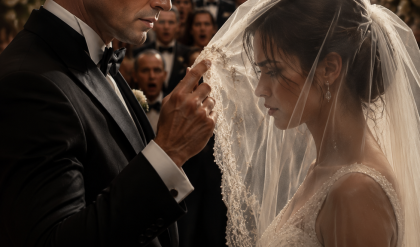
Brooke wore my ring to her wedding. My mother told me the man I loved had never been meant for me. Caleb believed a lie because it was easier than trusting the woman in front of him.
For a while, I thought that meant they had stolen my future.
They had not.
They had only forced me to stop begging for a place in theirs.
And when I finally stopped standing in their shadow, I discovered I was not small at all.
I had simply been surrounded by people who needed me to believe I was.
THE END