“Why?” I asked. “Why would you help me?”
He looked at the hospital bill in my hand, then at my face.
“Because you did not run into my elevator to save yourself,” he said. “You ran for your mother.”
His answer took the air out of me. I looked down because if I looked at him any longer, I was afraid I would break.
“I’ll pay you back.”
“I’m not paying yet.”
“Yet?”
“I’m taking you there first.”
He opened the car door and stepped aside, giving me space instead of taking my arm.
It confused me more than force would have.
Men like him were supposed to take. My father had taken a whole life from my mother and called it moving on. Hospital counters took money before mercy. Rich people took dignity from anyone who entered their world without the right shoes.
But this man opened the door and waited as if my choice mattered.
So I got in.
He sat beside me. Luca took the front seat. Another car pulled out behind us, and the garage gates opened.
As the hotel disappeared, tears slipped down my face. I wiped them fast, but his voice came from beside me.
“You don’t have to hide that.”
I almost laughed. It came out broken.
“People say that until tears make them uncomfortable.”
“I am difficult to make uncomfortable.”
“Because you’re used to people crying?”
“Because I’m used to people lying.”
I turned my head. City lights moved over his face, making him look carved from shadow and control.
“What’s your name?” he asked.
I hesitated.
“Mira.”
“Mira what?”
The name felt heavy in my mouth.
“Bennett.”
The air in the car shifted. Luca glanced at the mirror. The man beside me became very still.
“Bennett,” he repeated.
I looked out the window. “It’s just a name.”
“Names are rarely just names in rooms like that.”
I did not answer. I was too tired to explain my father to a stranger, too ashamed to say the word daughter after Richard had refused it.
“The sign outside the ballroom,” I said instead. “Romano Holdings. Is that you?”
“Yes.”
My stomach sank.
The man my father had invited to save his business had left the ballroom with the girl my father had just denied.
“Then you should go back,” I said. “He’ll be waiting for you.”
“Let him wait.”
“You don’t even know me.”
“I know enough.”
“No, you don’t. You know I ran into your elevator. You know my mother is sick. You know I don’t have the money. That doesn’t mean you know me.”
For the first time, the corner of his mouth moved, not quite a smile.
“There she is.”
I frowned. “What?”
“The woman hidden under the panic.”
My father had seen my desperation and called security.
This man saw my anger and looked almost relieved.
“Who are you?” I asked, though some part of me already feared the answer.
The guard in front looked at him as if the question itself was dangerous.
The man answered without drama.
“Alessio Romano.”
I had heard the name before. Everyone in the city had heard it, usually in lowered voices.
Alessio Romano, the man newspapers called a private investor because newspapers liked staying alive. Alessio Romano, whose enemies lost businesses, court cases, and sometimes the courage to remain in Chicago. Alessio Romano, the man respectable people feared but still invited when their clean money ran out.
My body went cold.
“Oh, God.”
“No,” he said calmly. “Just Alessio.”
Under any other circumstances, I might have laughed. That night, it only reminded me how far from safety I had fallen.
“Please don’t hurt me,” I said before pride could stop me.
His face changed sharply. Not anger. Something older. Pain buried so deep it almost looked like rage.
“Who taught you to ask that quickly?”
My fingers twisted together. “Life.”
He looked out the window for a second, jaw tight. Then he said, “I am not going to hurt you, Mira.”
St. Agnes Medical Center appeared ahead, white and bright and merciless.
Before the car fully stopped, I reached for the door. But Alessio moved first. He did not touch me. He only blocked the handle.
“Wait.”
“My mother—”
“You’ll reach her faster if people move out of your way.”
He stepped out first.
The hospital reacted the moment he entered. Security straightened. Nurses looked up. A man at the reception desk dropped his pen. The night supervisor came from behind the counter, saw Alessio, and forgot the sentence he had been about to say. No one said his name, but everyone seemed to know it.
I followed behind him, suddenly aware of my cheap dress, messy hair, and tear tracks.
Alessio did not look embarrassed to have me beside him.
That alone made my throat tighten.
The nurse from the phone call recognized me and rushed forward.
“Miss Bennett, I’m so sorry. The surgeon is waiting, but accounting still needs approval before they can keep the specialist assigned.”
“Take her to her mother,” Alessio said.
The nurse looked at him, then at me. “Sir, hospital policy requires—”
Alessio turned slightly toward Luca.
Luca stepped to the counter with a black card and opened his phone.
“Romano Holdings is listed under your private donor emergency account,” Luca said. “Call your administrator and authorize the deposit now. The operating room stays reserved.”
The receptionist went pale and started dialing.
My stomach dropped.
“No.”
Alessio looked at me. “Mira.”
“I said no. My mother’s life is not a debt I owe with my soul.”
The lobby went silent.
Alessio did not interrupt. He stepped closer slowly enough that I did not move back.
“Listen carefully,” he said. “I am not buying your silence, your gratitude, or your future. I am buying your mother time. Hate me after she survives if you need to, but let her survive first.”
My mouth trembled. I hated that his words reached the part of me that wanted to collapse.
The nurse touched my shoulder gently.
“Miss Bennett, please. We need to move now.”
I looked at the black card, then at Alessio.
“I’ll pay you back.”
“If that helps you stand, say it.”
“I mean it.”
“Then I believe you.”
No one had said that to me in a long time.
The nurse led me down the hallway before I could answer.
My mother looked smaller than she had that morning. Machines surrounded her. A thin blanket covered her body. Her hair lay flat against the pillow, and her skin had the pale look of someone who had been fighting pain too long.
But her eyes opened when I came in.
“Mira,” she whispered.
I fell beside her bed and took her hand.
“I’m here.”
Her fingers were cold.
“You went to him.”
I could not lie. “I’m sorry.”
“Don’t be.”
“He denied us,” I said, and my voice broke. “He looked at me like I was a stranger. Like you were nothing. Like I was nothing.”
My mother closed her eyes, and one tear slipped down her temple.
“Richard has spent years pretending his choices did not have faces.”
“I hate him.”
She squeezed my hand weakly.
“No, you don’t.”
“I want to.”
“That is different.”
I pressed my forehead to her hand.
“I couldn’t get the money.”
“Then why are they preparing me?”
She studied my face the way only mothers can.
“Who helped you?”
I swallowed. “A man from the hotel.”
“What man?”
“Alessio Romano.”
Fear entered her eyes quickly.
“Mira.”
“I know.”
“You do not know men like that.”
“I didn’t ask him. He saw the bill. He paid before I could stop him.”
My mother tried to sit up, but pain caught her.
“Powerful men do not give without wanting something.”
“He said he bought you time, not me.”
She stared at me.
“Did you believe him?”
I thought of the elevator. His raised hand stopping the guards. The way he had asked who made me run. The way he gave me space before opening the car door.
“I don’t know,” I whispered. “But I wanted to.”
My mother’s face softened.
“Be careful with wanting, baby. It can sound like safety when you are tired.”
Before I could answer, the surgeon came in. The room changed quickly. Consent forms. Nurses. Wheels unlocked. My mother’s bed began moving toward the operating room, and panic rose in my throat.
“Mom.”
She turned her head toward me.
“Stand straight, Mira.”
“I’m scared.”
“I know.”
“What if—”
“No. Don’t give fear the last word.”
I walked beside her bed until the double doors stopped me. A nurse held out a hand.
“You have to wait here.”
My mother looked at me one last time.
“His shame is not yours.”
Then the doors opened and took her away.
I stood there after they closed, staring at the place where she had disappeared.
For the first time that night, I had nothing to run toward. No ballroom. No elevator. No hospital counter. No father to beg. No mother’s hand to hold.
Just a hallway, a debt I had not chosen, and a mafia boss waiting somewhere behind me.
When I turned around, Alessio stood at the far end of the corridor, not close enough to intrude, not far enough to leave. His guard stayed behind him.
“She’s in surgery,” I said.
“Then she has a chance.”
My eyes burned again.
“Why are you still here?”
He looked past me toward the surgery doors.
“Because waiting alone is harder.”
I did not know what to do with that sentence.
It was too simple. Too human.
And it came from a man everyone feared.
Hospital time did not move like real time.
It stretched, paused, punished.
I sat on one of the plastic chairs because my legs were shaking. Alessio sat two chairs away, not close enough to make me uncomfortable. Luca brought coffee. I did not drink it. Nurses whispered from corners. Doctors pretended not to stare. Alessio ignored all of it as if public fear were only weather.
After nearly two hours, Luca’s phone vibrated. He read the message, leaned close to Alessio, and spoke quietly.
Alessio’s eyes moved toward the elevators, then back to me.
“Richard Bennett is here.”
My stomach tightened.
“For my mother?”
Alessio’s silence answered before his words did.
“He came after calling three board members to ask whether I had returned to the hotel.”
My father had not come because my mother was fighting for her life.
He had come because Alessio Romano had left his meeting.
Alessio watched my face.
“Do you want him stopped?”
Part of me wanted to say yes. Another part was tired of hiding from a man who had already abandoned me.
“No. Let him come.”
Alessio nodded once, then stood.
“I’ll be at the nurse station.”
“Why?”
“Because some men only tell the truth when they believe no one important can hear them.”
He stepped away, far enough that my father would think I was alone, close enough that I was not.
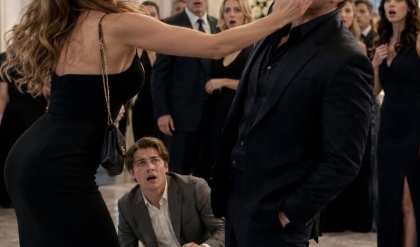
A few minutes later, Richard Bennett stepped out of the elevator with Vivian and Celeste behind him. He stopped first, searching the corridor for Alessio. When he saw him down the hall speaking to Luca and a hospital administrator, some of the fear left his face, and something colder replaced it.
He thought I was alone.
That made him confident.
He walked toward me fast, but kept his voice low, careful, controlled.
“Do you understand what you have done?”
I looked up slowly.
“My mother is in surgery.”
“My meeting was tonight. Romano left because of you. He was supposed to be discussing a private investment, not running to a hospital with a girl who had no right to be there.”
A girl.
Even here, outside the room where my mother was fighting for her life, he could not call me his daughter.
He pulled a check from inside his jacket and held it out.
“Take this.”
I stared at it. “What is this?”
“Money. That is what you came for, isn’t it? Pay the hospital. Pay whatever else you need. Then leave. You will not go near Romano again. You will not tell him who you are. You will not tell him I am your father. Tonight was a misunderstanding. That is all he needs to know.”
My chest tightened.
“So you came because you’re afraid he might find out I’m your daughter.”
His eyes flashed toward the nurse station.
“Keep your voice down.”
“Why? Because truth sounds ugly when rich people hear it?”
Vivian stepped closer.
“Mira, don’t be foolish. Your father is offering help.”
“No,” I said, looking at the check. “He is offering silence.”
Celeste crossed her arms.
“You should be grateful.”
I looked at her, polished and untouched by hunger.
“I did beg tonight. I begged my father to help save my mother. He said he didn’t know me.”
Richard’s face hardened, but he did not shout. That made it worse. His cruelty was not wild. It was chosen.
“You embarrassed me in front of important people.”
“You erased me in front of them.”
“You forced my hand.”
The words hit like a slap.
I stood slowly.
“I forced your hand?”
He pushed the check closer.
“Take it, Mira. This is more than your mother ever received from me.”
For one second, the hallway blurred. My mother was behind those doors with her life open under a surgeon’s hands, and he still spoke like she was an old mistake.
My fingers closed around the check.
Relief flashed across his face.
Then I tore it in half.
Vivian inhaled sharply. Celeste’s mouth fell open. I dropped the pieces into the trash beside the chairs.
“You came to the hospital because Alessio left your party,” I said. “Not because my mother might die.”
Richard’s expression tightened.
“Without my name, you are nothing.”
The sentence filled the corridor.
Maybe once it would have broken me. Maybe in the ballroom it had. But now my mother’s words stood between his shame and my heart.
Slow footsteps sounded behind him, controlled and heavy enough to make my father turn.
Alessio Romano was walking back from the nurse station, and from the look in his eyes, I knew he had heard enough.
He did not shout.
He simply stopped beside me, not in front of me, and the whole corridor seemed to understand the difference.
Richard’s face lost color.
“Mr. Romano,” he said quickly. “This is a private matter.”
Alessio looked at the torn check in the trash, then at Richard.
“You made it public when you denied her in my ballroom.”
“There has been a misunderstanding.”
“No,” Alessio said calmly. “For once, I think I understand perfectly.”
Vivian tried to smile.
“Family matters can be complicated.”
Alessio’s eyes moved to her, and her smile died.
“Complicated is when people disagree. This is something uglier.”
Richard adjusted his jacket, trying to become a businessman again.
“This girl is emotional. Her mother’s illness has made her desperate.”
Alessio turned his head toward me, not to question me, but as if giving me the dignity of being the person most worth listening to.
Then he looked back at Richard.
“She ran into my elevator with a hospital bill in her hand and fear on her face. You stood in a ballroom and pretended not to know her. Now you are here with a check, asking her to hide the truth so your deal survives.”
My father opened his mouth, but nothing came out.
Alessio stepped closer.
“You told her without your name, she is nothing.”
He paused.
“Good. Then everyone should know she never needed your name to be worth something.”
The surgery doors opened behind us.
A doctor stepped out, pulling down his mask.
My heart stopped.
Everyone turned.
The doctor looked past Richard, Vivian, and Celeste, and found me.
“Miss Bennett.”
I could not breathe.
Alessio’s hand lowered beside mine, close but not touching, as if he knew I needed something to hold and was still letting me choose.
“Your mother made it through the surgery.”
My knees almost gave out. I pressed both hands over my mouth as the words broke through me.
My mother was alive.
That was the only sentence my heart understood.
“She is stable for now,” the doctor continued, “but the next twenty-four hours are important. We are moving her to recovery, then ICU. You can see her soon.”
Behind me, Richard cleared his throat.
“Doctor, I’m Richard Bennett. I’ll be handling any further financial arrangements for Mrs.—”
“No,” I said before he could finish.
My voice was weak, but it stopped him.
“You don’t get to arrive after the surgery and speak like you saved her.”
Vivian exhaled sharply.
“This is not the time.”
“You’re right,” I said. “It was time twelve years ago.”
Alessio did not move, but the air beside me changed. He did not need to threaten them. His silence did what other men tried to do with volume.
The doctor gently told me to wait in the family room, and I followed the nurse because my legs no longer knew how to stand still.
The family room was small, with pale walls, a coffee machine, and chairs that had seen too many people pray.
Alessio stood near the door.
“I’ll have Luca arrange anything she needs for recovery.”
My head lifted.
“No.”
He did not argue. He waited.
“I mean, I don’t know how to accept help from you without feeling like I’m losing something.”
His eyes stayed on mine.
“Then don’t accept anything else tonight.”
“What does that mean?”
“It means your mother’s surgery is paid. That cannot be undone. For everything after this, you decide.”
“And if I say no?”
“Then I listen.”
“Men like you don’t listen.”
“Men like me are usually surrounded by people too afraid to say anything worth hearing.”
The door opened before I could answer.
Richard stepped in without knocking. Vivian and Celeste waited behind him in the hall, but he came alone, probably because he thought a softer voice would work better without witnesses.
“Could I speak to my daughter alone?”
My daughter.
The words should have warmed me.
Instead, they made my skin feel cold.
“Now I’m your daughter.”
He looked at Alessio, then back at me.
“Mira, I made a mistake upstairs.”
“You made a choice.”
“I was under pressure.”
“So was my mother.”
He looked away for half a second, and in that half second I saw the man he might have been if cowardice had not become a habit.
Then pride returned.
“I can fix this. I will cover the hospital bills. I will arrange a private nurse. I will make sure your mother has a proper room. And in return—”
His jaw tightened.
“You will stop speaking about tonight. You will tell Mr. Romano you misunderstood what happened. You came to me emotionally. I was going to help privately, but you panicked.”
I stared at him.
He was rebuilding the lie while my mother was still unconscious.
Alessio’s voice came from near the door.
“She understands perfectly.”
Richard turned to him, slipping from father to businessman in one breath.
“Mr. Romano, I have spent years building Bennett Development. Tonight’s meeting was important not only to me, but to hundreds of employees. Surely one emotional incident should not threaten everything.”
Alessio’s face did not change.
“If one truth can threaten everything, perhaps everything was weaker than you believed.”
Richard’s hands curled at his sides.
“You would walk away from a major deal over a girl you met tonight?”
The room went still.
Alessio stepped closer, enough that my father’s confidence faded.
“I would walk away from a hundred deals for one clear look at a man’s character.”
“This is sentimental nonsense.”
“No,” Alessio said. “This is risk assessment.”
For the first time that night, I almost smiled.
My father had no answer. He left the room with his pride bruised and his fear growing.
A nurse came for me twenty minutes later. My mother lay pale and still, machines blinking around her, but she was breathing. I touched her fingers carefully.
“Mom,” I whispered.
Her eyes did not open, but her fingers moved just enough to press mine.
That tiny pressure broke me.
When I came out, Alessio was still there. He had taken calls, given quiet instructions, sent men away and back again, but he had not left.
“She squeezed my hand,” I said, because it was the only good thing I had.
“Then she is still giving orders,” he replied.
I laughed once, and it surprised me. It surprised him too, not because it was funny, but because laughter had no business being alive in that hallway.
And yet there it was, small and shaking between us.
Dawn came slowly through the hospital windows.
By then, my father had left, but his shadow stayed. Around six, Luca brought coffee and a paper bag with food. I took the coffee because my body had begun to feel hollow.
“You should sleep,” Alessio said.
“I can’t.”
“Then eat.”
“You always give orders.”
“Only when people are bad at taking care of themselves.”
I looked at him over the cup.
“Is that why no one likes you?”
Luca made a sound that might have been a cough.
Alessio looked at me for a long moment, then the corner of his mouth moved.
“No one has ever asked me that so directly.”
“Maybe no one had a night as bad as mine.”
“Fair.”
His almost-smile disappeared, but not coldly.
“People don’t like me because liking me is dangerous.”
“Do you like anyone?” I asked before I could stop myself.
Maybe exhaustion made me careless.
Alessio looked toward the window. Morning light touched the side of his face and made the darkness under his eyes visible.
“No,” he said simply, not proudly. “I learned early that attachment gives people a place to cut.”
I thought about my mother, the only attachment I had never regretted, even when it cost me everything.
“That sounds lonely.”
“It is efficient.”
“That wasn’t what I said.”
He looked at me then, and something passed between us, too quiet to name.
“No,” he said. “It wasn’t.”
Later that morning, when my mother was moved to ICU, an administrator came to speak with me about recovery costs, medication, monitoring, and numbers that sounded bigger than rent, bigger than food, bigger than the life my mother and I had built.
Alessio remained silent until the man left.
Then he said, “There is a recovery center outside the city. Her doctor recommends it when she is stable.”
“You said I decide.”
“Yes.”
“Then don’t decide for me.”
“I asked for the medical options, not the decision.”
I watched him carefully.
“It sounded like ordering.”
“I’m working on the difference.”
I should not have smiled, but I did.
Then the smile faded.
“I can’t afford a recovery center.”
“I can.”
“That is exactly the problem.”
He sat across from me, hands loosely clasped. For the first time, he looked less like a man above the world and more like someone trying to enter a room without breaking the door.
“Mira, if money is the only wall between your mother and care, let me remove the wall.”
“And what do I become after you remove it?”
“The same woman who told me no in an elevator.”
My throat tightened.
“Why do you keep helping?”
He looked at me for so long that I wanted to look away, but I did not.
“Because when you ran into that elevator, you were not asking to be saved. You were trying to save someone else. I have seen people run toward me for money, fear, protection, revenge, and power. You were the first woman who ran into my life without wanting anything from me.”
The room felt suddenly too quiet.
“Maybe that is why I could not look away.”
I stared at him, unsure what to do with the warmth rising inside me. It did not feel like romance yet. It felt like being seen after years of standing in corners.
That was more frightening.
“Don’t pity me,” I whispered.
“I don’t.”
“Everyone does when they hear my story.”
“Your story does not make me pity you. It makes me question everyone who failed you.”
By afternoon, my phone was full of messages. Some were from unknown numbers. A clip from the ballroom had begun moving online. Not the whole truth. Only enough to make me look like a desperate girl causing a scene at a rich man’s event.
One message said, Is this you?
Another said, Why were you at Bennett’s party?
Then came the worst one.
Girls like you always know which powerful man to cry in front of.
My hands went cold.
The rumor had started.
By evening, the story had become uglier. I was no longer a daughter begging her father for surgery money. I was a gold digger who had embarrassed a respected businessman and somehow left with Alessio Romano.
My father was protecting his image.
The world was doing what it always did, turning a poor woman’s pain into entertainment.
Alessio found me with the phone in my hand. He took one look at my face.
“Who sent it?”
“Everyone.”
He held out his hand.
“May I?”
I gave him the phone because I was too tired not to.
He read silently. The dangerous stillness came back to him. He did not look angry. He looked like a man deciding how much damage was necessary.
“Luca,” he said.
Luca appeared from nowhere.
“Find where it started. No noise, no blood, but make sure whoever did it understands that lies have invoices.”
“No,” I said quickly.
Alessio looked at me.
“No. Don’t destroy anyone.”
“That was not what I said.”
“It was what your face said.”
Luca wisely looked away.
Alessio handed the phone back.
“They are lying about you.”
“People lie about women like me all the time. If we cry, we are dramatic. If we ask for help, we are greedy. If a man helps us, we must have sold something.” My voice shook. “I don’t want to become another reason for people to call you dangerous.”
“I am already called dangerous.”
“Not because of me.”
He studied me, frustration breaking through his control.
“You are still protecting people who would not protect you.”
“No,” I said softly. “I am protecting myself from becoming like them.”
That stopped him.
The anger in his face did not vanish, but it changed shape. He sat beside me, closer than before, but still not touching.
“Then tell me what you want.”
No one had asked me that all day.
I looked toward the room where my mother slept.
“I want my mother to wake up. I want my father to stop rewriting what happened. I want whoever started that rumor exposed with the truth, not punished in darkness. And I want to stand in a room one day and not feel ashamed because someone else abandoned me.”
Alessio nodded slowly.
“Then we start there.”
“We?”
“If you allow it.”
I looked at him.
“You really don’t know how to be normal, do you?”
“No.”
This time, I smiled first.
My mother woke the next morning. Not fully, not easily, but enough to know my name and squeeze my hand.
When her eyes cleared, she saw Alessio standing near the door. The laughter left her face.
“Mr. Romano,” she whispered.
He stepped forward with respect I did not expect.
“Mrs. Bennett.”
“My daughter tells me you bought me time.”
“She chose to let me.”
My mother looked at me, then back at him.
“Mira does not know how to owe without bleeding herself dry.”
“I have noticed.”
“Then do not make kindness a chain.”
“I won’t.”
“Men always say that.” She stopped to breathe. “Prove it later.”
“I will.”
My mother studied him.
“Why her?”
My face warmed. “Mom.”
She ignored me.
“You are a man with enemies, money, and women who probably know how to smile in five languages. Why did you follow my daughter to a hospital?”
Alessio was silent long enough that I thought he might refuse to answer.
Then he said, “Because she was afraid and still proud. Because she needed help and still tried to protect her dignity. Because when she said mother, I remembered mine.”
My mother’s expression changed.
“Gone?”
“Yes.”
“Hospital?”
“Too late.” His voice stayed steady, but the pain behind it did not. “I had power by then. Not enough. Never where it mattered.”
My mother closed her eyes briefly.
“Then be careful. Grief can mistake someone for a second chance.”
Alessio did not deny it.
“I know.”
“Do you?”
“I am trying to.”
My mother looked at me.
“Gratitude is not love, Mira. Rescue is not love. Do not give your heart just because someone arrived when others left.”
I nodded, embarrassed and grateful.
Alessio’s voice came quietly.
“She shouldn’t.”
We both looked at him.
“She shouldn’t give me her heart because I paid a bill. If she ever gives me anything, it should be because I earned peace in her life. Not because I ended panic for one night.”
My mother watched him for a long moment.
Then, very faintly, she smiled.
“Good answer.”
After that, something shifted.
Not quickly. Not like stories where love arrives dressed as certainty. It came slowly through hospital chairs and bad coffee. Through the way Alessio never entered my mother’s room without asking. Through the way he remembered which side of the bed she preferred me to sit on. Through the way he never called Richard my father unless I did first.
He sent no flowers with his name large enough to impress anyone. He sent a soft blanket because my mother complained the hospital ones scratched her skin. He arranged a second opinion but asked me before confirming.
He made people move, but he never moved me.
That was the difference I could not ignore.
On the third day, Richard sent his lawyer.
A thin man with silver glasses arrived with papers and a voice polished by other people’s cruelty. Alessio did not come into the room. He only stood outside, visible enough to make arrogance careful.
The lawyer told me my father wanted to avoid further public confusion. Reporters were asking questions. Bennett Development’s board was concerned. Richard was prepared to create a medical trust for my mother if I signed a statement saying the ballroom incident was a misunderstanding caused by stress.
I looked at the signature line.
My name like a trap.
“This is a generous offer, Miss Bennett,” the lawyer said.
“Generous?” I repeated. “Is that what rich men call a gag?”
His smile faded.
“You should think carefully.”
“I have.”
“Without this, your mother’s continued care may become difficult.”
Fear moved through me, but it did not own me this time.
I pushed the papers back.
“My mother taught me that dignity only leaves when you hand it away. Tell Richard I’m not handing it away.”
The lawyer looked toward the hallway, saw Alessio watching him without expression, and gathered his papers with shaking fingers.
Ten minutes later, Luca returned with a tablet.
“The smear started from Celeste Bennett’s assistant,” he said. “The original clip was sent to a gossip account from a phone registered under her PR company. We recovered a message from Celeste telling the account to make the poor girl look unstable. Her words.”
My face went cold, but I was not surprised.
Alessio looked at me.
“I told you I would not destroy anyone in darkness, but I will not let them destroy you in public with lies.”
“What are you going to do?” I asked.
“Nothing you do not approve.”
“And if I approve nothing?”
“Then the proof stays locked.”
Luca looked surprised.
Alessio did not look away from me.
That was when I understood the real danger of him. It was not just that men obeyed him.
It was that when he chose patience, he became even harder to resist.
The next morning, an article appeared online calling me an unstable woman who had interrupted a private business event and attempted to manipulate a prominent investor.
No one used the word daughter.
No one used the word mother.
No one mentioned surgery.
The truth had been dressed in expensive lies and sent into the world.
I expected Alessio to explode.
Instead, he became colder. Quiet. Precise.
“Tonight,” he said, “Bennett is hosting the rescheduled investment dinner.”
I stared at him. “After all this?”
“Especially after all this. He needs to show the board he still has me.”
“Do you still plan to go?”
“Yes.”
Pain moved through me before I could hide it.
“For the deal?”
“For the truth.”
I did not understand until he said, “Come with me.”
I laughed once because the idea was impossible.
“No. No, I am not walking into another room full of people so they can stare at me again.”
“This time, you won’t be running.”
“That doesn’t make it easier.”
“No. But it makes it yours.”
I turned away.
“You don’t understand what rooms like that do to people like me.”
“Then tell me.”
The gentleness in his voice almost broke me.
“They make you feel like your shoes are wrong. Your voice is too loud. Your pain is too messy. Your whole life is something that should have stayed outside. And when everyone looks at you, you start believing them.”
Alessio was quiet.
Then he said, “My whole life, rooms like that taught me something different. They taught me that if people fear you enough, they make space. But fear is not respect. I know that now.”
I looked back at him.
“And what do you want from me?”
“Walk in with your head up. Not for me. Not for them. For the girl who ran out of that ballroom believing she had been made small.”
My throat tightened.
“And if I can’t?”
“Then we leave.”
“Just like that?”
“Just like that.”
My mother, who I thought was asleep, opened one eye.
“Go.”
I turned. “Mom, no.”
Her voice was weak but sharp.
“I did not survive surgery so you could hide in hospital corridors while that man turns your pain into a rumor.”
“You need me here.”
“I need my daughter to stop carrying shame that does not belong to her.”
“What if I break?”
She touched my cheek.
“Then break standing.”
That evening, I wore the same cream dress.
It had been cleaned, but one small mark near the hem refused to disappear. I thought about asking for something expensive, something that would help me look like I belonged. Then I decided I wanted the room to see the same girl they had laughed at.
Not upgraded.
Not hidden.
Just unashamed.
Alessio arrived in a black suit, silent and impossible to ignore. When he saw the dress, he understood without asking.
“Are you ready?”
“No.”
“Good.”
I looked at him. “Why good?”
“Because ready is overrated.”
“That is terrible advice.”
“I am not known for comfort.”
“No,” I said more softly than I meant to. “But you are learning.”
We drove to the Belmont Grand in silence. When the hotel came into view, my hands turned cold.
Alessio noticed.
“We can turn around.”
I shook my head.
“If I turn around now, I’ll hear Celeste laughing for the rest of my life.”
The car stopped at the main entrance, not the garage.
Cameras flashed when Alessio stepped out. Reporters called his name. He ignored them and turned back, holding out his hand.
I looked at it.
The whole world seemed to pause around that hand.
Alessio seemed to read the fight in my face. He lowered his hand, not offended.
“Your choice.”
That was why I took it.
Not because I needed help stepping out of a car, but because he had let me choose whether to.
The flashes became brighter. Whispers rose.
Inside, the ballroom looked exactly as it had before. Same flowers. Same gold light. Same polished floor.
But I was not the same.
Richard stood near the stage with Vivian and Celeste. The moment he saw me with Alessio, his face froze. He had expected Alessio, but not me.
He hurried forward with a smile so false it looked painful.
“Mr. Romano,” he said warmly. “I’m glad you came.” His eyes touched me, then slid away. “And Mira, I’m glad you’re feeling calmer tonight.”
My name in his mouth made my stomach turn.
“Calmer?” I asked.
Guests began to look over. Cameras lifted.
“Of course,” Richard said. “Last night was difficult. A family misunderstanding during a medical emergency. We are handling it privately.”
There it was.
The lie.
Dressed for dinner.
“Family misunderstanding,” I repeated. “In this ballroom, you said you didn’t know me.”
His eyes flashed.
“Mira.”
“At the hospital, you told me not to tell Mr. Romano you were my father.”
The room quieted the way rooms quiet when truth enters without invitation.
Richard’s smile vanished.
“This is not appropriate.”
“No,” I said.
My voice shook, but it carried.
“What was not appropriate was letting my mother lie in a hospital bed while you protected your reputation. What was not appropriate was handing me a check so I would hide who I was. What was not appropriate was calling me your daughter only after the man you needed chose to stand beside me.”
A camera flashed.
Vivian stepped forward.
“This is cruel, Mira. Your father has been under enormous pressure.”
I looked at her.
“So was my mother’s heart.”
Celeste laughed nervously.
“You’re enjoying this, aren’t you? Playing victim in front of everyone.”
I turned to her, and for the first time in my life, her beauty did not make me feel smaller.
“No. I am tired of being turned into the villain because I survived what your family did quietly.”
A woman near Celeste whispered, “You did this to your own sister?”
Celeste’s face flickered.
Richard’s voice dropped.
“Enough.”
Alessio finally spoke.
“No. Not enough.”
The entire room remembered who he was.
Conversations died. Even waiters stopped moving.
Alessio stepped forward, but he did not look at the documents waiting on the table. He looked at Richard.
“Last night, I came to this hotel to discuss investment in Bennett Development. I left before the meeting because a woman ran into my elevator with a hospital bill in her hand and more dignity than anyone in this room showed her.”
My breath caught.
Richard went pale.
“I followed her to St. Agnes because her mother was being taken off a surgery schedule while you stood here smiling under your own name. I watched you come to the hospital, not to ask whether the woman you abandoned survived, but to offer your daughter money in exchange for silence.”
Whispers moved through the ballroom.
Richard looked around, seeing the room turn against him by inches.
“Mr. Romano, you are making a serious accusation.”
“No,” Alessio said. “I am giving everyone the courtesy of hearing it from me before they see the proof.”
Luca stepped forward and placed a tablet on the nearest table.
The screen showed the hospital corridor.
Richard pushing the check toward me.
My hand tearing it.
His face tightening as the internal recording caught his words clearly.
You will not tell him I am your father.
Without my name, you are nothing.
The room went silent in a different way now.
Not shocked.
Convinced.
Richard stared at the screen as if it had betrayed him. Vivian’s hand slipped from his arm.
Alessio looked toward Celeste.
“The smear online also started from your assistant’s phone.”
Celeste’s face went white.
“That’s a lie.”
Luca tapped the screen once.
A message appeared from Celeste to her assistant.
Make the poor girl look unstable before Romano asks questions.
A low, ugly sound moved through the ballroom.
Celeste looked at the guests, then at her father, suddenly not amused anymore.
A board member near the contract table closed his folder. Another investor stepped away from Richard. Reporters began calling questions from the back of the room.
“Mr. Bennett, is Mira your daughter?”
“Did you deny her publicly?”
“Did your company know about the smear?”
Richard opened his mouth.
But the man who always knew how to perform had lost his script.
Alessio turned toward the contracts.
“Romano Holdings will not invest in Bennett Development. Not tonight. Not ever.”
The words hit harder than any shout.
Richard’s face lost all color.
The board member whispered to another man.
“Emergency meeting tonight.”
My father’s empire did not collapse with violence.
It cracked under the weight of one truth told in public.
“You can’t do this,” Richard said.
Alessio looked at him.
“I just did.”
Then Richard did the one thing I did not expect.
He turned to me, not with love, but with desperation.
“Mira,” he said loudly enough for people to hear. “You are my daughter. You know I never meant to hurt you.”
There it was.
The word I had wanted my whole life.
Daughter.
It should have healed something.
Instead, it showed me how empty a word becomes when it arrives only after power changes sides.
I stepped closer.
“No. I was your daughter when my mother sold her wedding ring to pay rent. I was your daughter when I sent birthday cards you never answered. I was your daughter last night when I stood in this room with a hospital bill in my hand. I was your daughter when you said you did not know me.”
His eyes shone, but I no longer knew if it was grief or fear.
“Mira, please.”
“You don’t get to claim me because losing me is suddenly expensive.”
The silence after that was complete.
For years, I had imagined confronting him. In those fantasies, I screamed. I cried. I demanded apologies.
But standing there, I felt something quieter than anger and stronger than pain.
I felt finished.
Alessio turned to the room.
“St. Agnes Medical Center will receive a donation tonight for a patient assistance fund in Elena Bennett’s name.”
My mother’s name in that ballroom made my chest ache.
“No family should have to beg for a surgery room while men like this buy applause with charity.”
Richard flinched as if struck.
Reporters shouted questions, but I heard only my mother’s voice in my head.
Break standing.
Alessio walked toward the exit, then stopped and looked back at me.
He did not call me.
He did not hold out his hand.
He waited.
The choice was mine again.
I looked once at Richard. He looked smaller now, not because he had lost money, but because I no longer needed him to be bigger.
Then I turned and walked out of the ballroom beside Alessio Romano.
Not behind him.
Beside him.
The hallway felt different this time. Same mirrors. Same flowers. Same private elevator at the end.
But my feet did not run. My breath did not tear. My phone did not buzz with panic.
When we reached the elevator, Alessio pressed the button. The doors opened, and for one strange moment, I saw myself from the night before, stumbling inside with tears on my face and a hospital bill in my fist.
I stepped in.
Alessio followed.
The doors closed, shutting out the noise.
For a few seconds, neither of us spoke.
Then I looked at him.
“Last time I entered this elevator because I had nowhere else to go.”
His eyes rested on me.
This time, I breathed in, and the air did not hurt.
“This time I’m not running.”
Something in his face changed. The same small shift I had seen the first night. Only now I understood it better.
It was not weakness.
It was a door opening in a man who had spent years becoming a locked room.
“Mira,” he said quietly. “I need you to know something.”
My heart began to pound for a different reason.
“What?”
“I have never liked anyone easily. I have never trusted softness. I have never believed a person could walk into my life by accident and change the way a room felt after she left.”
He looked down for a second, as if honesty cost him more than money ever could.
“When you ran into this elevator, I thought I was helping you because of your mother. Then I stayed because of you.”
My throat tightened.
“Alessio, I am not—”
“I am not asking you for anything tonight. Not gratitude. Not love. Not trust you are not ready to give. I am only telling you the truth before someone else teaches you to doubt it.”
He turned toward me fully.
“I did not choose you because you were helpless. I chose you because even broken, you refused to be bought. Even afraid, you stood. Even after being denied, you still ran for the woman who loved you.”
Tears filled my eyes.
This time, I did not hide them.
“I don’t know how to be loved by someone like you.”
“Then we learn slowly.”
“You make it sound possible.”
“For you,” he said, “I would like to become possible.”
The elevator opened into the garage, but neither of us moved immediately.
Outside, cameras waited. Deals had ended. Rumors had begun. My mother was still healing, and life would not become easy because one powerful man had stood beside me.
But something had changed in me.
Something my father could no longer touch.
I had entered that hotel as a daughter begging to be remembered.
I was leaving as a woman who had finally remembered herself.
Two weeks later, my mother was moved to the recovery center.
It was quiet there, with windows facing a garden and nurses who called her Mrs. Bennett with respect. She complained about the soup, corrected the pillows, and told Alessio he stood too stiffly for a man visiting a patient, which made Luca turn away to hide a smile.
Alessio came often, never with cameras, never with grand speeches. Sometimes he brought books for my mother. Sometimes he brought coffee for me. Sometimes he simply sat in the corner while I read insurance forms and pretended not to notice that his presence made the room feel safer.
My father tried to call once.
I did not answer.
He sent a letter. My mother read it first, then handed it back to me.
“Some apologies are written to reduce guilt, not repair harm,” she said. “You do not have to open the door just because someone knocks late.”
So I did not.
Bennett Development lost the Romano investment. The board removed Richard from control after reporters found enough of the truth to damage the image he had protected for years. Celeste vanished from the society pages for a while, and Vivian stopped looking at cameras like she owned the room.
But I stopped watching after the first week.
Their fall was not my healing.
My healing was my mother learning to walk slowly along the recovery center hallway.
My healing was sleeping through the night without hearing the ballroom laughter.
My healing was looking in a mirror and no longer seeing the girl security had tried to remove.
The Elena Bennett Patient Fund opened at St. Agnes a month later. I stood beside my mother at the small dedication, not as a charity case, not as Richard Bennett’s hidden daughter, but as the woman who had once begged for one surgery room and now watched other families receive help before desperation could break them.
Alessio stood at the back, away from the cameras, where only I could see him. When our eyes met, he did not smile for the crowd. He only gave a small nod, as if reminding me this victory was mine.
One evening, as the sun lowered behind the recovery center garden, Alessio found me outside on a bench.
“Your mother threw me out,” he said.
I looked up. “She what?”
“She said I was hovering and making the flowers nervous.”
I laughed, really laughed, and the sound surprised both of us.
He sat beside me, leaving the same careful space he had left in the hospital corridor.
“She likes you,” I said.
“She threatened me with a spoon.”
“That means she likes you.”
He nodded gravely.
“Good to know.”
The silence that followed was gentle, not empty.
I looked at his hands, strong and still, and thought about how many people feared them. Then I thought about the elevator door opening, his hand stopping his guards, his voice asking who made me run.
“I used to think love would feel like someone promising never to leave,” I said. “Now I think it feels more like someone staying without making you beg.”
Alessio looked at me, and the guarded man the city knew disappeared for a moment.
“Then let me stay.”
My heart trembled, but it did not run.
“Slowly,” I whispered.
He nodded.
“Slowly.”
Months later, people would tell the story differently.
Some would say Alessio Romano fell in love at first sight with a girl who ran into his elevator. Some would say I changed him. Some would say he saved me.
They would all be partly wrong.
He did not fall for me because I looked beautiful under hotel lights. I was wet from rain, shaking from fear, and holding a hospital bill like it was the last thread between my mother and death.
He did not save me the way people in stories like to be saved.
He stood beside me until I remembered how to stand for myself.
And I did not change him by being soft. I changed him because he saw that love does not always arrive dressed in silk, smiling at the right tables, speaking the right language.
Sometimes love arrives breathless, humiliated, and late for a surgery payment.
Sometimes it forces its way into a private elevator with tears on its face and a mother’s name in its mouth.
The mafia boss who had never liked anyone did not fall in love because a girl ran toward him.
He fell because I was running for someone else.
And in a world full of people protecting their image, I was still protecting a life.
THE END