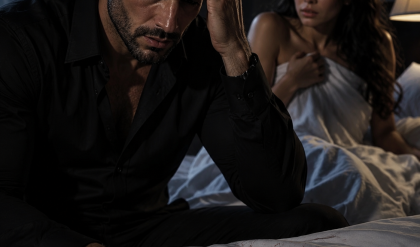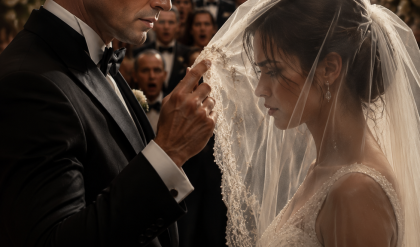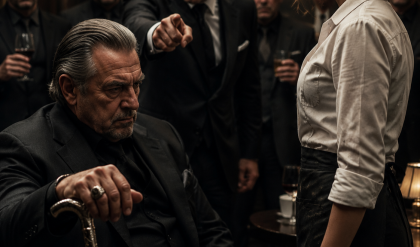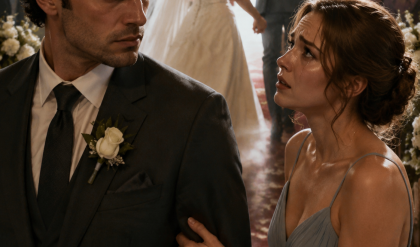
“What’s your name?” he rasped.
“Rosalie,” she said. “Rosalie Jenkins.”
Harris closed his eyes for a second, as if saving the sound.
Then he looked at Matteo.
“She comes with us.”
Rosalie recoiled. “No. No, I can’t. My brother needs me. I can’t just disappear.”
“Nico saw you,” Harris said, each word dragged through pain. “He will find out who you are. He will use your brother to get to me. If you go home, you both die.”
The truth struck her harder than any threat.
Matteo’s face softened by half an inch. “He’s right.”
Rosalie shook her head, tears spilling again. “I’m nobody.”
Harris’s eyes did not leave hers.
“No,” he whispered. “You’re the reason I’m alive.”
His strength gave out before he could say more. The machines screamed as his heart rate spiked. Matteo moved fast, calling in the private medical team he trusted more than the doctors Nico had bought. Within minutes, room 1401 became chaos: guards shouting, nurses running, a decoy ambulance being summoned to the lower loading dock.
And Rosalie, still shaking, was pulled into a war because she had sung a lullaby in the dark.
The Costa safe house sat on a private stretch of rocky Rhode Island coast, hidden behind black iron gates and wind-bent pines. From the outside, it looked like an old stone mansion built by a shipping family who wanted to watch the Atlantic punish the shore. From the inside, it was a fortress. Reinforced glass. Security cameras. Underground garage. Men with earpieces who spoke in murmurs and never smiled.
For three days, Rosalie lived there like a guest who was not allowed to leave.
They gave her a bedroom bigger than her entire apartment. They stocked the closet with clothes that still had tags on them. They brought trays of food she barely touched. Every time she walked toward an exit, a guard appeared as if summoned by guilt.
“Ma’am,” he would say gently, “Mr. Russo asked that you stay inside.”
Mr. Russo asked.
Harris ordered.
That was what it meant.
Her brother Leo called the first night, frantic because she was not home. Rosalie lied so badly she almost choked on it.
“I got assigned to a private overnight job,” she told him, pacing the bedroom while a guard stood outside. “It pays more. I’m okay.”
“You sound scared,” Leo said.
“I’m tired.”
“You always say that when you’re scared.”
Rosalie sat on the edge of the bed and closed her eyes. Leo was nineteen, but illness had stolen so much from him that sometimes he sounded older than her and younger than a child in the same sentence. Kidney failure had made his face gray, his body thin, his hope cautious. She had borrowed money from a South End loan shark named Mickey Sullivan to keep him on dialysis when insurance delays and hospital bills buried them alive.
Mickey had come to collect four nights before Harris woke up.
He had smiled when Rosalie told him she did not have ten thousand dollars.
Then he hit her hard enough to knock her into the kitchen counter.
“Friday,” he had said, crouching beside her while Leo slept in the next room. “Or your brother learns how interest works.”
Now Friday was coming, and Rosalie was trapped in a mansion with criminals while her brother waited alone.
On the fourth night, Harris asked about the bruise.
He was sitting in a leather chair near the fireplace, wearing dark sweatpants and a plain white T-shirt. He looked nothing like the motionless ghost from the hospital bed. Color had returned to his face, and with it something sharper, colder. But his body was still weak. His hand trembled around the armrest. Sweat darkened the collar of his shirt after an hour of physical therapy. Each breath seemed like a decision.
Rosalie stood near the door, arms folded.
“Who hit you?” Harris asked.
She touched her cheek before she could stop herself. “I fell.”
“I know what falling looks like.”
“Good for you.”
His eyebrow lifted slightly.
She had not meant to snap. Fear and exhaustion had burned through manners.
“I’m sorry,” she said, though she was not.
“Don’t be.”
Rosalie looked at him then, really looked. Harris Costa had the kind of face people remembered even when they wanted to forget it. Strong jaw, dark eyes, a scar near his left temple from the bombing, and a stillness that made every room feel like it was waiting for him to speak. But there was pain there too. Not only physical. Something older.
“I need to go home,” she said. “My brother has dialysis tomorrow. His medication runs out soon. I don’t know what Matteo told you, but I am not part of this. I cleaned floors. I sang because the room was too quiet. That’s all.”
Harris leaned back, studying her.
“You sang every night.”
Rosalie’s throat tightened. “You heard?”
“I heard you when I heard nothing else.”
The anger in her weakened, and she hated that. She wanted him to be only a monster. It would make everything easier.
“My mother sang that song,” he said. “Before she died.”
Rosalie looked toward the fire. “Mine too.”
The room went quiet except for the crackle of burning wood and the distant crash of waves against rock.
“Tell me about your brother,” Harris said.
“Why?”
“Because your hands shake every time your phone rings.”
That was the cruel thing about people who survived violence. They noticed everything.
Rosalie sank into the chair opposite him, too tired to stand. “His name is Leo. He needs a kidney transplant. The hospital keeps saying he’s on the list, but every month there’s a new bill, a new delay, a new reason we have to wait. I borrowed from Mickey Sullivan to keep him alive.”
Harris’s expression changed at the name.
“How much?”
“Eighty thousand. But with interest, it’s whatever Mickey says it is.”
“And the bruise?”
She looked down.
Harris pressed a button on the side table.
Matteo entered almost immediately.
“Find Mickey Sullivan,” Harris said. His voice had gone flat. “South End operation. Runs loans through Nico’s people. Take his books. Freeze his accounts. Send copies to the federal task force anonymously. I want every family he’s threatened notified their debts are erased.”
Matteo nodded once.
Rosalie stood. “Wait. What are you doing?”
Harris continued. “Find Leo Jenkins. Move him to Commonwealth General under full protection. Get the transplant team involved. Legal channels only. No line-cutting. No dirty medicine. If there’s a donor match, we fund the surgery. If there isn’t, we fund every treatment until there is.”
Matteo’s gaze flicked to Rosalie, then back to Harris.
“Done.”
When he left, Rosalie could barely breathe.
“You can’t just do that,” she whispered.
“I can.”
“Why?”
Harris looked at her, and for the first time, the dangerous mask slipped. Beneath it was a man who had spent five years screaming where no one could hear him.
“Because you came into a room everybody else had turned into a grave,” he said. “And you treated the thing in that bed like a person.”
Rosalie’s eyes burned. “That doesn’t mean you own me.”
“No,” Harris said quietly. “It doesn’t.”
That answer shocked her more than any order could have.
He looked toward the window, where the black ocean beat itself into white foam against the rocks.
“I said that at the hospital because I needed Matteo to understand you were protected. Not property. Protected.” His jaw tightened. “I have spent my life around men who confuse the two.”
“And you don’t?”
His eyes returned to hers. “I did.”
The honesty landed between them heavily.
“I’m trying to wake up from more than a coma, Rosalie.”
She did not know what to say to that.
The next morning, Leo called from a private hospital room at Commonwealth General, crying so hard Rosalie had to sit down on the floor.
“They said the debt people can’t contact me anymore,” he told her. “A lawyer came. A real one. He said Mickey’s lending operation is being investigated. And Rosie, the transplant coordinator came in. They found a donor match from a paired registry. It’s legal. It’s real. The surgery could happen this week.”
Rosalie pressed her fist against her mouth.
For years, relief had been something she did not trust. It always came with a bill hidden inside it. But this time Leo’s face on the secured tablet looked brighter than she had seen it in months.
“What did you do?” Leo asked softly.
Rosalie looked through the open adjoining door.
Across the hall, Harris was struggling to stand between two parallel bars while a physical therapist counted seconds. His face was pale with pain. His knees shook. Matteo stood nearby, pretending not to worry.
“I sang,” Rosalie said.
Leo frowned. “What?”
She smiled through tears.
“I’ll explain someday.”
By the end of the week, the safe house had developed a strange rhythm. Harris trained his body like an enemy he intended to conquer. Rosalie called Leo twice a day. Matteo moved through the halls with silent purpose, gathering evidence, securing allies, discovering how deeply Nico had poisoned the Costa organization.
Nico had not merely tried to take power.
He had prolonged Harris’s coma.
Dr. Edwin Vale, the neurologist who claimed Harris had no meaningful brain activity, had been receiving monthly payments through shell accounts. Sedatives had been adjusted whenever Harris showed signs of awareness. Reports had been altered. Hope had been smothered on paper before it could reach Rosa Costa, Harris’s younger sister, who had slowly been convinced there was no brother left to save.
When Matteo placed the proof on Harris’s desk, Harris did not shout.
He only stared at the files until Rosalie, standing in the doorway, felt the room turn colder.
“They buried you alive,” she said.
Harris closed the folder.
“Yes.”
“What are you going to do?”
The old Harris Costa might have said something that turned her stomach.
Instead, he looked at the stack of medical records, bank transfers, and forged signatures.
“I’m going to make the whole city watch him tell the truth.”
That answer should not have made Rosalie proud.
It did.
The kiss happened three nights later, after a storm knocked power out along the coast and the mansion ran on generators.
Harris had managed twelve steps without assistance. Twelve. To most people, it would have meant nothing. To a man who had spent five years motionless, it was a revolution.
Rosalie found him afterward in the library, one hand braced on the mantel, his breath uneven.
“You should be resting,” she said.
“I’ve rested enough.”
“You were in a coma. That’s not resting.”
His mouth curved faintly.
She brought him water. He accepted it, but his hand shook so badly that some spilled over his fingers. His face hardened with humiliation.
Rosalie did not look away. She took the glass back, set it down, and held his hand between both of hers until the shaking eased.
“You don’t have to perform strength every second,” she said.
“In my world, weakness gets people killed.”
“In mine too,” she answered. “We just call it poverty.”
That made him look at her.
The firelight caught the gold in her hazel eyes. For the first time since he had awakened, Harris looked almost uncertain.
“I don’t know how to be gentle,” he admitted.
Rosalie’s thumb moved over his knuckles. “You learned how to stand again. Maybe start there.”
He leaned closer, slowly enough for her to stop him.
She did not.
The kiss was not smooth or easy. It carried fear, gratitude, hunger, and warning. It felt like two people reaching across a burning bridge, knowing the flames were real and crossing anyway.
When he pulled back, Harris rested his forehead against hers.
“I won’t cage you,” he said.
Rosalie closed her eyes.
“Then don’t make me regret staying.”
Before he could answer, the perimeter alarm screamed.
The first bullet shattered the library window.
Matteo burst through the door as glass rained across the rug.
“Down!”
He tackled Harris behind the sofa. Rosalie dropped to the floor, heart slamming against her ribs as automatic gunfire ripped through the room. Outside, men shouted over the storm. The safe house guards returned fire, but the attack had come too cleanly, too fast.
“Nico found us,” Matteo said, checking his weapon. “Hardlines are cut. Cell signal’s jammed.”
Harris reached for the gun at Matteo’s ankle.
“No,” Matteo snapped. “You can barely walk.”
Harris gave him one look.
Matteo cursed and handed it over.
Rosalie crawled toward them, shaking. “How do we get out?”
“Garage tunnel,” Matteo said. “Armored SUV. We move now.”
Harris grabbed Rosalie’s wrist.
“You go with Matteo.”
“So do you.”
“I’ll slow you down.”
“Then we go slow.”
The room shook as an explosion tore through the front entrance.
Harris’s eyes burned. “Rosalie.”
“No,” she said fiercely. “You don’t get to wake up because of me and then die because you’re too proud to be helped.”
For half a second, even with bullets tearing through the walls, Matteo looked like he might smile.
“She has a point.”
They moved together.
Harris leaned on Matteo on one side and Rosalie on the other, each step agony. Twice he nearly fell. Twice Rosalie held on harder. They reached the servant stairwell as masked men entered the hall behind them.
Matteo fired over his shoulder. Harris fired once, clean and controlled, forcing the attackers back.
In the underground garage, the lights flickered over concrete pillars and black vehicles. The armored SUV waited thirty yards away.
So did Nico’s men.
Gunfire erupted.
Matteo shoved Rosalie and Harris behind a pillar. A bullet caught Matteo in the thigh, and he went down with a hard grunt, his pistol skidding across the floor.
“Harris,” Rosalie cried.
“I’m fine,” Matteo lied through clenched teeth.
Three attackers advanced from the far side of the garage.
“We got the girl,” one of them shouted. “Nico wants her breathing.”
Rosalie’s fear turned suddenly, strangely clear.
For years she had cleaned other people’s messes. Blood from hospital floors. Vomit from waiting rooms. Coffee spilled by surgeons who never said thank you. She knew chemicals. Pressure canisters. How things broke when people stopped reading labels.
On the wall beside the attackers hung a large industrial fire suppressant tank.
Matteo’s gun lay six feet away.
Rosalie moved before anyone could stop her.
She dove, grabbed the pistol with both hands, and aimed not at the men but at the tank.
“Rosalie!” Harris shouted.
She pulled the trigger.
The bullet struck the canister.
White chemical fog exploded through the garage, swallowing the attackers in a blinding cloud. Men screamed. Weapons fired wildly into concrete. Matteo, wounded but still lethal, dragged himself into the chaos and disarmed the nearest man. Harris used the pillar to pull himself upright and fired twice at the muzzle flashes, forcing the others to drop their weapons.
When the fog thinned, the attackers were down, coughing and groaning, alive but finished.
Matteo looked at Rosalie, who still held the pistol in shaking hands.
“You ever want a job?” he asked breathlessly.
Rosalie started laughing, then crying, then both.
Harris limped to her and took the gun gently from her fingers.
“I told you I’d protect you,” he said.
She wiped her face with the back of her hand. “You were doing a terrible job for about thirty seconds.”
A laugh escaped him. Small. Pained. Real.
They got Matteo into the SUV. Rosalie drove because she was the only one with two working legs and enough adrenaline to challenge God. The vehicle smashed through the garage barrier and tore into the storm, leaving the burning safe house behind.
In the back seat, Harris called his sister Rosa for the first time in five years.
When she answered, he said only, “It’s me.”
The sound that came through the speaker was not a word. It was a sob breaking open half a decade of grief.
Harris closed his eyes.
Rosalie drove faster.
Forty-eight hours later, Nico Romano gathered the remaining Costa captains in a private dining room above the Beacon Club, a brick building in Back Bay where old money went to pretend it did not know new crime.
He wore a white suit and a black sling under his jacket, his wounded shoulder hidden beneath elegance. His smile was steady because he had practiced it in the mirror.
“Harris Costa died two nights ago,” he told the room. “The Rhode Island property burned. Matteo Russo is dead. The cleaner is dead. We mourn them, of course. But business does not mourn for long.”
The men around the table said nothing.
They were old enough to know that rumors were dangerous and silence was safer than loyalty.
Nico lifted his glass.
“To stability.”
The doors opened behind him.
Not kicked in. Not blasted apart.
Opened.
Matteo Russo walked in first, leaning on a cane, pale from blood loss but very much alive. Two Costa men followed, weapons lowered but visible.
Nico’s glass slipped from his hand and shattered.
Then Harris Costa stepped into the room.
He wore a dark suit tailored to hide the weakness in his frame. He leaned on a silver-handled cane. Every step cost him. Everyone could see that.
And still, every man at the table stood as if pulled by a wire.
Harris looked at them.
“Sit down.”
They sat.
Nico backed toward the wall. “Harris. Boss. Thank God. I thought—”
“You thought wrong.”
Harris moved to the head of the table. Matteo placed a folder in front of each captain. Bank records. Medical files. Audio transcripts. Photos of Dr. Vale entering Nico’s building. Proof of payments. Proof of altered charts. Proof that the man who claimed to protect the family had spent five years keeping its boss sedated and silent.
Nico’s face turned gray.
“This is fake,” he said.
The elevator doors opened again.
Rosa Costa entered with Dr. Vale beside her, flanked by two federal agents in plain suits.
Nico stopped breathing.
Dr. Vale looked destroyed. His collar was open. His hands shook. A man who had sold his oath for money now looked like money had abandoned him.
Rosa’s eyes were red, but her voice was steel.
“Tell them,” she said.
Dr. Vale swallowed.
“Nico Romano paid me to falsify Harris Costa’s neurological reports,” he said. “He instructed me to suppress signs of awareness. He ordered the final injection.”
Nico lunged for the gun beneath his jacket.
Harris moved first.
Not with a bullet.
With the cane.
He struck Nico’s wrist hard enough to send the gun skidding across the floor. Matteo stepped on it. The federal agents moved in, slamming Nico against the table and cuffing him as the captains watched in stunned silence.
Nico spat blood and laughed wildly.
“You’re handing me to cops now?” he snarled at Harris. “What happened to you in that coma? You get religion?”
Harris leaned close enough that only Nico and the men nearest him could hear.
“No,” he said. “I got time to think.”
Nico stared at him.
“For five years, I listened to men like you talk over my body like I was already in hell,” Harris continued. “I heard what power sounds like when nobody decent is left in the room. And then a cleaner sang to me like I was still human.”
His eyes flicked to Rosalie, standing quietly near the doorway.
“So I’m trying something new.”
Nico struggled against the cuffs. “You’ll never be clean.”
“No,” Harris said. “But I can stop making the world dirtier.”
The agents dragged Nico out, still cursing.
The room remained silent after he was gone.
Harris looked at the captains, one by one.
“The Costa family is finished as you knew it,” he said. “The loan operations end tonight. The protection rackets end tonight. Anyone who wants to keep preying on working families can follow Nico into a cage. Anyone who wants legitimate business will meet with my attorneys in the morning.”
One captain scoffed. “You think men like us can just become businessmen?”
Harris’s smile was faint and dangerous.
“No. I think men like you can become prisoners very quickly if you don’t.”
No one argued after that.
One week later, sunlight poured through the windows of Commonwealth General’s transplant recovery wing.
Leo Jenkins sat propped against pillows, color back in his face, eating chocolate pudding like it was a five-star meal. Rosalie sat beside him, one hand wrapped around his, still unable to stop checking that he was warm, breathing, alive.
“You’re staring again,” Leo said.
“I’m allowed.”
“You look like Mom when I tried to skateboard down the church steps.”
“You broke your wrist.”
“I almost landed it.”
Rosalie laughed, and the sound surprised her. For so long, laughter had felt like something other people could afford.
A soft knock came at the door.
Harris entered carrying white orchids.
He wore a dark sweater instead of a suit, his cane in one hand and flowers in the other. He looked tired, thinner than any headline would ever show, but alive in a way that filled the room before he spoke.
Leo stared.
“You’re him.”
Harris set the flowers on the table. “I’m Harris.”
“You saved my life.”
Harris looked at Rosalie.
“No,” he said. “Your sister saved mine. I only paid attention afterward.”
Leo studied him with the blunt suspicion of a younger brother who had been sick too long to be easily impressed.
“Are you dangerous?”
Rosalie closed her eyes. “Leo.”
Harris answered before she could soften it.
“Yes.”
Leo nodded slowly. “Are you dangerous to her?”
“No.”
“You swear?”
Harris stepped closer, his expression solemn.
“On the song that brought me back.”
Leo seemed to accept that.
When he fell asleep later, Rosalie and Harris stood in the hallway, where nurses moved around them and the world kept going as if miracles happened every day.
“You’re free,” Harris said.
Rosalie turned to him.
“Mickey is gone,” he continued. “Nico is in custody. Leo’s care is funded through a legal trust in your name, not mine. The apartment is secured. If you want to walk away from me, Matteo will drive you wherever you want to go.”
She stared at him, feeling the full weight of what he had done.
Not bought her.
Not trapped her.
Freed her.
“And if I don’t want to walk away?” she asked.
Something vulnerable crossed his face.
“Then I spend the rest of my life proving you stayed by choice.”
Rosalie reached up and touched the scar near his temple, the one the bomb had left behind.
“For five years, you were trapped in the dark,” she said. “For most of my life, so was I. Maybe that’s why the song worked. Maybe it wasn’t just calling you out.”
Harris covered her hand with his.
“Maybe it was calling us both.”
She smiled then, and it was not the smile of a frightened cleaner, not the smile of a woman begging the world to spare what little she loved. It was steady. Certain. Hers.
Down the hall, somewhere inside Leo’s room, the heart monitor beeped in a calm, living rhythm.
Outside the hospital windows, Boston glittered under a clean blue sky, still bruised, still dangerous, but no longer entirely ruled by wolves.
Rosalie leaned into Harris, and very softly, just for him, she sang the final line of the old lullaby.
“The fire burns bright, and the lost come home.”
Harris closed his eyes.
For the first time in five years, the silence did not feel like a grave.
It felt like peace.
THE END