The stranger did not answer.
My body healed slowly. Surgeries repaired my shoulder and leg. Physical therapy taught me how to walk again. The first time I took six steps without collapsing, the nurses cheered.
I cried afterward, but not because I was happy.
I cried because I had no idea who I was walking toward.
Back home, Elise was learning another kind of survival.
Our house became a museum of me. My boots stayed beside the front door. My coffee mug remained on the second shelf, handle turned exactly how I liked it. My jacket hung beside hers in the hallway. On cold nights, she still slept on her side of the bed, leaving mine untouched.
Colton came by twice a week with groceries and excuses.
“The porch light needed fixing.”
“The gutters were clogged.”
“I made too much chili.”
He never said, I’m afraid you’ll disappear too.
But Elise knew.
One evening, he found her sitting on the kitchen floor with my old flannel shirt in her lap.
“Have you eaten today?” he asked.
She looked at him as though he had spoken another language.
“I don’t remember.”
“Elise.”
“I’m trying, Colton.”
“No,” he said softly, crouching in front of her. “You’re waiting.”
Her eyes filled with tears.
“I promised.”
He sat beside her on the floor and said nothing, because there are moments when friendship means not correcting a broken heart.
At the hospital, tiny fragments began returning to me after six months.
Not facts.
Feelings.
The smell of coffee made me stop in a hallway with my hand against the wall, suddenly certain someone had laughed in a kitchen while pouring it.
A nurse humming an old jazz song made my chest ache so sharply I had to sit down.
A volunteer dropped a box of donated Christmas ornaments, and the flash of silver glass gave me a vision of a woman’s hand sliding into mine.
Then it vanished.
Every fragment hurt worse than emptiness.
My doctor, Helena Moore, told me memory was not a locked room. It was a house after a storm. Some doors opened. Some had to be rebuilt. Some might never open again.
“Don’t chase everything at once,” she warned.
“What if the thing I’m missing matters?”
She looked at me with pity she tried to hide.
“Then it will keep calling.”
It did.
One word began haunting me before I knew what it meant.
Elise.
At first, it came in dreams. A voice laughing. Brown eyes turning toward sunlight. A woman saying my name, though I could never hear what name she used. I woke with tears on my face and whispered, “Elise,” into the dark.
Dr. Moore asked if I knew who Elise was.
I didn’t.
“Maybe a sister,” a nurse suggested gently.
I shook my head.
“How do you know?”
“Because,” I said, pressing a hand to my chest, “I miss her like breathing.”
Meanwhile, Elise was being told by everyone who loved her that surviving was not betrayal.
At first, she hated them for it.
Then she hated herself for needing to hear it.
A year passed. Then fifteen months. Then eighteen.
People stopped saying “when Ryland comes home” and started saying “if Ryland had been here.” The shift was small, but Elise heard it every time.
She kept visiting the bridge on Fridays. She brought flowers to the memorial plaque the city had installed after the accident. Sometimes she talked to me for an hour. Sometimes she just sat in her car and watched the river move on without apology.
One winter evening, Colton stood beside her at the overlook, hands in his coat pockets, breath fogging in the air.
“He would hate this,” he said.
She didn’t look at him. “What?”
“You freezing out here every week. Punishing yourself because the river didn’t give you an answer.”
Her jaw tightened.
“I’m not punishing myself.”
“Elise.”
“Don’t.”
He went quiet.
She stared at the plaque. My name was carved into bronze. Ryland James Mercer. Beloved husband, son, friend. Builder of safe places.
Her voice broke. “I don’t know how to leave him here.”
Colton’s own eyes shone. “Maybe you don’t leave him. Maybe you carry him differently.”
That sentence stayed with her.
A few months later, Colton invited her to dinner with a widower named Adrian Holloway.
Elise almost refused the moment she understood what he was doing.
“I’m not dating,” she said.
“I know.”
“Then why would you do this?”
“Because Adrian isn’t a date. He’s someone who knows what it feels like to keep talking to a person who isn’t there anymore.”
Adrian was a quiet man with kind eyes and gray beginning at his temples. He taught history at a community college. His wife had died of ovarian cancer three years earlier. He didn’t flirt with Elise. He didn’t tell her time healed everything. He didn’t ask her to remove her wedding ring.
When she mentioned me, he listened.
When she apologized for mentioning me, he said, “Please don’t. Love doesn’t become disrespectful just because it’s painful.”
For the first time in nearly two years, Elise spent an entire evening with someone who did not look frightened by her grief.
Their friendship grew slowly.
Coffee after work.
Walks around the lake.
Books exchanged.
Silences that did not demand explanation.
Adrian never tried to replace me. That was why Elise trusted him. He made space for the dead instead of competing with them.
One night, after they had known each other for almost six months, Elise admitted the thing she had been ashamed to say aloud.
“Sometimes I laugh,” she said. “And then I feel sick.”
“Why?”
“Because Ryland can’t.”
Adrian looked at the dark lake in front of them.
“When my wife died, I didn’t laugh for eight months. Then one day a student wrote something ridiculous on an exam, and I laughed so hard I cried. Afterward I sat in my car and apologized to her.”
“What did you think she would say?”
He smiled sadly.
“She would have told me not to be dramatic.”
Elise laughed through tears.
That was the first time laughter did not feel like betrayal.
By then, my memory had returned in pieces large enough to torment me.
I remembered a porch with maple leaves scattered across it.
I remembered a dog’s head on my knee.
I remembered a woman wearing my sweatshirt and dancing barefoot in a kitchen.
I remembered saying, “I’ll always find my way back to you.”
But I still did not remember my full name.
Then, on an ordinary rainy afternoon almost two years after the accident, a volunteer wheeled an old television into the rehab center recreation room. Most of us barely watched. The local station was running a segment about a community fundraiser, and a pianist began playing a soft wedding melody in the background.
The first notes hit me like lightning.
A white aisle.
An oak tree.
Elise in an ivory dress.
My hand shaking as I placed a ring on her finger.
Her whisper.
“Then I’ll always be waiting.”
The room tilted.
My chair crashed backward as I stood.
A nurse rushed toward me. “John?”
But John Doe was gone.
“My name,” I said, grabbing the edge of the table. “My name is Ryland Mercer.”
The memories came so fast they nearly knocked me unconscious.
My parents. My firm. Colton. The bridge. The rain. The truck. The river.
And Elise.
My wife.
My wife who thought I was dead.
I fell to my knees, sobbing so hard the nurses thought I was in physical pain. Maybe I was. Maybe remembering love all at once after living two years without it feels exactly like breaking.
Dr. Moore helped me into a chair.
“I have to call her,” I said.
“We will contact the authorities first.”
“No. You don’t understand. She’s been waiting for me.”
Dr. Moore’s face softened. “Ryland, she has believed you were dead for almost two years. We have to do this carefully.”
Carefully.
The word felt obscene.
I had already lost two years.
Detective Naomi Sinclair arrived two days later. She had led the original search after my accident. When she stepped into the hospital room and saw me, she stopped as if the floor had vanished beneath her.
“My God,” she whispered.
I stood slowly.
“I’m sorry,” I said, because I did not know what else a ghost should say.
She covered her mouth with one hand. “I went to your memorial.”
“I know.”
“We searched everywhere.”
“I know.”
Her eyes moved across my scars, my trembling hand, the cane beside my chair.
“What happened to you?”
I told her.
Walt Hayes finding me. The hospital. The surgeries. The amnesia. The name that had pulled me back to myself.
Detective Sinclair cried before I finished.
Then she became all business. Fingerprints. Dental records. Old medical files. Scars from childhood injuries my mother had once joked about. Everything matched.
Legally, I was alive.
Emotionally, I had no idea whether the life I remembered still existed.
Detective Sinclair asked if I wanted her to contact Elise immediately.
“Yes,” I said.
Then her phone buzzed.
She stepped outside to answer it. When she returned, the expression on her face had changed.
“What?” I asked.
She hesitated.
I felt my stomach drop.
“What happened?”
“Ryland,” she said carefully, “Elise is getting married on Saturday.”
For a few seconds, I could not hear the machines beside my bed.
Saturday.
It was Thursday.
“No,” I said.
“I’m sorry.”
“No.”
I stood too quickly. Pain shot through my leg. Dr. Moore reached for me, but I pulled away.
“She doesn’t know I’m alive.”
“No, she doesn’t.”
“Then I have to go.”
“You are not cleared for that kind of travel.”
I looked at her. “My wife is about to marry another man because the world told her I was dead. I will crawl there if I have to.”
No one argued after that.
The next morning, Detective Sinclair arranged my travel. Dr. Moore gave me medication, instructions, and a look that said she knew I would ignore half of them.
Before I left, she placed a hand on my shoulder.
“Ryland, listen to me. Whatever you find when you get there, remember that she survived the only way she could.”
“I know.”
“Do you?”
I looked away.
Because fear is not always reasonable.
On the flight home, I stared out the window at clouds glowing white beneath the sun and wondered if Elise still wore her hair pinned back when she was nervous. I wondered if my parents had aged beyond recognition. I wondered if Colton had kept the firm alive. I wondered whether Elise would see my scars before she saw me.
Most of all, I wondered if I was returning as a miracle or a wound.
Part 3
When the taxi pulled into my old neighborhood, I expected the sight of our street to comfort me.
Instead, it nearly broke me.
The maple trees were still there. The Henderson kids’ old basketball hoop still leaned at the end of their driveway. Mrs. Whitmore still had ceramic rabbits in her flower bed even though winter had cracked two of them.
But my house looked wrong.
Our curtains were gone.
The porch swing was missing.
A real estate sign stood near the mailbox.
For a moment, I simply stared.
Then Mrs. Whitmore stepped onto her porch holding a grocery bag. She saw me and frowned, polite but uncertain. Her eyes moved over my scarred face, my cane, my thin frame.
Recognition hit her slowly.
The bag slipped from her hand.
Apples rolled across the porch.
“Ryland?” she breathed.
I nodded.
She made a sound like a prayer and hurried across the street, crying before she reached me. She hugged me carefully, afraid I might vanish or break.
“Oh, honey,” she said. “Oh, sweet boy. We thought…”
“I know.” My voice shook. “Where is Elise?”
Her face changed.
That was when I knew.
“The church,” she whispered.
My chest tightened.
“Which church?”
“St. Matthew’s.”
I turned toward the steeple rising over the downtown rooftops.
Mrs. Whitmore grabbed my arm. “Ryland, the ceremony already started.”
I ran anyway.
Or tried to.
My body was not the body that had gone over the bridge two years before. My leg burned by the end of the block. My ribs screamed. My lungs felt too small. But terror kept me moving. A pickup truck slowed beside me, and the driver, a man I vaguely recognized from town, leaned across the passenger seat.
“Ryland Mercer?”
“I need St. Matthew’s.”
“Get in.”
He drove like a man who understood that some red lights were less important than destiny.
Inside the church, Elise stood at the altar trying not to look at the doors.
She had looked at doors for almost two years.
Restaurant doors. Library doors. Airport doors. Grocery store doors. Every unexpected knock had made her heart leap and then humiliated her when it was only a neighbor, a delivery driver, Colton, anyone but me.
So on her wedding day, she told herself not to look.
Adrian stood across from her in a navy suit, gentle and nervous. He had been honest with her from the beginning.
“I know I’m not replacing him,” he had said when he proposed.
“No one could.”
“I’m not asking to.”
That was why she said yes.
Not because she stopped loving me.
Because she believed loving a dead man forever did not require dying beside him.
The minister spoke about second chances. Elise held her bouquet and listened. She thought of me when she should not have. She thought of my laugh. She thought of the way I used to kiss her forehead before leaving for work. She thought of the last text she had sent.
I’m waiting.
Her eyes drifted toward the doors.
Stop, she told herself. He’s gone.
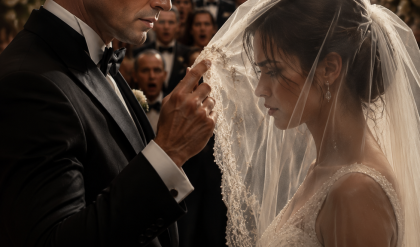
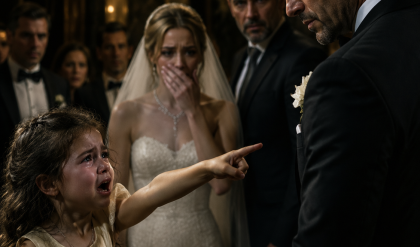
Then the doors opened.
Every head turned.
The minister stopped.
Adrian looked first.
Then Elise turned.
And the world she had rebuilt with trembling hands collapsed in a single breath.
I stood there alive.
Not whole. Not untouched. Not the same. But alive.
Her bouquet fell.
“Ryland?”
“I came home,” I said.
The sound that left her was not a cry. It was something deeper, older, torn from the place grief had lived inside her for too long.
She walked toward me at first as if approaching a dream. Halfway down the aisle, she began to run.
When she reached me, she stopped inches away and lifted a shaking hand to my face.
Her fingertips touched the scar along my cheek.
Real.
Her knees almost gave out.
I caught her.
Then she was in my arms, sobbing so hard her whole body shook.
“I waited,” she kept saying. “I waited. I waited so long.”
“I know,” I whispered into her hair. “I know, sweetheart. I tried to come back. I swear I tried.”
The church disappeared.
There was no altar, no guests, no stunned groom, no minister. There was only Elise in my arms and the impossible mercy of holding her again.
“I thought you were dead,” she cried.
“I know.”
“They told me you were gone.”
“I know.”
“I didn’t stop loving you.”
That broke me.
I pulled back just enough to look at her. “I never thought you did.”
Her eyes searched mine, wild with guilt. “I was going to marry him.”
“Because you thought I was dead.”
“I’m sorry.”
“No.” I held her face gently. “Don’t apologize for surviving.”
Behind her, Adrian stepped down from the altar.
The church tensed. Some people looked ready for anger, scandal, confrontation. But Adrian Holloway was not that kind of man.
He stopped a few feet away, pale but composed.
“I’m Adrian,” he said quietly.
“I know,” I answered. “I’m sorry.”
He shook his head. “You have nothing to be sorry for.”
I looked at the woman between us. “Neither do you.”
Adrian’s eyes glistened, but his voice remained steady. “I asked Elise to marry me because I wanted her to have peace. If peace came through you walking back into her life alive, then this is the best wedding gift I could have received.”
A broken laugh moved through the front row.
Elise turned to him with tears streaming down her face. “Adrian…”
He smiled sadly. “You told me from the beginning that part of your heart was buried with him.”
She could not speak.
He looked at me. “Take care of her.”
“I will.”
“No,” he said, and his voice finally cracked. “Take care of each other. She took care of your memory when nobody knew whether hope was mercy or madness.”
I extended my hand.
He shook it.
The church exhaled.
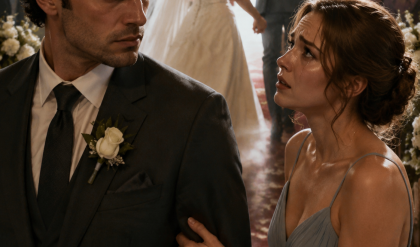
Then Colton appeared from a side pew, staring at me like he had seen judgment day. For one second, my best friend looked angry, hurt, relieved, and terrified all at once. Then he crossed the aisle and pulled me into a hug so careful and fierce I almost laughed.
“You idiot,” he choked. “You absolute idiot.”
“I missed you too.”
He pulled back, crying openly. “Do you have any idea what you put us through?”
“I was unconscious for most of it, so I’m hoping that helps my defense.”
He laughed through tears and hugged me again.
Detective Sinclair entered quietly at the back of the church, out of breath from following the rumors already spreading across town. When Elise saw her, understanding dawned.
“You knew?”
“Only for two days,” the detective said softly. “We were trying to verify everything before contacting you. Then we found out about today.”
Elise pressed a hand to her mouth.
The minister closed his Bible.
“I believe,” he said, voice thick with emotion, “that this ceremony has changed purpose.”
Some guests cried. Others laughed. My mother arrived ten minutes later after Colton called her. She ran into the church with my father behind her, and when she saw me, she stopped so abruptly my father nearly collided with her.
Then she screamed my name.
I had imagined my mother’s face for months after remembering her. Nothing prepared me for the sound she made when she held me again. My father, a quiet man who had always treated emotions like storms to be endured privately, wrapped both arms around me and shook like a child.
“My son,” he whispered. “My son.”
“I’m here, Dad.”
He gripped the back of my neck.
“I buried an empty casket,” he said.
“I know.”
“Don’t ever make me do that again.”
“I’ll do my best.”
Outside, news had already begun to spread. Phones buzzed. Reporters gathered near the sidewalk. Half the town seemed to appear within the hour, drawn by whispers that Ryland Mercer had walked into his wife’s wedding alive.
But inside the church, we did not give them a story.
We gave ourselves time.
Elise sat beside me in the front pew with both hands wrapped around mine as Detective Sinclair explained what had happened. The crash. The river. The fisherman. The mountain hospital. The amnesia. The proof of identity.
Elise listened without blinking.
When the detective finished, she turned to me.
“You didn’t know who you were?”
“No.”
“You didn’t know me?”
My voice broke. “Not at first.”
That hurt her. I saw it.
So I told her the truth.
“But I knew I was missing someone. Even before I remembered your name, I felt you. Like my heart remembered what my mind couldn’t.”
She bowed her head over our joined hands and cried.
Adrian left quietly before the church emptied. Later, Elise found a note tucked beneath the bouquet she had dropped.
Elise,
I meant what I said. Some love stories end because they were never strong enough. Yours paused because the world lost the page. I’m grateful I got to stand beside you for a little while. Now go live the miracle you deserved.
Adrian
Elise cried when she read it.
So did I.
Six months later, we returned to St. Matthew’s Church.
Not for a wedding.
For a vow renewal.
The real estate sign was gone from our yard. Elise had taken the house off the market the day after I came home. My boots were back beside the front door. My coffee mug was back on the second shelf. The porch swing was rebuilt by Colton, who claimed it was crooked on purpose for “historic authenticity.”
Recovery was not simple.
Miracles do not erase trauma. They only give you a reason to keep healing.
Some mornings, I woke from nightmares choking on river water that was not there. Some nights, Elise woke reaching for me, convinced the bed would be empty. My scars stayed. My leg ached when storms came through. There were memories I never fully recovered.
But love returned in ordinary ways.
Pancakes on Saturdays.
Jazz records on Sunday afternoons.
Walks beneath maple trees.
Doctor appointments.
Therapy.
Laughter that sometimes turned into tears without warning.
Elise kept Adrian’s note in a small wooden box, and I never asked her to throw it away. He had been kind to her when the world had left her with an empty casket. A man who helps someone breathe again deserves gratitude, not jealousy.
He attended our vow renewal.
He sat in the third row with a quiet smile. Afterward, he hugged Elise and shook my hand.
“I’m seeing someone,” he told us.
Elise smiled through tears. “Is she good to you?”
“She tells terrible jokes.”
“Then Ryland will approve.”
“I already do,” I said.
At the front of the church, the same minister who had watched my return stood before us again.
“The last time we gathered here,” he said, “we witnessed grief interrupted by grace. Today we witness what happens after the miracle, when two people choose not only to find each other again, but to heal together.”
Elise held my hands.
This time she wore a simple cream dress. No veil. No trembling guilt. Just tears, love, and the strength of a woman who had survived the unbearable without letting it make her cruel.
I repeated the vow I had made years earlier beneath the oak tree.
“No matter what happens, I’ll always find my way back to you.”
Her smile broke and healed me at the same time.
“And I’ll always be waiting,” she whispered. Then she shook her head softly. “But next time, maybe call first.”
The church laughed.
So did I.
Years have passed since that day, and people still ask what it felt like to walk into my wife’s wedding.
They expect me to say it felt like victory.
It didn’t.
Victory belongs to battles.
That moment felt like mercy.
Because Elise had not betrayed me. She had mourned me. She had honored me. She had carried me until carrying me nearly destroyed her. Then she did the bravest thing a grieving person can do.
She kept living.
And when I came home, she did not have to choose between love and guilt. We learned together that true love is not measured by how loudly someone refuses to move on. It is measured by how tenderly they remember, how honestly they grieve, and how bravely they open their heart to whatever mercy comes next.
Every morning now, before I leave the house, Elise kisses my forehead.
The first time she did it after I came home, we both froze.
Then she whispered the words that had once been ordinary.
“Come home safely.”
I looked at my wife, at the woman who had waited, grieved, survived, and loved me beyond memory itself.
Then I smiled.
“I always will.”
THE END