Claire always replied:
Only if you have.
His executives found the ritual amusing. His men pretended not to notice.
But everyone close to Gabriel understood the truth.
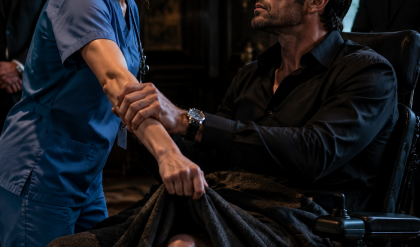
The only person in Harbor City who could order Gabriel Moretti to eat lunch was a waitress wearing a fifteen-dollar apron.
On the Friday Madison Cole entered Bellanova’s, the restaurant was packed.
Families filled the booths. Couples waited near the bar. A local jazz pianist played beside the windows while servers hurried between tables carrying pasta, wine, and baskets of warm bread.
Madison arrived with Evan and three friends, all holding phones.
The hostess recognized her immediately.
Madison had built an audience of nearly six million followers by humiliating strangers, provoking employees, and calling the results social experiments.
Her videos generated millions of views.
Her sponsors called her fearless.
Her victims used different words.
“We need the window table,” Madison said.
“I’m sorry,” the hostess replied. “It’s occupied.”
Madison glanced toward an elderly couple celebrating their anniversary.
“Then move them.”
The hostess hesitated.
Bellanova’s manager, Curtis Lane, appeared almost instantly. When he saw Madison’s phone, his expression changed.
Five minutes later, the elderly couple had been relocated to a smaller table near the kitchen.
Claire noticed.
She disliked it, but Curtis had made the decision.
Madison began streaming before she opened the menu.
“Tonight,” she told her viewers, “we’re testing whether expensive restaurants actually provide expensive service.”
Evan leaned into the frame.
“And whether the staff can survive Madison.”
The comments appeared rapidly.
Make them mad.
Send the food back.
Ask for something impossible.
Madison grinned.
“Oh, we’ll make it interesting.”
Claire approached the table.
“Good evening. My name is Claire, and I’ll be taking care of you tonight.”
Madison looked at her from head to toe.
The inspection lasted only seconds, but Claire knew the expression well.
“You’re our server?” Madison asked.
“Yes, ma’am.”
Madison glanced at the camera.
“I thought busy restaurants hired people who could move quickly.”
Her friends snickered.
Claire smiled politely.
“I’ll make sure you’re well taken care of.”
Her calm answer frustrated Madison.
For the next forty minutes, the table created one unnecessary demand after another.
More ice.
Less ice.
A cleaner fork.
A different glass.
Fresh napkins.
Extra lemon.
No lemon.
Warm bread.
Then new bread because the first basket had cooled while they filmed it.
Claire crossed the restaurant repeatedly without complaint.
She answered every insult with courtesy.
When Madison claimed her pasta was cold, Claire replaced it, although steam had still been rising from the plate.
When Evan snapped his fingers, Claire approached without reacting.
When one friend deliberately dropped a spoon, Claire picked it up and brought another.
Near the kitchen, Claire’s coworker Mia touched her arm.
“They’re doing this on purpose.”
“I know.”
“Let me take the table.”
“They’ll do it to you instead.”
“We should tell Curtis.”
Claire glanced toward the manager.
Curtis was watching the livestream from behind the bar.
“He already knows.”
By dessert, Madison’s viewer count had begun falling.
She needed a bigger moment.
Her eyes settled on the tall glass of Coke beside her plate.
Evan followed her gaze.
“Don’t,” one of their friends whispered.
Madison smiled.
“Relax. It’s content.”
“It’s assault.”
“It’s soda.”
Claire returned with tiramisu, chocolate cake, and cannoli.
“May I bring anyone anything else?”
Madison wrapped her fingers around the glass.
She turned toward her phone.
“You wanted entertainment.”
Then she poured the entire drink over Claire.
Now, standing in the employee restroom with the door locked, Claire stared at her reflection.
Brown liquid streaked her blouse. Her mascara had begun to run. Her wet hair clung to her cheeks.
For the first time that evening, her shoulders dropped.
She had survived worse than a spilled drink.
But that did not mean it did not hurt.
There was something especially painful about becoming entertainment for strangers who would never know her name.
A soft knock sounded.
“Claire?” Mia called. “I brought towels.”
Claire opened the door.
Mia’s eyes filled with tears.
“I’m so sorry.”
Claire accepted the towels.
“You didn’t do it.”
“I should’ve stopped them.”
“There were five cameras pointed at us. You were scared.”
“So was everyone else.”
Claire dried her face.
“That’s how people like Madison keep doing it.”
Curtis appeared in the hallway.
“Claire, I need you back on the floor.”
Mia stared at him.
“You’re joking.”
Curtis lowered his voice.
“Madison has millions of followers. We cannot turn this into a public fight.”
“She dumped a drink on me,” Claire said.
“I saw.”
“And you want me to continue serving her?”
“They’re almost finished. Apologize for whatever upset them, offer dessert on the house, and let them leave happy.”
The kitchen went silent.
Even the cooks stopped moving.
Claire studied Curtis.
“Apologize?”
“It’s business.”
“No,” she said quietly. “It’s cowardice.”
His face hardened.
“Be careful.”
Claire took a slow breath.
“Will you preserve the security footage?”
“Why?”
“Because I asked.”
“This does not need to become a legal situation.”
“I didn’t say it did.”
Something in her voice unsettled him.
Curtis glanced at the watching employees.
“I’ll preserve it.”
“Thank you.”
Claire changed into a spare blouse from her locker and returned to the dining room.
She did not apologize.
She did not serve Madison’s table again.
Instead, Mia delivered their bill while Claire finished caring for the customers who had treated her like a human being.
The elderly anniversary couple left five hundred dollars beneath their receipt.
A businessman approached Claire near the bar.
“My daughter waits tables while she’s in college,” he said. “I hope she has your strength.”
Claire managed a smile.
“I hope she never needs it.”
Across the room, Madison’s livestream comments had changed.
That wasn’t funny.
She handled that better than you did.
You went too far.
Someone needs to identify the waitress.
Madison rolled her eyes.
“People get offended by everything.”
Evan placed an arm around her.
“By tomorrow, this will be your biggest video.”
He was right.
But not for the reason he imagined.
After closing, the restaurant’s security supervisor handed Claire a flash drive.
“I copied the footage before Curtis could change his mind.”
“You could lose your job.”
The older man shrugged.
“My wife served tables for thirty-two years.”
Claire closed her fingers around the drive.
“Thank you.”
Outside, rain tapped against her windshield.
She sat in her car without starting the engine.
Her phone buzzed.
Have you eaten?
Claire stared at Gabriel’s message.
Her promise echoed in her mind.
If anyone ever hurts you, tell me.
She began typing.
Something happened tonight.
Then she deleted it.
Only if you have, she replied.
Gabriel answered almost immediately.
Finishing a meeting. I’ll be home soon.
Claire started the car.
She never noticed the video spreading across the internet.
She never saw the millions of views accumulating.
And she did not know that twenty miles away, on the top floor of Moretti Holdings, a young attorney had just entered Gabriel’s conference room carrying a tablet.
“Sir,” he said carefully. “You need to see this.”
Part 2
Gabriel Moretti watched the video twice.
The first time, he watched as Claire approached the table.
He heard Madison mock her size.
He watched Evan snap his fingers at her.
He saw Claire respond with patience to every insulting demand.
Then the glass rose.
The Coke crashed over his wife’s head.
Laughter filled the conference room speakers.
Gabriel did not move.
His senior advisers sat frozen around the table. These were men who had negotiated with labor unions, prosecutors, rival organizations, and armed foreign smugglers without showing fear.
Now none of them dared breathe.
The video continued.
Claire folded her apron.
“I hope you’re prepared to explain this to my husband.”
More laughter.
When the clip ended, Gabriel placed the tablet on the table with extraordinary care.
Men feared Gabriel most when he became quiet.
“Names,” he said.
His chief attorney, Samuel Reid, opened a folder.
“Madison Cole. Twenty-seven. Online personality. Six point two million followers. Multiple brand partnerships. She has faced three previous civil complaints involving harassment, but all were settled privately.”
“And the man?”
“Evan Price. Thirty-one. Executive vice president of Price Urban Development.”
Gabriel looked up.
“The company seeking our financing?”
“Yes.”
Price Urban Development had spent eight months negotiating a two-hundred-million-dollar partnership with Moretti Holdings. The deal would rescue the company from several overleveraged construction projects and allow it to expand along the East Coast.
The final approval meeting was scheduled for nine the next morning.
A man seated near the end of the table leaned forward.
“I can have them brought here tonight.”
Another said, “Or they can disappear from public life before breakfast.”
Samuel Reid stiffened.
The legitimate side of Gabriel’s organization had spent years separating itself from the violent habits of the past. Some men remained nostalgic for older methods.
Gabriel looked at the paused image of Claire.
She stood soaked beneath the restaurant lights while strangers laughed.
His hands curled beneath the table.
For several seconds, he imagined all the ways fear could be delivered.
A destroyed career.
A bankrupt family.
A midnight visit.
An abandoned warehouse.
His anger supplied possibilities faster than reason could reject them.
Then he remembered Claire’s voice inside the chapel.
You will not destroy someone’s life because you can.
“No,” Gabriel said.
The men looked confused.
“Boss,” one adviser began.
“I gave my wife my word.”
“They humiliated her.”
“I saw.”
“They assaulted her in public.”
“I saw that too.”
Gabriel rose and walked toward the windows. Harbor City spread beneath him, its streets reflecting the rain.
“If I break my promise the first time it becomes difficult, then it was never a promise.”
Samuel closed the folder.
“What are your instructions?”
Gabriel looked back at the frozen video.
“Verify everything. Their finances. Their contracts. Their previous complaints. The restaurant’s response. I want facts, not revenge.”
“And tomorrow’s meeting?”
“It proceeds.”
Claire reached home shortly before midnight.
Gabriel arrived ten minutes later.
He found her in the kitchen warming soup. She had showered, but the skin beneath her eyes remained red.
“You’re late,” she said.
“So are you.”
“Friday shift.”
He removed his coat.
For a moment, neither spoke.
Claire knew him too well. There was a controlled stillness in his face that appeared only when rage was hiding beneath it.
“You saw it.”
Gabriel nodded.
She looked down at the soup.
“How?”
“The internet.”
“I was going to tell you.”
“No, you weren’t.”
Claire’s silence admitted it.
Gabriel crossed the room.
“Did they touch you?”
“Only the drink.”
“That is touching you.”
“I’m not injured.”
“That is not what I asked.”
She turned off the stove.
“I didn’t tell you because I knew what you would feel.”
“You know what I feel now?”
“Yes.”
“Then tell me.”
Claire met his eyes.
“You feel embarrassed that anyone dared disrespect something belonging to you.”
Gabriel’s expression changed.
“I do not think you belong to me.”
“Part of you does.”
He stepped back as if she had struck him.
Claire softened.
“That part is not all of you. But it exists.”
Gabriel looked toward the window.
“I watched them laugh at you.”
“I know.”
“I watched people sit there and do nothing.”
“I know.”
“And then you came home and protected them from me.”
Claire approached him.
“I was protecting you too.”
“From what?”
“From becoming the worst version of yourself for my sake.”
Gabriel’s jaw tightened.
“Would it be so terrible if they were afraid?”
“Yes.”
“Why?”
“Because fear would not teach them that I mattered. It would only teach them that you are dangerous.”
He looked at her.
Claire placed one hand against his chest.
“What they did should have consequences. But those consequences should come from their choices, not from your anger.”
Gabriel closed his eyes briefly.
“I hate when you make restraint sound reasonable.”
A small smile touched her lips.
“That is why you married me.”
“No. I married you because you gave me cake.”
“You came back for the cake.”
“I came back for the woman who accused me of being lonely.”
“You were lonely.”
“I was enjoying a peaceful meal.”
“You had two armed men guarding the door.”
“They were also enjoying a peaceful meal.”
Claire laughed despite herself.
The sound loosened something in Gabriel’s chest.
Then her expression became serious.
“You promised.”
“I remember.”
“You will not hurt them.”
“No.”
“You will not send anyone to frighten them.”
“No.”
“You will not destroy Price Development simply because Evan is connected to it.”
Gabriel hesitated.
Claire’s eyes narrowed.
“That pause was too long.”
“Business decisions are not violence.”
“Gabriel.”
He took her hand.
“I will judge the partnership exactly as I would judge any partnership after learning the character of the executive involved.”
“That sounds carefully worded.”
“It is carefully worded.”
“Promise me you will be fair.”
“I promise.”
The next morning, Evan Price arrived at Moretti Holdings wearing his most expensive navy suit.
Madison walked beside him in a cream-colored designer outfit. She was not part of the scheduled meeting, but Evan had insisted she come.
“This deal changes everything,” he told her in the elevator. “When it closes, we’ll announce it on your channel.”
Madison checked her phone.
The restaurant video had passed twelve million views overnight.
Unfortunately, public opinion was shifting.
A slowed-down version showed Madison planning the attack.
Another clip included Claire’s calm response.
Former Bellanova’s employees had begun posting stories about Curtis allowing wealthy customers to mistreat staff.
The hashtag StandWithClaire was trending.
Madison dismissed the criticism.
“Outrage increases engagement.”
Evan smiled.
“By tonight, brands will be fighting to work with you.”
The elevator doors opened onto the executive floor.
The atmosphere was strangely quiet.
A receptionist escorted them into a boardroom where twelve executives sat around a long walnut table.
Evan recognized attorneys, investment directors, and division presidents.
Everyone appeared unusually serious.
At precisely nine o’clock, the doors opened.
Gabriel entered alone.
He wore a charcoal suit and a simple silver watch. No security guards followed him, but every person in the room sat straighter.
Evan rose.
“Mr. Moretti, it’s an honor.”
He extended his hand.
Gabriel looked at it but did not take it.
After several uncomfortable seconds, Evan lowered his arm.
Gabriel sat at the head of the table.
“Good morning.”
The executives returned the greeting.
Evan cleared his throat.
“We have prepared final projections based on the revised financing structure.”
Gabriel opened a leather portfolio.
“We will discuss those shortly.”
He removed one photograph.
It showed Claire standing in Bellanova’s, soaked in Coke.
Gabriel placed it in the center of the table.
Madison’s smile disappeared.
Evan stopped breathing.
Gabriel folded his hands.
“Would either of you like to explain why my wife came home last night pretending she was not hurt?”
The room became silent.
Evan stared at him.
“I’m sorry. Your what?”
“My wife.”
Madison shook her head.
“No. That’s impossible.”
Gabriel’s eyes settled on her.
“Which part?”
“She’s a waitress.”
“And?”
Madison opened her mouth, then closed it.
Evan’s face drained of color.
His father had warned him repeatedly that Gabriel Moretti valued discipline and loyalty above profit. He had also warned him never to assume that Moretti’s calm manner meant softness.
But nobody had ever mentioned a wife.
Evan pointed at the photograph.
“Sir, I think there has been a misunderstanding.”
“I watched the entire recording.”
“It was just a joke,” Madison said quickly. “My content is provocative. The audience understands that.”
“Did Claire understand?”
Madison hesitated.
“We didn’t mean to hurt her.”
“You poured a drink over her while mocking her body in front of millions of people.”
“It was Coke.”
Samuel Reid looked up from his notes.
“Liquid does not stop being assault because it is sold in a restaurant.”
Madison glanced around the table.
No one smiled.
Evan leaned forward.
“Mr. Moretti, I want to be clear. I did not pour anything.”
Madison turned sharply.
“You encouraged me.”
“I laughed. That was wrong. But you picked up the glass.”
“You said the audience was getting bored.”
“I never told you to do that.”
“You said it would trend.”
Their voices rose as they blamed each other.
Within seconds, the loving couple who had toasted their viral success the night before were exposing each other’s selfishness before a room of strangers.
Gabriel watched without interruption.
Fear did not change character.
It revealed it.
Finally, he raised one hand.
Silence returned.
Evan swallowed.
“My father knows nothing about this. Price Development employs almost eight hundred people. Please don’t punish them for something that happened at dinner.”
Gabriel studied him.
“That is the first intelligent thing you have said.”
Hope flickered across Evan’s face.
Gabriel opened the financing file.
“Our analysts confirmed that Price Development is overextended on three commercial projects.”
Evan shifted in his chair.
“With Moretti financing, we can complete all three.”
“You can.”
Gabriel turned one page.
“We also found that your company’s debt was not caused by market conditions alone. It was caused by executive bonuses, reckless expansion, and falsified progress reports.”
Evan’s father, Richard Price, had not attended the meeting because Evan had insisted on handling the final presentation himself.
Now Evan looked trapped.
Gabriel continued.
“Your personal spending increased forty percent while contractors waited ninety days for payment.”
“That’s not unusual in development.”
“It is unacceptable in mine.”
Evan’s voice weakened.
“What are you saying?”
“I am saying this partnership was already in danger before I saw the video.”
Gabriel slid the file toward him.
“Last night did not create your lack of judgment. It revealed it.”
Madison leaned forward.
“I’ll apologize publicly. I’ll delete the video. I’ll donate money.”
“To whom?”
“To any charity you choose.”
Gabriel’s expression remained calm.
“You believe generosity is most valuable when it purchases escape.”
“That’s not what I meant.”
“It is exactly what you meant.”
He looked around the boardroom.
“I will not ruin either of your lives.”
Relief flashed across Madison’s face.
Gabriel continued.
“But neither will I reward your character.”
He turned toward Samuel.
“Moretti Holdings will reject the proposed partnership with Price Development.”
Evan’s shoulders collapsed.
“No. Please.”
“We will, however, offer a separate restructuring proposal directly to the company’s board. It will protect employees, contractors, and active projects.”
Evan frowned.
“What does that mean?”
“It means your company may survive.”
Gabriel paused.
“But not under your leadership.”
Evan stared at him.
“You can’t remove me.”
“No. Your board can.”
Samuel placed a folder in front of Evan.
“Your father and four independent directors are joining a video conference in ten minutes.”
“You contacted my father?”
“We presented evidence,” Gabriel said. “They made their own decision.”
Evan’s phone began vibrating.
Dad.
He did not answer.
Madison looked toward the door.
“What happens to me?”
Gabriel’s eyes returned to her.
“That depends on whether you believe consequences are persecution.”
“My sponsors will drop me.”
“Perhaps.”
“My reputation could be destroyed.”
“You broadcast the event yourself.”
Tears appeared in Madison’s eyes, though Gabriel could not tell whether they came from remorse or fear.
“I made one mistake.”
“No,” he said. “You made a series of decisions. You selected someone you believed could not defend herself. You mocked her. You tested how much cruelty the room would tolerate. You planned the humiliation. You lifted the glass. You posted the video. You celebrated the attention.”
Madison looked down.
“One mistake is forgetting a birthday,” Gabriel continued. “What you did required commitment.”
No one spoke.
Then Gabriel surprised everyone.
“I am not asking your sponsors to leave you. I am not contacting platforms. I am not threatening your career.”
Madison looked up.
“Why?”
“Because my wife asked me to be fair.”
He pushed a printed document toward her.
“This is a list of the previous people who accused you of harassment. Two restaurant workers. A hotel clerk. A teenage cashier. A rideshare driver. Each complaint disappeared after a confidential settlement.”
Madison’s face changed.
“How did you get those?”
“Legally.”
“What do you want?”
“I want you to decide what kind of person you are when fear is no longer useful.”
Gabriel stood.
“The meeting is over.”
Evan remained seated.
“My father will never forgive me.”
Gabriel looked at him.
“Then earn forgiveness. Do not demand it.”
Madison rose unsteadily.
At the door, she turned back.
“Did Claire ask you to do this?”
“No.”
“Does she know who we are?”
“She refused to give me your names.”
Madison stared at him.
Gabriel’s voice softened.
“My wife tried to protect you before you understood you needed protection.”
For the first time since entering the building, Madison had no answer.
Part 3
By noon, the story had changed.
At first, the internet had seen a glamorous influencer humiliating a nameless waitress.
Now former employees, witnesses, and customers began filling in the missing pieces.
The elderly anniversary couple posted a short statement describing Claire’s kindness.
A mother uploaded a video recorded from the next table. It showed her eight-year-old daughter asking why nobody helped the waitress.
Mia told a local reporter that Claire had continued working after the attack because the manager cared more about publicity than employee safety.
The restaurant’s security footage appeared online shortly afterward.
Claire never discovered who released it.
The complete video showed Madison repeatedly insulting her, Evan encouraging the behavior, and Curtis ordering Claire to apologize afterward.
Public anger intensified.
Bellanova’s ownership placed Curtis on leave before lunch.
By evening, several of Madison’s sponsors had suspended their contracts.
No one from Moretti Holdings contacted them.
They acted because consumers began demanding answers.
At home, Claire watched the news in silence.
Gabriel entered the living room carrying two cups of tea.
“You said you would be fair,” she said.
“I was.”
“Evan is being removed from his company.”
“Because he concealed debt and falsified reports.”
“You found that after the video.”
“Yes.”
Claire looked at him.
“Would you have investigated so deeply if he had not laughed at me?”
“No.”
Gabriel sat beside her.
“But the information was true.”
“That is not the same as being fair.”
He absorbed the criticism without defending himself.
Claire had always been the only person who spoke to him without calculating the risk.
“You’re right,” he said.
She blinked.
Gabriel Moretti rarely admitted fault so quickly.
“I allowed anger to choose where I looked,” he continued. “But once I looked, I did not alter what I found.”
“What happens to the workers?”
“Moretti Holdings offered emergency financing directly to the board. The projects will continue. Contractors will be paid. No layoffs are expected.”
“And Evan?”
“He will remain with the company in a reduced role if the board approves it. He will have no financial authority for at least two years.”
Claire considered this.
“You could have destroyed him.”
“Yes.”
“But you didn’t.”
“No.”
“Why?”
Gabriel handed her the tea.
“Because I am terrified of disappointing my wife.”
A reluctant smile appeared on her face.
“That is not a healthy basis for corporate governance.”
“It has improved several meetings.”
Claire leaned against him.
“What about Madison?”
“Nothing from me.”
“She’s losing sponsors.”
“She earned their distrust herself.”
Claire watched television footage of Madison leaving an apartment building surrounded by reporters.
“She looks scared.”
“So did you.”
“That doesn’t mean I enjoy seeing it.”
“I know.”
Gabriel touched her wedding ring.
“That is what separates you from people like us.”
Claire looked up.
“People like you.”
“People who have mistaken punishment for justice.”
For the next several days, Claire refused interview requests.
News stations offered exclusive appearances. Podcasts wanted emotional details. Producers offered money for her story.
She declined them all.
“I don’t want to become famous because someone was cruel to me,” she told Mia.
“But you could help people.”
“That’s different.”
Claire began thinking about the other workers mentioned in Madison’s previous complaints.
The cashier who had been mocked for stuttering.
The hotel clerk who had been forced to kneel and search beneath furniture while Madison filmed her.
The rideshare driver whose accent became the joke in a video viewed nine million times.
They had all received settlements.
None had received public dignity.
One week after the incident, Claire asked Gabriel to arrange a meeting with Samuel Reid.
Samuel arrived at their home carrying three legal pads and enough nervousness to surprise Claire.
“You know I’m not going to hurt you,” she said.
Samuel glanced toward Gabriel.
“You are not the person I am concerned about disappointing.”
Claire pointed at a chair.
“I want to create a foundation.”
Gabriel said nothing, but she saw quiet pride in his eyes.
“What kind?” Samuel asked.
“For hospitality workers. Restaurant employees, hotel staff, delivery drivers, cleaners, anyone who is abused by customers or pressured by management to accept humiliation.”
Samuel began writing.
“Legal aid?”
“Yes. Counseling too. Emergency financial support for people who lose jobs after reporting abuse.”
Gabriel added, “And assistance removing unauthorized videos when possible.”
Claire looked at him.
“That is a good idea.”
Gabriel tried not to appear pleased by the compliment.
Samuel continued taking notes.
“What would you like to call it?”
Claire thought for a moment.
“The Open Table Foundation.”
Gabriel frowned slightly.
“Not the Claire Moretti Foundation?”
“No.”
“Claire Bennett Foundation?”
“No.”
“Something with your name?”
“Absolutely not.”
Samuel hid a smile.
Gabriel leaned back.
“I financed it.”
“And I am grateful.”
“My name is also excluded?”
“Completely.”
“This marriage is becoming increasingly disrespectful.”
Claire patted his hand.
“You’ll survive.”
The Open Table Foundation launched quietly six weeks later.
Its first cases came from Bellanova’s employees.
During the ownership review, investigators discovered that Curtis had ignored repeated complaints about harassment. He had also manipulated schedules and withheld desirable shifts from employees who challenged wealthy customers.
Curtis was fired.
The restaurant adopted a zero-tolerance policy for customer abuse and installed silent alert buttons near every service station.
Mia became assistant manager.
Claire resigned from her waitress position.
Not because Gabriel asked her to.
Because she decided she could help more people through the foundation.
On her final evening, the staff held a small dinner after closing.
The elderly anniversary couple attended. So did the security supervisor who had copied the footage.
Claire stood beneath the same warm lights where she had been humiliated.
This time, the room was filled with people who knew her name.
Mia raised a glass.
“To Claire, who taught us that dignity is not silence.”
Claire shook her head.
“I was silent for too long.”
“You stayed calm.”
“That’s not always the same as being strong.”
She looked around at the younger servers.
“Sometimes dignity means walking away. Sometimes it means speaking. Sometimes it means demanding that a manager protect you. What happened to me became public because I happened to be married to someone powerful.”
Gabriel stood near the back, listening.
Claire continued.
“But most people who are humiliated at work do not have anyone powerful waiting at home. That is why the foundation exists.”
The room applauded.
Gabriel did not.
He simply watched her with an expression so open that several of his men politely looked away.
Madison Cole disappeared from social media for nearly a month.
When she returned, there was no dramatic music, professional lighting, or tearful thumbnail.
She sat alone at a plain kitchen table.
“I confused attention with respect,” she said. “I treated people as props because I believed views made me important. I chose people I thought could not fight back. That was cruel.”
The video lasted less than three minutes.
She did not mention Gabriel.
She did not claim she had been threatened.
She did not ask viewers to forgive her.
She announced that profits from her remaining channel archive would be donated to organizations supporting service workers.
Many people dismissed the apology as damage control.
Some accepted it.
Others never would.
Claire watched the video twice.
“Do you believe her?” Gabriel asked.
“I believe she understands that she lost something.”
“Her sponsors?”
“Her illusion of herself.”
Three days later, a letter arrived at the Open Table Foundation.
It was handwritten.
Claire,
You told your husband not to destroy me when I had given you no reason to protect me. I don’t understand that kind of mercy yet. I am trying to.
I am sorry.
Madison
Claire placed the letter in a drawer.
She did not respond immediately.
Forgiveness, she believed, should never be demanded on the offender’s schedule.
Evan Price faced a different reckoning.
His father removed him from the executive suite and assigned him to oversee contractor payments from a small office on an active construction site.
There was no private driver.
No assistant.
No luxury expense account.
For the first time in his career, Evan spent his days speaking with electricians, laborers, truck drivers, and small business owners whose families depended on invoices being paid on time.
At first, he considered the assignment humiliating.
Then he met a subcontractor named Luis Hernandez, who had nearly lost his home because Price Development delayed payment for four months while Evan approved a bonus for himself.
Luis did not know about the restaurant incident.
He only knew that Evan represented the company that had almost destroyed his family.
“You people think numbers are numbers,” Luis told him. “But every unpaid invoice is somebody’s groceries.”
The words stayed with Evan.
Six months later, he returned every bonus he had received during the company’s financial crisis.
It did not erase what he had done.
But it paid several contractors.
Gabriel heard about the repayment during a board review.
“He may be learning,” Samuel said.
Gabriel closed the report.
“Learning is easy when shame is fresh.”
“You don’t believe he can change?”
Gabriel thought of Claire.
“I believe people can change. I also believe change must survive after no one is watching.”
Nearly a year after the Coke incident, Harbor City hosted its annual Community Leadership Gala.
Claire believed she had been invited to speak about the Open Table Foundation.
She waited backstage wearing a deep blue dress that followed her curves without apology. For most of her life, she had chosen clothing designed to help her disappear.
That evening, she wanted to be seen.
An organizer approached.
“Mrs. Bennett, there has been a change in the introduction.”
“What change?”
“Your husband will be introducing you.”
Claire stared at her.
“My husband is supposed to be in Washington.”
The organizer smiled.
“Apparently he returned early.”
The ballroom lights dimmed.
Gabriel walked onto the stage.
Hundreds of people applauded politely. Most knew him as the chairman of Moretti Holdings. Some knew the darker rumors surrounding his family. Very few knew anything about his personal life.
He approached the microphone.
“For most of my life,” he began, “I believed strength was measured by what a person could control.”
The room quieted.
“Companies. Territory. Money. Fear.”
Several people shifted in their seats.
Gabriel glanced toward the curtain where Claire stood.
“I was wrong.”
He extended one hand.
“Claire, would you join me?”
Confused applause rose as she stepped onto the stage.
Gabriel took her hand.
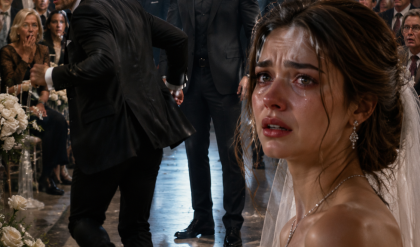
It was the first time they had appeared publicly as husband and wife.
Whispers swept through the ballroom.
Claire recognized former Bellanova’s employees in the audience. Mia covered her mouth. Curtis, invited through a restaurant association before his dismissal, slowly lowered his eyes.
Gabriel turned toward the crowd.
“This is my wife.”
The whispers became gasps.
“A year ago, many people learned her face because someone tried to humiliate her. Tonight, I want you to know what happened afterward.”
A screen behind them displayed photographs from the Open Table Foundation.
A waitress receiving legal assistance.
A hotel housekeeper meeting with a counselor.
A delivery driver receiving emergency rent support.
A restaurant staff attending workplace safety training.
“In twelve months,” Gabriel said, “the foundation Claire created has assisted more than nine hundred workers.”
Applause spread through the ballroom.
Claire’s eyes filled with tears.
Gabriel continued.
“She did not use power to destroy the people who hurt her. She used what happened to protect people she had never met.”
He looked at her.
“For years, people feared my name. Claire taught me that fear can force obedience, but it cannot create respect.”
The room became completely still.
“She is the strongest person I know, not because she endured humiliation quietly, but because she refused to let humiliation decide what kind of person she would become.”
Gabriel stepped away from the microphone.
The audience rose.
The standing ovation seemed endless.
Claire saw Mia crying. The elderly anniversary couple stood near the front. Samuel Reid applauded with both hands raised.
Even several men who had once carried weapons for Gabriel looked down to hide their emotion.
Claire turned toward her husband.
“You planned this.”
“Yes.”
“You revealed our marriage to an entire ballroom.”
“Yes.”
“Without asking me.”
Gabriel’s confidence faltered.
“I may have misunderstood the boundaries of the surprise.”
Claire stared at him for another second.
Then she kissed his cheek.
“You’re fortunate I love you.”
“I have always been aware of that.”
After the gala, they returned to Bellanova’s.
The restaurant looked much the same as it had a year earlier. Warm lights glowed above the booths. Fresh bread scented the air. The pianist played softly near the windows.
But a framed sign now hung near the entrance.
Our employees are professionals, not targets. Harassment will not be tolerated.
Mia greeted Claire with a hug.
Gabriel took a table near the back while Claire walked through the dining room.
A young waitress approached shyly.
“Mrs. Moretti?”
Claire smiled at the name.
“Yes?”
“I hope this isn’t rude, but everyone here talks about you.”
“That is usually dangerous.”
The waitress laughed nervously.
“I wanted to ask something. If you were married to one of the most powerful men in the city, why did you keep working here?”
Claire looked across the room.
Gabriel sat alone, hands folded, watching her with the same quiet attention he had shown on the night they first met.
She remembered the Coke dripping from her hair.
She remembered the laughter.
She remembered folding her apron because it was the only thing her trembling hands could control.
Then she remembered everything that followed.
The workers who found attorneys.
The employees who kept their homes.
The managers who learned to intervene.
The strangers who discovered that service did not mean submission.
“Because power can make people obey you,” Claire said. “But it cannot tell you whether they would respect you if your name meant nothing.”
The waitress nodded slowly.
Claire continued.
“I needed to know who I was without my husband’s power.”
“And what did you learn?”
Claire glanced toward Gabriel.
“That I never needed his power to have worth.”
Gabriel rose as she approached.
He helped her into her coat.
Outside, rain had begun to fall, soft and silver beneath the streetlights.
A year earlier, Claire had sat alone in her car during a storm, too ashamed to tell her husband what had happened.
Now she took his hand openly as they walked down the sidewalk.
They were not a ruthless mafia boss and the woman he had rescued.
They were a husband who had learned restraint and a wife who had transformed pain into protection.
Behind them, Bellanova’s windows glowed against the rain.
Inside, workers moved between tables with their heads held high.
And somewhere across the city, a woman who had once confused cruelty with entertainment was learning that an audience could make a person famous, but only character could make that person worthy of being remembered.
THE END