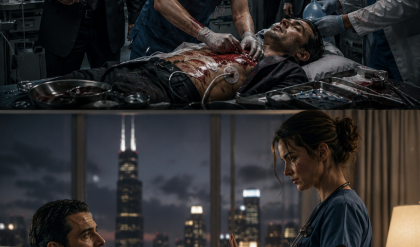
He shook his head, breathing hard. “The crash. The fire. The dental records.”
“They were switched.”
“By who?”
At that, Rachel’s eyes went to the closed hospital door. Terror returned so violently that Bennett felt it enter his own bones.
“Don’t let him know you found me.”
“Who?”
She swallowed, and the monitor quickened with her pulse.
“If he knows I’m alive, he’ll kill Noah first.”
Bennett leaned close, every muscle locked.
“Rachel. Who did this?”
Her answer was almost soundless.
“Malcolm.”
The name landed in the room like a gunshot.
Bennett’s older brother. Malcolm Harlan. The charming heir who smiled for magazines and slapped backs at charity auctions. The man who had stood beside Bennett at Rachel’s funeral, rain streaming down his face, one arm around Noah, telling everyone that family had to hold together. The man Noah called Uncle Mac. The man who attended Sunday dinners, brought expensive train sets, and had toasted Rachel’s memory every year with a glass of twenty-three-year-old bourbon from their oldest barrelhouse.
Bennett stared at his wife, waiting for some fevered correction.
But Rachel only cried.
Over the next two days, the story came out in fragments because Rachel could not tell it all at once. Each memory cost her. Each sentence pulled her back into a darkness Bennett could barely imagine without wanting to tear the room apart.
Three years earlier, Rebecca had returned to Kentucky in trouble. Not ordinary trouble. She owed money to men tied to an illegal racing and laundering operation stretching from Ohio to Tennessee. Rachel, who had spent her entire life trying to save her twin from herself, hid Rebecca in an unused caretaker’s cottage on one of the Harlan horse farms. She had not told Bennett because he was in New York negotiating a merger and because Rebecca had begged her not to involve “the Harlan machine.”
While looking for old tax files to help Rebecca prove one debt had already been paid, Rachel had gone into Malcolm’s private office at the distillery headquarters. There, inside a locked cabinet Rebecca knew how to pick, Rachel found folders.
Not small mistakes. Not aggressive accounting.
Fraud.
Forged signatures bearing Bennett’s name. Shell companies. Illegal land transfers. Documents preparing to sell protected Harlan farmland to a development group that existed only on paper. Behind that paper company were men Malcolm should never have known—men who needed private roads, storage warehouses, and quiet rural acreage. The bourbon empire was not just losing money. Malcolm was using it as camouflage.
Rachel confronted him the next day.
“I gave him twenty-four hours,” she told Bennett from the hospital bed, her voice thin but steadier now. “I told him he could confess to you, return what he stole, and leave the company quietly. I thought shame would scare him. I still believed there was something human in him.”
Bennett sat with his elbows on his knees, hands clasped so tightly his knuckles whitened.
“What did he say?”
Rachel stared at the ceiling. “He laughed. He said you were always the golden son, and I was just another thing you had that should have been his.”
That night, Rachel had driven to pick Bennett up from the private airfield. Rebecca was hidden in the back seat under a blanket because the men chasing her had found the cottage. Rachel planned to tell Bennett everything on the drive home.
They never reached the airfield.
Malcolm forced Rachel off a rural road near the Salt River. He came with another man, someone Rachel never saw clearly, and struck her before she could call 911. Rebecca, realizing what was happening, attacked him from the back seat. In the struggle, the SUV rolled down an embankment and slammed into a tree. The impact knocked Rachel unconscious. When she came to, smoke was filling the vehicle, Rebecca was trapped in the crushed rear, and Malcolm was dragging Rachel out by her arms.
“I begged him to help her,” Rachel whispered. “Rebecca was screaming. She was alive, Ben. She was alive.”
Bennett rose from his chair and walked to the window because the rage in him needed distance from anything breakable.
Rachel continued anyway, because the truth, once opened, had to bleed.
“Malcolm looked at the car. Then he looked at me. And I saw him decide. Not panic. Not confusion. Decide.”
He left Rebecca to burn.
The fire destroyed the body beyond recognition. Malcolm arranged the identification through people he controlled. The dental confirmation was falsified. The death certificate moved through the right hands. The closed casket was explained by the severity of the crash. Bennett, shattered by grief and busy protecting a toddler from photographers, never questioned what everyone told him.
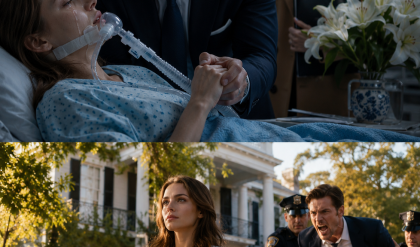
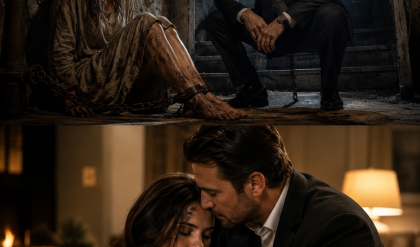
“And me?” Rachel said. “I woke up chained to a pipe in a basement outside Covington.”
Malcolm had kept her there for three years, moving her twice when he feared discovery. He told her Bennett had remarried. He told her Noah had forgotten her. He told her that if she tried to escape, a boy could disappear from a playground in less than ten seconds. He starved her, drugged her, beat her when she screamed, and brought her photos of her own son at birthday parties just to prove he could get close.
Bennett listened until something inside him went quiet. Not calm. Quiet. A dangerous, airless quiet.
“I’m going to kill him,” he said.
Rachel’s hand shot out and caught his sleeve with surprising strength.
“No.”
“He took you from us.”
“And if you kill him, he takes you from Noah too.” Her eyes filled again, but her grip did not loosen. “That is what he wants. He wants you ruined. He wants to prove you are just as violent, just as rotten, just as unworthy as he is.”
Bennett looked at his wife’s ruined hands, then through the glass wall into the adjoining room where Noah slept curled around the stuffed horse Rachel had given him before she vanished.
The boy had already lost his mother once.
Bennett would not make him lose his father too.
So he made one phone call.
Not to his security chief. Not to his lawyers. Not to the private investigators who had fixed problems for the Harlan family for decades.
He called Special Agent Dana Whitaker of the FBI’s Louisville office, a woman he had met two years earlier when Harlan Holdings cooperated in a federal inquiry into interstate money laundering. Dana Whitaker did not like billionaires, did not attend charity galas, and did not smile unless something was actually funny. Bennett trusted her precisely because she could not be bought.
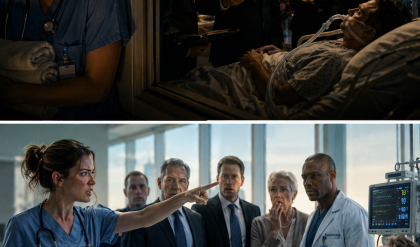
When she arrived at the hospital through a private entrance before dawn, she listened to Rachel for forty minutes without interrupting. Then she stepped into the hallway with Bennett.
“You understand what you’re saying,” she said. “Your brother is connected to financial crimes, kidnapping, attempted murder, falsification of identity, and possibly organized criminal activity. If we move too early, he’ll deny everything and bury evidence.”
Bennett’s eyes were bloodshot, but his voice was firm.
“Then we don’t move early.”
Dana studied him. “You want a trap.”
“I want him in prison until he forgets what sunlight feels like.”
The first part of the trap was silence.
Officially, the woman Bennett had found downtown was an unidentified unhoused patient being treated under a sealed hospital file. The staff who knew signed federal confidentiality orders. Noah was kept out of school for a week under the excuse of a family flu. Bennett canceled two public events, then appeared at a third with tired eyes and a controlled smile, letting gossip do what gossip did best. People whispered that the poor child had seen a homeless woman and imagined his mother. They pitied Bennett. They pitied Noah. No one warned Malcolm.
Two days after Rachel identified him, Malcolm came to Bennett’s house for breakfast.
Bennett saw his brother’s black Range Rover roll through the gates of the Bardstown estate just after eight. The house, a white-columned mansion built by their grandfather and renovated by their mother, sat above miles of bluegrass and split-rail fencing. Horses grazed beyond the mist. Everything looked peaceful enough to mock him.
Malcolm entered through the kitchen like family always did, carrying a paper bag from a bakery in town.
“Benny,” he called, cheerful as church bells. “Brought cinnamon rolls. Figured the kid could use a treat after that mess downtown.”
Bennett stood at the kitchen island, pouring coffee. His hand did not shake. That surprised him.
Malcolm was handsome in a way that had always opened doors—silver at the temples, expensive tan, smile practiced but warm enough to fool most people. He wore a navy jacket, Italian loafers, and the watch Bennett had given him the Christmas after Rachel died. He smelled of tobacco, cedar cologne, and betrayal.
“He’s still sleeping,” Bennett said.
“Poor little man.” Malcolm sighed, shaking his head. “Grief does weird things to kids. Maybe you should get him a new therapist.”
Bennett handed him coffee. “Maybe.”
Malcolm leaned against the counter and took a sip. “You okay? You look like hell.”
“Didn’t sleep much.”
“Thinking about Rachel?”
Bennett forced himself to meet his brother’s eyes. “Always.”
For the first time, something flickered across Malcolm’s face. Not guilt. Assessment.
Then he softened his expression and clapped Bennett on the shoulder. “You did everything you could for her. You know that, right?”
Bennett almost laughed. He almost drove the coffee mug into Malcolm’s teeth. Instead, he nodded.
“I know.”
Malcolm smiled, satisfied. “Good. Because I need you sharp this week. We finally got the land transfer ready. The investors are flying in Friday. This deal puts us back on top.”
There it was—the deal Rachel had died trying to stop.
Bennett lowered his coffee.
“Friday?”
“At McAllister & Greene downtown. Ten sharp. We sign, they wire, we celebrate. Dad’s old dirt finally makes us real money.”
Bennett looked out the window at the land his father had refused to sell even when debt nearly swallowed them whole. “Dad never called it dirt.”
Malcolm’s smile thinned. “Dad also died with a mortgage and a warehouse full of barrels he couldn’t move. Sentiment is expensive.”
Bennett turned back, and for one dangerous second, he let his hatred show.
Malcolm noticed. His eyes narrowed.
“What?”
Bennett covered it by looking away. “Nothing. I’m tired.”
His brother studied him for another beat, then laughed. “Get some sleep. Friday’s going to change everything.”
He left with the same easy confidence he had carried into Rachel’s funeral.
Only when the Range Rover disappeared down the drive did Bennett set the mug in the sink and realize he had cracked the handle clean through.
By Friday morning, the federal trap had teeth.
Dana Whitaker’s team had traced shell companies, subpoenaed bank records under seal, and found the first caretaker property where Rachel had been held. In a basement beneath a foreclosed house outside Covington, agents discovered a rusted chain bolted to a support beam, old medical packaging, and marks scratched into the wall.
Rachel had carved one word there hundreds of times.
NOAH.
They also found a partial fingerprint belonging to Malcolm on a plastic water jug and security footage from a gas station showing one of Malcolm’s drivers buying bulk supplies every month near the property. It was not enough for every charge, but it was enough to squeeze the door open.
Bennett would open it the rest of the way.
The signing took place in a walnut-paneled conference room on the eighteenth floor of a downtown law firm, with a view of the Ohio River glittering beneath the morning sun. Malcolm arrived first, wearing a charcoal suit and the expression of a man already spending money he had not received. Bennett arrived ten minutes later with his general counsel, who knew only part of the plan and looked appropriately nervous.
The so-called investors were late by design.
Malcolm checked his watch. “Where the hell are they?”
“On their way,” Bennett said.
His brother drummed his fingers on the polished table. “You read the final transfer?”
“I did.”
“And?”
Bennett sat across from him. “I have a question.”
Malcolm groaned. “Not today.”
“Why did you forge my signature?”
The room changed.
Not visibly. The river kept moving. The air conditioner kept humming. But something old and ugly lifted its head between them.
Malcolm stared at him, then chuckled.
“That’s not funny.”
“I’m not laughing.”
Their lawyer shifted in his chair. “Mr. Harlan—”
Bennett lifted a hand without looking at him. “Stay out of it.”
Malcolm leaned back slowly. “You want to do this here?”
“I want to know when you decided stealing from me wasn’t enough.”
His brother’s eyes hardened. “Careful.”
“Was it before Rachel found the folders? Or after?”
Malcolm went very still.
There. Bennett felt it like a blade sliding into place. The first crack.
“I don’t know what you think you know,” Malcolm said quietly, “but grief has made you paranoid.”
“Noah saw her.”
The blood drained from Malcolm’s face so quickly Bennett almost missed the small, involuntary twitch in his left hand.
“Who?”
Bennett leaned forward. “Don’t insult me.”
Malcolm recovered, but not completely. His voice lowered. “You listen to me. Whatever some street junkie told you, whatever fantasy your traumatized kid has dragged you into, you need to bury it. For Noah’s sake.”
Bennett’s mouth tightened. “You always knew how to use his name.”
Malcolm stood. “This meeting is over.”
At that exact moment, the conference room doors opened.
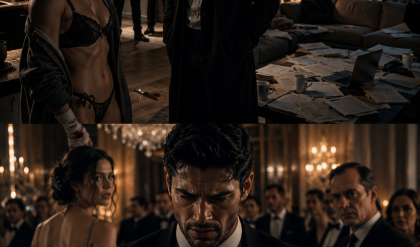
Dana Whitaker entered first, wearing a dark suit and a badge on her belt. Four federal agents followed. Behind them came two Louisville Metro detectives and an assistant U.S. attorney carrying a folder thick enough to make even Malcolm blink.
“Malcolm Harlan,” Dana said, “you’re under arrest.”
Malcolm stared, then laughed once, too loudly. “This is ridiculous.”
Dana continued, unmoved. “Kidnapping, conspiracy, wire fraud, falsification of records, obstruction of justice, attempted murder, and charges related to organized financial crimes. Put your hands where I can see them.”
The lawyer rose so fast his chair nearly tipped. “Agent Whitaker, my client—”
“He can call counsel after he’s processed.”
Malcolm looked at Bennett, and for the first time in Bennett’s life, the older brother looked afraid.
“What did you do?”
Bennett stood but did not move toward him. “I listened to my son.”
Malcolm’s mouth opened, then shut.
And then, as if the room itself had saved its worst judgment for last, the doors opened again.
Rachel entered in a wheelchair pushed by a nurse, with a federal victim advocate walking beside her. She wore a soft blue sweater over her thin frame. Her hair had been cut to her shoulders. Bruises still marked her face, and one hand trembled in her lap, but her eyes were clear.
Malcolm made a sound Bennett had never heard from him before.
Not a word. Not a scream.
A frightened animal sound.
Rachel looked straight at him. “Hello, Malcolm.”
He stepped backward until his legs hit the chair.
“No,” he whispered.
Dana watched him closely. “No what, Mr. Harlan?”
Malcolm’s face twisted. “She’s dead.”
Rachel’s voice shook, but she did not look away. “You tried.”
“No, no, this is a setup.” He turned wildly to Bennett. “She’s lying. She was always unstable. Rebecca too. Both of them were—”
“You left Rebecca burning,” Rachel said.
The room went silent.
Malcolm’s lips parted.
For one second, Bennett saw calculation fail. His brother’s mind, so skilled at charm and escape, reached for a door and found only wall.
“You don’t know what happened,” Malcolm snapped.
“I was there.”
“You were unconscious.”
Rachel’s eyes filled with tears. “Not the whole time.”
The assistant U.S. attorney’s pen moved across his notepad.
Malcolm realized his mistake a second too late.
Dana nodded to the agents. “Cuff him.”
When the metal closed around Malcolm’s wrists, his mask finally shattered. He lunged toward Bennett, stopped only by two agents grabbing his arms.
“You think she came back because of love?” he spat. “She came back because that brat wouldn’t shut his mouth. You were always weak for them. Dad knew it. That’s why he should’ve left the company to me.”
Bennett stepped close enough for Malcolm to see that the old rules between them had ended.
“Dad left it to the son who wouldn’t sell his soul.”
Malcolm laughed bitterly. “You think I was the only one?”
The words hung there.
Bennett froze. Dana’s eyes sharpened.
Malcolm smiled through his rage, suddenly pleased by the damage he could still do.
“You still don’t get it, do you? I couldn’t switch a body, falsify dental records, and bury a woman under the Harlan name by myself.”
Bennett felt Rachel’s eyes turn toward him.
“Who helped you?” Dana asked.
Malcolm looked at Bennett with a cruelty that reached back through their childhood.
“Ask Mom.”
For the second time in a week, Bennett’s world tilted.
His mother, Vivian Harlan, was eighty-two years old, elegant, cold, and beloved by every society page in Kentucky. She wore pearls to breakfast and funded pediatric hospital wings. She had never approved of Rachel, whom she considered too soft, too middle-class, too unwilling to be managed. But dislike was not conspiracy. Distance was not murder.
Bennett wanted to reject it instantly.
Rachel did not.
She lowered her eyes.
Bennett turned to her. “Rachel?”
Her silence was the answer.
Vivian had not planned the kidnapping. She had not known Malcolm would leave Rebecca to die. But afterward, when Malcolm arrived at the estate in a panic, saying Rachel was alive and Rebecca was dead and the family would be destroyed, Vivian made a choice. The Harlan name mattered more to her than the women who had married into it. She called a retired medical examiner who owed the family money. She arranged pressure on the local sheriff. She told herself Rachel was already lost. She told herself Noah was too young to remember. She told herself Bennett would survive grief more easily than scandal.
That was the twist that broke something in Bennett more quietly than Malcolm’s violence had.
His brother had been jealous. Greedy. Rotten.
His mother had been practical.
In some ways, that was worse.
Vivian was arrested two days later in her sunroom, surrounded by white orchids and framed photographs of grandchildren. She did not cry when agents entered. She simply set down her tea and asked Bennett, who stood behind them, whether he had thought carefully about what this would do to the family.
Bennett looked at the woman who had raised him, then at Noah standing beside Rachel in the hall, clutching her hand as if the world might steal her again.
“I am thinking about the family,” he said.
The trial became a national obsession.
News vans camped outside the courthouse. Reporters called Rachel “the Bourbon Ghost,” a nickname Bennett despised and Rachel ignored. Podcasts dissected every detail. Business channels debated how Harlan Holdings would survive. True crime accounts posted side-by-side photos of Rachel and Rebecca until Bennett’s lawyers threatened half the internet.
But inside the courtroom, beneath all the spectacle, the truth was smaller and more brutal. It was Rachel taking the stand with her hands folded to hide their trembling. It was Noah’s recorded forensic interview, played only for the jury, where his little voice said, “I knew because her eyes were sad like when Mommy said goodbye at preschool.” It was a photograph of the basement wall covered with the word NOAH. It was Malcolm’s driver accepting a plea deal and admitting he had delivered food, sedatives, and restraints without asking questions because Malcolm paid well. It was Vivian sitting straight-backed in pearls while a prosecutor read emails proving she had arranged the false identification.
Malcolm tried arrogance first. Then outrage. Then blame. He claimed Rachel had run away. He claimed Rebecca’s criminal associates had staged everything. He claimed Bennett had manufactured the accusations to take full control of the company. But arrogance does not erase fingerprints, bank records, basement chains, or the one thing Malcolm could never explain: how Rachel knew details of his crimes that had not been public, including account numbers hidden under shell companies only he controlled.
Vivian’s defense was quieter. Her attorneys argued she had been manipulated by Malcolm, that she believed Rachel was dead, that her actions after the crash were meant to spare a grieving family further trauma. But on cross-examination, the prosecutor showed an email Vivian had sent Malcolm three days after the funeral.
The subject line was blank.
The message read: Keep her far away, or all of this was for nothing.
Vivian closed her eyes when it appeared on the courtroom screen.
Bennett did not.
He wanted to remember every word.
The verdict came after eleven hours.
Guilty.
Malcolm received life without parole plus additional federal sentences that made release impossible. Vivian, due to age and health, received twenty-two years—effectively a life sentence of a different kind. When the judge spoke, Vivian showed no emotion. Malcolm turned once toward Bennett, his face filled with the same hatred that had ruined them all.
Bennett felt nothing in return.
Not forgiveness. Not satisfaction.
Only the final closing of a door.
Healing did not arrive like sunlight in a movie. It came badly, unevenly, with setbacks that made victory feel almost insulting. Rachel could not sleep in a room with the door closed. Sudden footsteps made her flinch. She ate slowly, sometimes crying over a full plate because hunger had trained her not to trust abundance. Noah had nightmares that if he let go of her hand, she would disappear into traffic again. Bennett woke some nights convinced he heard Rachel calling from under the house.
Money helped, but it did not cure. It bought the best trauma specialists, private security, quiet places to recover, and time away from cameras. It could not give Rachel back the three years she lost. It could not give Noah the preschool graduations, birthdays, and bedtime stories stolen from him. It could not give Rebecca the life she might have rebuilt if someone had considered her worth saving.
So the Harlans learned to live differently.
Bennett stepped down as CEO for six months and appointed an outside board to clean the company. He sold the private jet Malcolm loved and used the money to establish the Rebecca Vale Foundation for missing and exploited women, especially those whose past mistakes made police less likely to search. Rachel insisted on the name. She said her sister had died trying, and that had to count for something.
They moved out of the Bardstown mansion. Not forever, Bennett said at first, but Rachel never returned to sleep there, and eventually he stopped pretending the house was home. They bought a smaller farmhouse outside Lexington, with wide windows, a vegetable garden, and no locked gates except the kind needed to keep horses from wandering. Noah chose the paint color for his room. Rachel planted lavender by the porch because its scent reminded her she was no longer underground.
This story was written by the author “hoanganh1” – if you see any account copying it, please report it to respect the author. Thank you very much, readers!!
One year after the day on West Broadway, the three of them drove to the Harlan family cemetery.
It was late afternoon, warm and golden, the Kentucky hills rolling green beneath a wide blue sky. The old headstone with Rachel’s name had been removed. In its place stood a new marker beneath a young dogwood tree.
Rebecca Anne Vale
Beloved Sister, Brave Aunt, Imperfect Soul, Unforgotten
She fought for blood, and love remembered her.
Rachel stood for a long time in front of it, leaning on Bennett’s arm. She was stronger now, though still thin, with faint scars that no longer defined her face. Noah, seven years old and solemn in a button-down shirt he hated, held a toy car in both hands.
Bennett knelt beside him. “You okay, buddy?”
Noah nodded. “Can I give it to Aunt Rebecca?”
“Of course.”
The boy placed the little blue car at the base of the stone. It had been one of his favorites, scratched from years of play. He arranged it carefully beside the flowers, then stepped back.
“Thank you for helping Mommy come home,” he said.
Rachel covered her mouth and turned into Bennett’s chest. He held her while she cried, not the terrified crying of the hospital, not the broken crying of testimony, but something cleaner. Grief, finally allowed to belong to the right person.
Bennett looked at the grave, then at his wife and son.
For most of his life, he had believed family was blood, legacy, last names carved into stone, portraits hanging in hallways, signatures on company documents. He had believed betrayal came from outsiders, from competitors, from men in cheap suits making threats in parking lots.
He knew better now.
Sometimes the monster sits at your table, pours your coffee, kisses your child’s forehead, and tells you to be strong at the funeral he caused. Sometimes the person preserving the family name is the one poisoning everything the name was supposed to protect. And sometimes the only one who sees the truth is a child too young to understand evidence but old enough to recognize love through dirt, hunger, bruises, and fear.
On the drive home, Noah fell asleep in the back seat with Rachel’s sweater clenched in one fist. Rachel rested her head against the window, watching the fields blur gold in the sunset. Bennett reached across the console and took her hand.
She squeezed back.
Not hard.
Just enough.
And for the first time in three years, Bennett did not feel like he was holding on to a ghost. He was holding on to a woman who had crossed through hell and returned, not because money saved her, not because power protected her, but because a little boy looked at someone the whole city had learned not to see and said the truth out loud.
Daddy… that woman is Mom.
The world had called her dead. A coffin had carried the lie. A family empire had protected it. Men with titles had signed it into record.
But love had recognized her anyway.
And love, once recognized, refused to let her go.
THE END