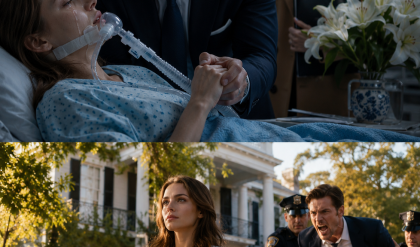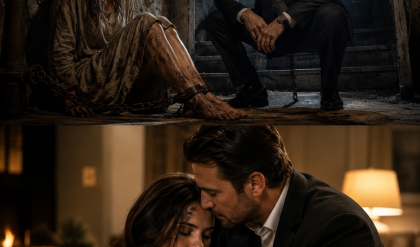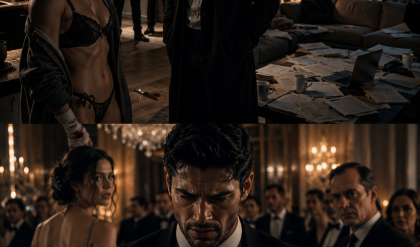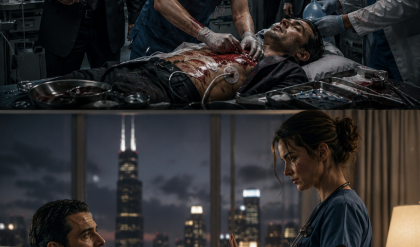
Caleb had laughed, which startled everyone in the kitchen because he did not laugh often and never before coffee.
“It’s all right,” he said. “She’s not wrong.”
After that, Isabel watched him whenever he passed through the service hall or crossed the garden on his way to the study. She did not chatter the way other children did. She observed. If Caleb changed his tie, she noticed. If Mrs. Dorsey, the house manager, moved the cookie jar to a higher shelf, Isabel found it. If Celeste entered a room smiling and left it angry, Isabel remembered.
“You have an old little girl,” Caleb once told Marisol.
Marisol had looked at her daughter through the kitchen doorway, where Isabel was lining up spoons by size.
“She had to learn early,” Marisol said before she could stop herself.
Caleb did not ask what she meant. That was one of the things Marisol respected about him. Rich people often treated pain like gossip if it belonged to someone beneath them. Caleb did not. He noticed, then gave her the dignity of silence.
Over time, he became part of Isabel’s small map of the world. Not family. Not exactly friend. Something steadier than employer and less simple than stranger. When she scraped her knee on the gravel path, Caleb had been the one who found her and carried her to the kitchen while Marisol ran for bandages. Isabel, crying hard into his jacket, had called him Daddy once by accident.
The word had embarrassed Marisol so deeply that she apologized three times.
Caleb had said only, “She was scared.”
Celeste, however, had heard about it.
Marisol saw the change immediately. Celeste began appearing in the kitchen more often. She asked small questions that sounded harmless until they gathered weight.
“How long have you worked here, Marisol?”
“Isabel’s father isn’t involved?”
“Does Caleb spend much time with her?”
“Children get attached so easily, don’t they?”
Marisol answered politely, but something about Celeste’s interest made her feel as if a hand had closed around the back of her neck.
Three weeks before the wedding, Caleb’s headaches became harder to ignore.
They began behind his eyes and moved down into his jaw. He felt dizzy when he stood too quickly. His hands trembled once during a board call, and he hid them under the desk until the meeting ended. At night, fatigue settled into his bones so heavily that he sometimes sat on the edge of his bed for ten minutes before finding the strength to unbutton his shirt.
Celeste urged him to see a doctor.
It sounded like love.
“You push too hard,” she told him, smoothing his hair back from his forehead. “You always have. Let someone take care of you for once.”
His physician, Dr. Alan Reeves, ran blood work and frowned at the results.
“Your liver enzymes are elevated,” he said.
Caleb stared at him. “How elevated?”
“Enough that I want to repeat the tests. It may be stress. Diet. Supplements. Alcohol.”
“I barely drink.”
“I know.” Dr. Reeves looked at the chart again. “Any new medication?”
“No.”
“Anything unusual in your routine?”
Caleb almost said no, then remembered Celeste placing a glass of lemon water beside his bed each night.
But that was not unusual. That was sweet.
So he shook his head.
Dr. Reeves told him to rest. Caleb, who had never known how, promised he would try.
Celeste became more attentive after that. She brought him herbal tea. She reminded him to take magnesium. She told the chef to reduce salt. She walked into his study at night and replaced his coffee with water, kissing the top of his head as she did.
“You’ll thank me when you look healthy in the wedding photos,” she said.
He smiled because he wanted to be the kind of man who could accept care without suspicion.
But Isabel saw what he did not.
She saw Celeste come down the hall after midnight in a silk robe, carrying a glass. She saw the tiny brown bottle Celeste held between two fingers. She saw the drops fall into the water. Once. Twice. Three times.
Isabel did not know the word poison.
She knew medicine. She knew bad. She knew the way her mother checked milk before giving it to her if it smelled strange. She knew the way adults acted when they did not want to be seen.
For several nights, she said nothing because children are often taught that adult business belongs to adults. Then on the morning of the brunch, while Marisol was changing sheets in the east guest room, Isabel slipped away after hearing Celeste say, “Make sure Caleb drinks this before the toast. He’s been avoiding water today.”
Isabel followed the voice.
She saw the glass.
She saw Caleb reach for it.
And she did the only thing a child could do.
She told the truth out loud.
After the guests left, Caleb took the glass to his private office, locked the door, and called the only lawyer he trusted.
Jonah Park answered on the second ring.
“I need you to listen carefully,” Caleb said. “I may have been poisoned.”
There was a pause.
Jonah was sixty-two, Korean American, a former federal prosecutor turned corporate attorney, and the sort of man who became quieter when other people became dramatic.
“Are you in immediate danger?”
“I don’t know.”
“Do not drink or eat anything prepared by anyone else until we know. Preserve the glass. Do not confront Celeste. Do not make accusations in front of staff. Tell me exactly what happened.”
Caleb did.
When he finished, Jonah said, “I’m sending a courier and contacting a private toxicology lab. I also want you to call Dr. Reeves and tell him everything. Not part of it. Everything.”
Caleb looked through the office windows at the lawn, where the brunch tent workers were already dismantling the evidence of a perfect morning.
“She said I was embarrassing her,” he murmured.
“Caleb.”
“I know.”
“No, I don’t think you do. If that glass contains what the child thinks it contains, embarrassment is the least dangerous thing in that house.”
Caleb closed his eyes.
He thought of Celeste smiling beside him in engagement photos. Celeste choosing music for the ceremony. Celeste crying, or seeming to cry, when he told her he had never brought any woman to his mother’s grave before.
“Do I call the police?”
“Not yet,” Jonah said. “First, we verify. Then we move properly. If this is real and she has money, counsel, and warning, she’ll bury the truth under procedure before anyone can touch her.”
Caleb laughed once, bitterly. “You sound like you’ve done this before.”
“I have prosecuted people who smiled while killing family members for less money than you keep in a checking account.”
That ended the laugh.
The courier arrived within an hour. Caleb gave him the sealed glass and watched him drive away through the gates.
Then he went to find Marisol.
She was in the laundry room with Isabel on her lap, though the child was too big to be held that way comfortably. Marisol looked up when Caleb entered, and he saw in her face the terror of someone who expected punishment for telling the truth at the wrong volume.
“Mr. Hartwell,” she began, “I’m so sorry she interrupted. She didn’t understand—”
“She understood enough.”
Marisol stopped.
Caleb crouched so Isabel could see his face. “Can you tell me what you saw?”
Marisol tightened her arms around her daughter.
Isabel looked at Caleb for a long moment. “Pretty lady has tiny bottle.”
“What color?”
“Brown. Like syrup.”
“When did you see it?”
“At nighttime. She puts drops in your water and says, ‘Good boy, drink it.’ But you’re not a dog.”
Caleb felt something inside him go very still.
Marisol whispered, “God help us.”
He looked up at her. “Has Celeste ever asked you about Isabel calling me Daddy?”
Marisol’s mouth tightened. “Yes.”
“How often?”
“Enough.”
There it was again, that cold line running through him.
“Tell me everything,” he said.
So Marisol did.
She told him about the questions, the way Celeste watched Isabel, the unlabeled bottles she had once seen in Celeste’s vanity drawer, and the phone call she had overheard two days earlier while dusting the upstairs landing.
“She said, ‘Julian, stop panicking. The clause is signed Friday. After the wedding, he won’t last long enough to change anything.’”
Caleb’s hands curled slowly.
“Julian?” he asked.
“That’s the name I heard.”
Celeste had told him she was an only child.
That night, Caleb did something harder than confronting her.
He acted normal.
Celeste came to his bedroom wearing pale blue silk and carrying tea. Not water this time. Tea.
“I thought you might need something calming,” she said.
He looked at the cup.
She followed his gaze, and for one second the air between them sharpened.
Then she smiled.
“Caleb, please. Are we really going to let a toddler make us suspicious of tea now?”
He smiled back because Jonah had told him to.
“You’re right,” he said. “I’m exhausted.”
She sat beside him and touched his cheek. “The stress is making you unlike yourself.”
“No,” he said softly. “Maybe it’s making me exactly like myself.”
Her hand paused, then moved away.
He did not drink the tea.
At 4:37 the next morning, Jonah called.
The glass had tested positive for a plant-derived cardiac toxin, an alkaloid that could cause dizziness, fatigue, irregular heartbeat, organ stress, and eventually death if administered in repeated small doses. It was difficult to detect unless someone knew to look for it. In tiny amounts, it could mimic illness, overwork, or a body collapsing under pressure.
“Was it enough to kill me?” Caleb asked.
“Not that single glass,” Jonah said. “That’s the point. This was not impulse. This was a schedule.”
Caleb sat on the side of his bed, staring at the pale strip of dawn at the edge of the curtains.
“A schedule,” he repeated.
“Dr. Reeves is reviewing your blood work again. He thinks exposure may have been ongoing for weeks, maybe months.”
Caleb pressed his palm over his eyes.
He thought he would feel rage.
Instead he felt foolish.
That was the first wound betrayal opened in him—not anger, not grief, but shame. He had built a company by reading people. He had negotiated with men who lied for sport. He had survived because he noticed patterns before they became traps.
Yet Celeste had sat across from him at dinner every night, poisoning his water with a steady hand, and he had called it care.
“Caleb,” Jonah said, “listen to me. This is not your failure.”
“It happened in my house.”
“That doesn’t make it your failure.”
“It happened in my bedroom.”
“That makes it a crime.”
The difference mattered. Caleb tried to hold on to it.
This story was written by the author “hoanganh1” – if you see any account copying it, please report it to respect the author. Thank you very much, readers!!
By midmorning, Jonah had contacted Detective Mara Quinn, a major crimes investigator in Westchester County with a reputation for patience and no appetite for rich people’s theatrics. She arrived at Hartwell House in plain clothes and asked to speak in the pool house, away from staff and security cameras Celeste might access.
Detective Quinn had gray eyes, short auburn hair, and the calm of someone who had learned not to waste emotion before evidence.
She listened to Caleb, then to Marisol, then, gently, to Isabel.
Isabel sat on her mother’s lap with her rabbit pressed under her chin.
“Do you know what a lie is?” Detective Quinn asked.
Isabel nodded. “It’s when you say a thing and the thing is not true.”
“That’s right. Are you telling me a true thing?”
“Yes.”
“What did you see the pretty lady do?”
“Drops.”
“Where?”
“In his water.”
“Did anyone tell you to say that?”
Isabel frowned, offended. “No.”
“What happened after she put the drops in?”
“She smiled at the glass.”
Detective Quinn’s expression did not change, but Caleb saw her pen stop moving for half a second.
People smiled at babies. At gifts. At jokes.
Smiling at a poisoned glass was something else.
The investigation began quietly because quiet was the only way to keep Celeste from running.
Caleb gave Detective Quinn permission to review internal household cameras. Celeste had disabled the hallway camera near his bedroom twice in the past month, each time for fewer than seven minutes. The official logs showed “maintenance reset.” The maintenance company had not performed any reset.
Security footage from the kitchen showed Celeste entering after midnight on several occasions, though she had always told Caleb she hated kitchens and did not know where anything was kept. One camera caught her removing a small bottle from the pocket of her robe before turning away from view.
The evidence was strong.
It was not yet enough.
Money changed crimes. Detective Quinn explained this without apology. A poor suspect with a vial in her bathroom might be arrested by lunch. Celeste Vale had lawyers, family connections, a public image, and the ability to claim anything from anxiety medication to herbal extracts. If they moved too soon, she could bury the case in doubt.
They needed motive.
Caleb knew where to look.
The prenuptial agreement.
At first, he resisted the thought because it made him feel dirty, as if love had been reduced to a spreadsheet. But when Jonah reviewed the newest draft, the motive rose from the language like a body from shallow water.
Celeste had pushed hard for amendments three months earlier. She had cried in Jonah’s office, saying the original agreement made her feel like a temporary accessory rather than a wife. She did not want Caleb’s company, she said. She only wanted dignity. Security. Proof that he trusted her.
Caleb had softened.
He had altered a clause related to marital trusts. If Caleb died within five years of the wedding, Celeste would gain control over a private family trust valued at $310 million, plus voting influence over a block of nonpublic Hartwell Dynamics shares. She would not own the company outright, but she would control enough to force board concessions, sell influence, and become impossibly wealthy even by the standards of the wealthy.
The final signing was scheduled for Friday morning.
The wedding was Saturday.
Jonah called it elegant.
Not admiringly.
“She needed the clause executed before the ceremony,” he said. “Then she needed the marriage completed. After that, your death becomes financially useful.”
Caleb sat in his office as rain began tapping the windows.
Financially useful.
That was what his life had become in the hands of the woman who chose his wedding vows.
Detective Quinn dug into Julian.
His full name was Julian Vale Mercer. Not Celeste’s brother, as one might expect from the familiar phone calls. Her stepbrother on paper for three years during adolescence, after Celeste’s mother briefly married his father. The marriage had ended, but Celeste and Julian had remained close in a way no one in the Vale family discussed.
Julian had studied pharmacology at Johns Hopkins before being dismissed after an internal investigation involving missing compounds from a research lab. No criminal charges had followed. His father had donated to the university the same month.
He now ran a boutique “wellness consultancy” in Boston that sold longevity plans to rich clients terrified of aging.
Detective Quinn found dozens of calls between Celeste and Julian going back almost three years, beginning two months before Caleb met Celeste at a museum fundraiser in Manhattan.
Two months before.
When Jonah told him that, Caleb felt the last soft place inside the lie harden.
“She didn’t meet me,” he said. “She hunted me.”
“I’m sorry,” Jonah replied.
The phrase was inadequate, but it was honest, and Caleb appreciated honest things more than comforting ones now.
More records followed.
Emails from Julian to encrypted accounts. Purchases of rare plant extracts through shell companies. A storage unit outside Stamford rented under a false name. A draft message from Celeste to Julian that had been backed up to an old tablet and recovered through legal process.
Caleb asked Jonah to read it aloud.
Jonah hesitated.
“Read it,” Caleb said.
So Jonah did.
“Target is lonelier than expected. No meaningful family. Staff loyal but distant. Child of maid may be a complication—he is sentimental about her. Could be useful if needed.”
Caleb closed his eyes.
Jonah continued.
“Prenup resistance worked. He hates feeling cold. Push emotional angle again. If he softens on trust language, timeline moves forward.”
Another.
“He is symptomatic but functional. Doctor suspects stress. Good. Keep dose low. After signing, we increase.”
Another.
“If anything goes wrong, we have the maid angle. Child calls him Daddy. Public will believe affair before they believe Celeste Vale poisoning anyone.”
There it was.
The second crime.
Caleb stood so abruptly his chair hit the wall.
“She was going to frame Marisol.”
“Yes,” Jonah said quietly.
“She was going to use Isabel.”
“It appears so.”
Caleb’s voice dropped. “Where is Marisol now?”
“Still in the east wing, as you asked.”
“Get Detective Quinn back here.”
But the detective was already ahead of him.
That afternoon, officers executed a sealed search warrant for parts of the estate while Celeste was at a bridal fitting in Manhattan. They did not search Celeste’s suite first.
They searched Marisol’s room.
Because if Celeste’s plan was what they thought it was, the planted evidence would be there.
They found it behind a loose panel under the small wardrobe.
Three small vials wrapped in a cleaning rag. A folded sheet of paper covered in handwriting that was not Marisol’s but attempted to imitate hers. A printed photograph of Caleb carrying Isabel after the scraped-knee incident. A fake paternity test stating Caleb Hartwell was Isabel’s biological father.
Marisol sat on her bed while Detective Quinn laid the evidence out on a towel.
Her face had gone gray.
“I’ve never seen those before,” she whispered.
“We know,” Detective Quinn said.
Marisol looked at Caleb.
For a terrible second, he saw the question she was too proud to ask.
Do you believe me?
The fact that she had to wonder made him ashamed all over again, but this time the shame belonged to the world, not to him alone.
“I believe you,” he said.
Her eyes filled, but she did not cry. She pulled Isabel closer instead, as if her child were the only solid object left.
Celeste returned from Manhattan at seven that evening carrying a garment bag and complaining about alterations. Caleb met her in the foyer.
“Long day?” he asked.
“The seamstress nearly ruined the neckline,” she said. “I swear, competence is dead.”
He looked at her hands. Perfect manicure. Diamond ring. No tremor.
“How was yours?” she asked.
“Productive.”
She smiled. “Good. You need distraction.”
He almost laughed.
That night, he lay beside her without sleeping.
Celeste breathed softly, evenly, like a woman with nothing on her conscience. Caleb stared at the ceiling until dawn and understood, with a grief so quiet it felt like age, that some people did not become monsters in moments of rage. Some became monsters through planning. Through patience. Through the ability to kiss a man’s mouth after calculating the value of his corpse.
Friday came.
The day of the final signing.
Detective Quinn wanted to arrest Celeste before she entered Jonah’s office, but Jonah advised waiting one more day. Julian was driving down from Boston for the rehearsal dinner that evening under the excuse of being an “old family friend.” They wanted both conspirators in the same place. They wanted communication in real time. They wanted Celeste comfortable enough to make one more mistake.
Caleb hated the plan.
He agreed anyway.
The signing took place at Jonah’s office in Manhattan, on the forty-second floor of a building overlooking Bryant Park. Celeste wore cream and pearls. Caleb wore a navy suit and the expression of a man attending his own funeral politely.
Jonah explained every clause.
Celeste squeezed Caleb’s hand at the right moments.
When the trust language came up, she lowered her eyes.
“I still hate talking about death,” she said softly.
Caleb turned his head and looked at her.
“Then let’s make sure we both live a long time.”
Her hand tightened around his.
Only a fraction.
Enough.
He signed.
So did she.
The document was legally executed. It was also evidence now. The trap had closed one more inch.
That evening, Hartwell House filled with rehearsal dinner guests. Celeste wanted the event at the estate instead of a restaurant because, she said, “Our home should be part of the memory.” Caleb understood now that she wanted control of the environment. Her glassware. Her timing. Her exits.
Julian Mercer arrived at 6:42 p.m.
He was handsome in a pale, forgettable way, with sandy hair, clever eyes, and the restless fingers of a man who preferred laboratory instruments to dinner forks. Celeste introduced him as “practically family.”
Caleb shook his hand.
Julian smiled. “Finally. The famous Caleb Hartwell.”
“Not that famous,” Caleb said.
“Oh, you’d be surprised.”
The words passed like a blade wrapped in silk.
Marisol had begged Caleb to let her take Isabel away from the house that night. He wanted to say yes. Detective Quinn said no—not because she needed them in danger, but because Celeste might notice their absence and panic. So Marisol stayed in the east wing with a uniformed officer dressed as a temporary security guard posted nearby.
Caleb promised her it would end tonight.
Marisol searched his face.
“Promises are expensive,” she said.
“Then I won’t make it cheaply.”
The rehearsal dinner began beautifully.
That was the horrible part.
The candles glowed. The pianist played soft jazz. Guests toasted love, legacy, partnership, destiny. Celeste’s father gave a speech about family names and modern ambition. Celeste laughed with her head tilted back, radiant beneath the chandelier.
Caleb watched people watch her.
They adored the performance because the performance had been designed for them. Beauty forgave suspicion. Money softened edges. Old family names turned cruelty into eccentricity until evidence forced another translation.
Near dessert, Celeste stood.
“I want to make a private toast,” she said, lifting a glass of champagne. “Not to the wedding. Not to the photographs or the flowers or the headlines. To Caleb.”
The room warmed with approving smiles.
Celeste looked down at him with tears shining in her eyes.
“When I met you, I saw a man who had built everything except a life. I wanted to be part of that life. I wanted to bring warmth into this house, laughter into these rooms, and someday, God willing, children into your arms.”
Across the room, Julian took a slow sip of wine.
Caleb felt his pulse in his throat.
Celeste continued, “You once told me you were afraid you didn’t know how to be loved. So tonight, before everyone we cherish, I want to promise you that you do. You are loved. Completely.”
She turned and took a glass from a waiter’s tray.
Not the champagne she had been holding.
Water.
Lemon.
Two slices.
She placed it in front of him.
“For your health,” she said playfully, and the room laughed.
Caleb looked at the glass.
Then at Celeste.
Then he smiled.
“To my health,” he said.
He lifted it.
At that exact moment, a crash sounded from the hallway.
Everyone turned.
Isabel stood in the doorway with her stuffed rabbit in one hand and a silver serving spoon in the other, which she had apparently knocked from a side table while escaping Marisol’s room for the second time in one week.
Marisol appeared behind her, breathless and horrified.
“I’m sorry,” she said. “I’m so sorry, she ran—”
But Isabel was not looking at her mother.
She was looking at Caleb’s glass.
Her little face twisted with fear.
“No,” she cried. “Not that one. That one has the sleepy drops.”
Celeste’s face went white.
The room erupted.
Caleb set the glass down untouched.
Julian stood.
That was his mistake.
Detective Quinn entered from the side hall before he reached the door, badge visible, two officers behind her.
“Julian Mercer,” she said. “Stay where you are.”
Celeste stared at Caleb.
The tears were gone now. So was the warmth, the wounded innocence, the perfect bride.
What remained was sharp enough to cut.
“You planned this,” she whispered.
Caleb stood slowly.
“No,” he said. “You did.”
Detective Quinn nodded to the officers. One secured Julian. Another moved toward Celeste.
Celeste stepped back.
“This is insane,” she said loudly. “You are all witnessing a breakdown. Caleb has been ill for weeks. He is confused. That woman—” She pointed at Marisol. “That woman has been obsessed with him. Her child calls him Daddy. She planted something. She wants money.”
There it was, performed right on cue.
The story Celeste had prepared.
The room turned toward Marisol, and Caleb saw what Celeste had counted on. Doubt moved faster than truth when class gave it permission. A maid. A fatherless child. A billionaire. A jealous fantasy. It was ugly, but it was easy.
Celeste saw it too and pushed harder.
“She has access to every room in this house. She cleans his bedroom. She brings food from the kitchen. Ask her why her daughter calls him Daddy.”
Marisol lifted her chin, shaking but upright.
“Because he was kind to her when she was scared,” she said. “Some children remember kindness better than adults do.”
For the first time that night, Caleb loved someone’s courage more than his own anger.
Detective Quinn spoke before Celeste could answer.
“Celeste Vale, we recovered the vials you planted in Ms. Vega’s room. We recovered the forged paternity test. We recovered communications between you and Mr. Mercer discussing the frame.”
Celeste’s mouth opened.
No sound came.
Julian’s face collapsed first.
“Celeste,” he said, almost pleading.
She turned on him with such hatred that the room seemed to recoil.
“Shut up.”
Detective Quinn continued, “We also have toxicology reports, financial motive, security footage, purchase records, and a warrant for both of your arrests.”
Celeste looked at Caleb one last time.
He expected her to beg.
Instead she smiled.
It was small and vicious and almost admiring.
“You were lonelier than I thought,” she said. “That was the only part I miscalculated.”
The words hit him, but they did not enter as deeply as they would have a week earlier.
Because behind him, Isabel had run to Marisol, and Marisol had caught her. Because the room had heard. Because the truth, once spoken clearly enough, did not need to flatter anyone.
Caleb looked at Celeste.
“No,” he said. “You miscalculated who loneliness makes a man listen to.”
Detective Quinn handcuffed her.
Celeste did not cry as they led her out past the roses, past the candles, past the guests who had arrived expecting a rehearsal dinner and would leave having witnessed the collapse of a fairytale. Julian followed minutes later, pale and trembling.
Outside, rain began to fall.
Not dramatically. Not violently.
Just enough to wash the dust from the stone steps.
In the days that followed, the story became national news.
The headlines were predictable, then cruel, then hungry. “Billionaire Bride Accused in Poison Plot.” “Toddler’s Warning Saves Tech CEO.” “Maid Framed in Murder Scheme.” Reporters camped beyond the gates until Caleb had the road closed. Former friends of Celeste appeared on morning shows to say they had always sensed something cold in her. People who had toasted her love on Friday sold their doubts by Monday.
Caleb refused every interview.
Marisol refused them too.
When a producer offered her enough money to buy a small house if she would sit under studio lights and tell America how it felt to have her child save a billionaire, she hung up without answering.
“You could have taken it,” Caleb said when he heard.
Marisol gave him a tired look. “I’m not selling my daughter’s fear.”
That ended the discussion.
The criminal case was strong. Celeste and Julian had planned for nearly three years. Celeste had identified Caleb as a target before meeting him. Julian had sourced and prepared the toxin. The amended prenup gave motive. The planted evidence proved consciousness of guilt. The fake paternity test, meant to destroy Marisol, became one of the prosecution’s most powerful exhibits.
Celeste’s attorneys tried to argue that Julian had manipulated her.
Julian’s attorneys tried to argue that Celeste had manipulated him.
The messages proved both had been willing.
Caleb’s health improved slowly. The toxin left his system, but recovery was not only medical. For weeks, he could not drink water without staring at the glass. He stopped sleeping in the master bedroom. He stopped wearing the watch Celeste had given him. He avoided rooms where she had laughed.
One afternoon, he found Isabel in the garden dropping pebbles into a birdbath.
“You’re not dead,” she said when he sat on the bench nearby.
“No,” he said. “I’m not.”
“Good.”
“I agree.”
She considered him with solemn approval. “You look less gray.”
“Thank you.”
“Gray is not a good face color.”
“I’ll remember that.”
She dropped another pebble into the water. “Are you still sad?”
Caleb looked across the garden at Marisol, who was pruning dead roses with more force than necessary.
“Yes,” he said honestly. “But not the same way.”
Isabel nodded as if that made perfect sense. “Mama says sad can move.”
He smiled faintly. “Your mama is smart.”
“I know.”
Two months later, Caleb sold Hartwell House.
People thought he was running from scandal. That was partly true. But more than that, he was leaving a house built around emptiness. The estate had been designed to impress strangers, not shelter a life. Every hallway echoed. Every window framed a view too large to feel human. He did not want to heal inside a monument to the man Celeste had studied and selected for destruction.
He bought a smaller home in Rye, near the water, with wide porches, a kitchen people actually used, and a backyard where Isabel immediately declared one crooked apple tree “mine.”
Marisol did not remain his maid.
That mattered to him.
She had spent too many years surviving under people’s power. Caleb did not want gratitude to become another kind of chain. He offered her a position with the Hartwell Foundation instead, helping manage housing grants for single parents working in domestic service. She told him she was not qualified. He told her neither was he when he started a billion-dollar company from a rented desk, but competence was often built by people who had been denied the chance to prove it.
Marisol accepted on three conditions.
No pity.
No press.
And no calling it charity.
Caleb agreed to all three.
The foundation changed under her. It became less glossy and more useful. Emergency rent funds. Legal support. Childcare stipends. Safe housing partnerships. Marisol understood the difference between help that looked good in annual reports and help that arrived before a woman had to choose between a paycheck and safety.
“You listen to the people everyone else talks over,” Caleb told her one evening after a board meeting.
Marisol shrugged. “That’s because I used to be one of them.”
“You still are, sometimes.”
She looked at him then, not offended, only measuring.
“So are you,” she said.
He thought about that for a long time.
The trial began the following spring.
Celeste appeared in court wearing navy blue, her hair cut shorter, her face composed for cameras. She looked less like a bride now and more like a politician after a scandal, wounded only by inconvenience. Julian looked smaller in person than he had in Caleb’s memory, as if the removal of secrecy had reduced him.
Marisol testified for three hours.
Celeste’s attorney tried to make her sound ambitious, unstable, resentful.
“Isn’t it true,” he asked, “that your daughter referred to Mr. Hartwell as Daddy?”
Marisol’s hands tightened around each other, but her voice stayed clear.
“Yes.”
“Isn’t it true that you allowed this fantasy to continue?”
“No.”
“Isn’t it possible you encouraged your daughter to say things that would bring you closer to a wealthy man?”
Marisol looked at the jury.
“My daughter saw a woman poison him,” she said. “Your question is uglier than my answer needs to be.”
The judge told the jury to disregard the comment.
No one did.
Caleb testified after her.
The defense wanted him angry, because anger could be made to look unstable. They wanted him emotional, because emotion could be made to look confused. They wanted the jury to see a humiliated man seeking revenge.
Instead, Caleb told the truth plainly.
He described his symptoms. The water. The trust clause. The night he realized the woman beside him had been planning his death. He did not raise his voice. He did not look at Celeste except when the prosecutor asked him to identify her.
At the end, the prosecutor asked, “Mr. Hartwell, why did you not drink the glass at brunch?”
Caleb looked toward the back of the courtroom, where Isabel sat beside a victim advocate coloring quietly with crayons.
“Because a child told me the truth,” he said. “And for once, I was smart enough to listen.”
Celeste was convicted on all major counts. Julian accepted a plea after the verdict and testified to details that made the public hate him and Celeste even more. There were appeals, of course. There were statements from attorneys. There were long articles about greed, privilege, and the psychology of long cons.
Caleb read none of them.
On the day Celeste was sentenced, he drove home without speaking. Marisol sat beside him in the passenger seat because she had testified at sentencing too, describing what it felt like to realize someone had planned to frame her for murder and leave her child motherless.
When they reached the house in Rye, Caleb parked but did not get out.
Marisol waited.
The sky beyond the windshield was pink and gold, soft in the way evenings sometimes are after terrible days, as if the world is apologizing without admitting fault.
“I keep thinking I should feel finished,” Caleb said.
Marisol looked at him. “Do you?”
“No.”
“Then don’t.”
He laughed softly. “That’s your advice?”
“That’s my expensive foundation-executive advice.”
He turned to her.
She smiled a little.
It was not the adjacent-to-a-smile expression she used to protect herself. It was real, brief and warm and gone before he could stare at it too long.
“Finished is for stories people tell afterward,” she said. “Living through it is messier.”
He nodded.
Inside the house, Isabel pressed her face to the front window and waved both hands.
Caleb waved back.
Marisol opened her door. “Come on. She made you something.”
“What?”
“A drawing.”
“Should I be worried?”
“It has less gray in your face this time.”
“That’s progress.”
The drawing showed three people under an apple tree: a tall man, a woman with dark hair, and a small girl holding a rabbit. Above them, Isabel had drawn a huge yellow sun and several blue lines that might have been rain or spaghetti. Across the bottom, with Marisol’s help, she had written: THE SAD MOVED AWAY.
Caleb stared at it longer than he meant to.
Isabel climbed onto the chair beside him. “That means you’re not all sad now.”
“I understood.”
“Good. Sometimes grown-ups don’t.”
He looked at Marisol, who was standing in the doorway watching them with an expression he could not name and did not try to own.
“No,” Caleb said. “Sometimes we don’t.”
Years later, people would still ask Caleb about the poison plot. They asked at business conferences after too much wine. They asked in profiles when journalists wanted a human angle. They asked with the fascinated discomfort people bring to another person’s near-death, as if surviving betrayal must produce a lesson clean enough to quote.
Caleb never gave them the answer they wanted.
He did not say the truth always wins. It often arrives late. He did not say money cannot buy happiness. Everyone already knew that, and many people kept trying anyway. He did not say love conquers all, because love had nearly been used as the weapon that killed him.
What he said was this:
“Pay attention to the people no one is performing for.”
That was where the truth usually lived.
Not in the toast.
Not in the ring.
Not in the perfect smile beneath the chandelier.
Sometimes the truth stood barefoot in a doorway, holding a stuffed rabbit, brave enough to say what everyone else had missed.
And sometimes that was enough to save a life.
THE END